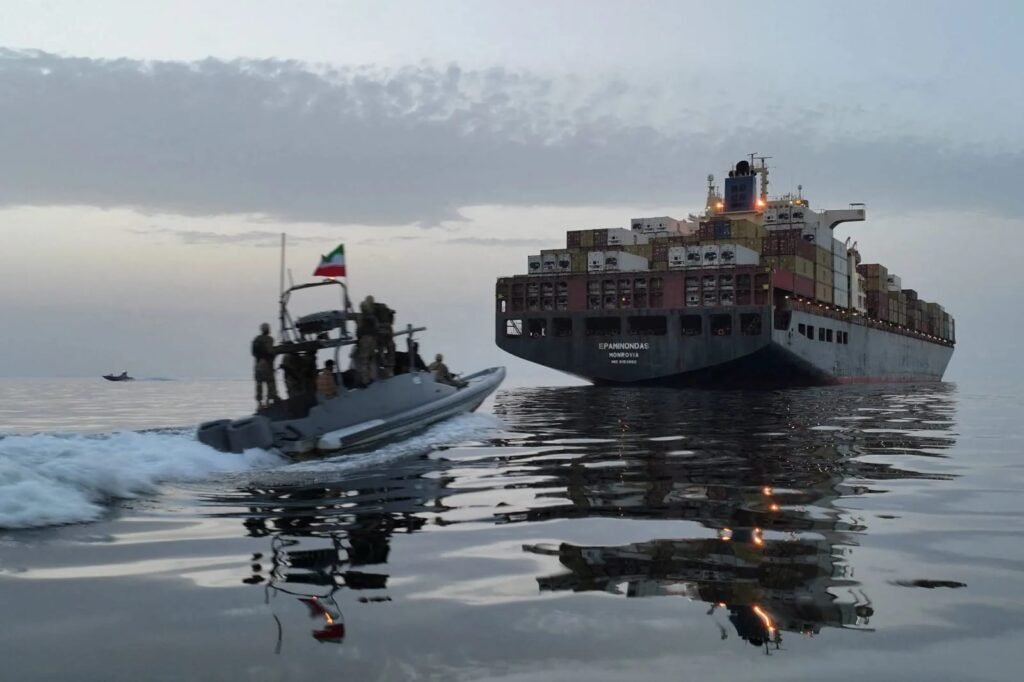
Islamabad (TDI): Iranian President, Masoud Pezeshkian, has said that the United States naval blockade of Iranian ports is “doomed to fail,” and that these actions amount to violation of international law by the US.
The remarks surfaced as global energy markets touched a record high in oil prices, reaching $120 per barrel for a short time, then dipped and settled at $110 per barrel. The overnight spike was the highest in four years.
President Pezeshkian also said that the maritime restrictions imposed by Washington are a primary source of regional tension, adding that the blockade undermines global peace and stability while failing to achieve any objectives.
The statement aligned with Persian Gulf National Day, on which Tehran reaffirmed its position against foreign military pressure. Pezeshkian maintained that these measures would not force the Islamic Republic to alter its diplomatic course.
“Any attempt to impose a blockade and maritime restrictions is contrary to international law and against the interests of the nations of the region and global peace and stability.”
He further said that US actions are against the interests of countries in the Gulf and characterized the blockade as an illegal disruption of trade that threatens the economic stability of the entire region.
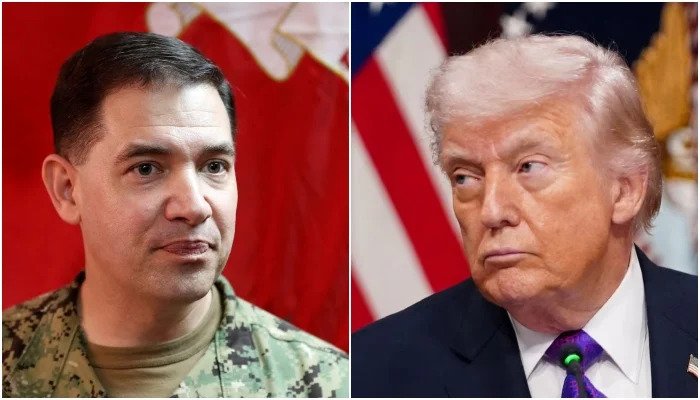
Statement from Adm. Brad Cooper, CENTCOM commander on the success of the U.S. blockade against Iran: pic.twitter.com/78OL04k5cZ
— U.S. Central Command (@CENTCOM) April 29, 2026
In the United States, average gas prices climbed to $4.30 a gallon, following reports that the US is considering “short and powerful” strikes on Iran to pressure it into reopening the Strait of Hormuz.
In a statement on Wednesday, CENTCOM Commander Admiral Brad Cooper said, Right now there are 41 tankers with 69 million barrels of oil that the Iranian regime can’t sell. That’s an estimated $6 billion-plus from which Iran’s leadership cannot financially benefit.”
President Donald Trump also reiterated his earlier position the same day that the naval blockade of Iranian ports will remain in place until a new nuclear agreement is reached.
In an interview with Axios, he described the naval siege as “somewhat more effective than the bombing” and emphasized its role as primary leverage.

Muhammad Usman Hashmi is a researcher in International Relations, focusing on climate diplomacy, global governance, and political economy in the Global South. He has contributed to policy dialogues with the Foreign Policy Community of Indonesia and serves as a Senior Research Fellow at the International Council on Human Rights, Peace and Politics. He is also associated with Rethinking Economics Islamabad, contributing to research on development and sustainability.