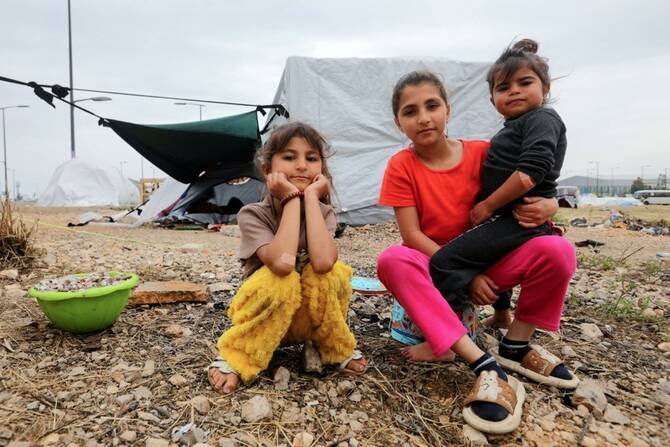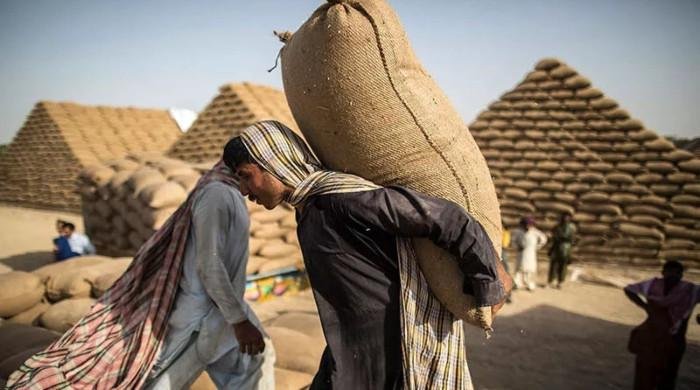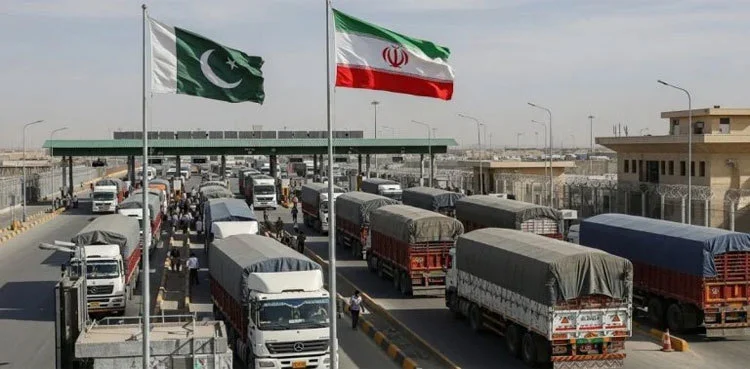
On April 25, 2026, Pakistan’s Ministry of Commerce issued the “Transit of Goods through Territory of Pakistan Order 2026”, formally notifying six land routes for the transportation of goods to Iran. The decision is framed as a pragmatic response to a concrete crisis: over 3,000 containers destined for Iran had been stranded at Karachi port following the US naval blockade of the Strait of Hormuz, which Washington imposed on April 13, 2026.
Yet beneath this humanitarian and commercial rationale lies a more complex legal and diplomatic reality. By reopening these corridors, Pakistan has not triggered automatic sanctions, but it has placed itself on a precarious legal tightrope, navigating the extraterritorial reach of US secondary sanctions while pursuing a distinctly autonomous regional strategy.
The central question is, does reopening trade corridors impose sanctions on Pakistan? Prior to argue on this, one must first understand the architecture of U.S. sanctions against Iran. The United States maintains a layered sanctions regime comprising both primary sanctions (binding on US persons and entities) and secondary sanctions (targeting non-U.S. entities who engage in certain prohibited activities with Iran).
The legal basis includes the Comprehensive Iran Sanctions, Accountability, and Divestment Act of 2010 (CISADA) and various Executive Orders, most notably EO 13902, which authorizes secondary sanctions on non‑U.S. persons operating in designated sectors of the Iranian economy. Secondary sanctions do not criminalize conduct per se; rather, they threaten to cut off foreign actors from the U.S. financial system, block their assets, or otherwise impose severe economic penalties.
Read More: Petroleum Minister, Iranian Envoy Review Pakistan-Iran Cooperation
Crucially, transit trade of non‑sanctioned goods does not automatically trigger these measures. The new Pakistani order permits the transportation of “transit goods in transport units, consigned from the territory of a third country and destined to a place in the territory of Iran” through Pakistan. The text imposes only one substantive condition: a cashable bank guarantee equivalent to Pakistan’s applicable import levies. The order does not sanction or facilitate Iranian oil or gas exports; it is concerned with general cargo. That distinction is not trivial.
However, the absence of a prohibition does not mean the absence of risk. The U.S. has repeatedly warned “anyone considering business deals with Iran to be aware of the potential ramifications.” More directly, the Office of Foreign Assets Control (OFAC) has sanctioned Chinese “teapot” refineries and shadow fleet operators for materially assisting Iran’s oil trade.
The question, therefore, is not whether Pakistan has violated a black letter prohibition, but whether its actions fall within the broad, discretionary net of U.S. secondary sanctions enforcement.
Mediation and Its Contradictions
Pakistan’s decision cannot be understood in isolation. At the very same time that Islamabad issued the transit order, it was actively mediating ceasefire talks between Washington and Tehran. High‑level US‑Iran negotiations formally commenced in Islamabad in April 2026, with Pakistan stepping in as a mediator.
The transit order thus operates in a strange duality: while Pakistani diplomats sit with U.S. officials to negotiate an end to hostilities, Pakistani bureaucrats open land corridors that directly undermine the US naval pressure campaign.
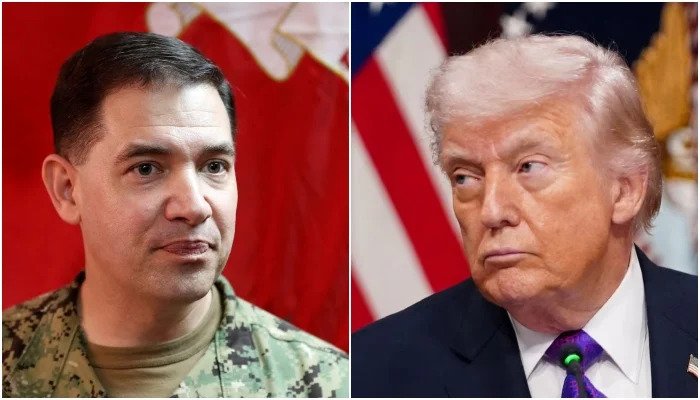
This duality has not gone unnoticed. Derek J. Grossman, a U.S. national security expert, accused Pakistan of “double‑dealing.” The America, warning that the land routes “will help Iran continue to resist U.S. pressure.” A retired U.S. colonel claimed that “Pakistan helps Iran break the U.S. naval blockade.”
Even Iran has questioned Pakistan’s neutrality: Ebrahim Rezaei, spokesperson for Iran’s National Security and Foreign Policy Commission, called Islamabad a “good friend” but stressed it “is not a suitable intermediary” and is “partial” towards American interests.
From a diplomatic perspective, Pakistan is attempting an audacious balancing act. By keeping the trade corridor administratively and legally distinct from its mediation efforts, Islamabad maintains plausible deniability: the transit routes are presented as a response to stranded containers and food shortages, not as a coordinated strategy to undermine U.S. policy.
Yet the timing and framing suggest otherwise. As one analysis observed, Pakistan “just punched a legal hole in the U.S. naval blockade of Iran while simultaneously mediating the ceasefire that depends on the same blockade for leverage.” Whether this reflects strategic genius or reckless provocation depends largely on U.S. tolerance.
Does Pakistan Face Sanctions?
The legal answer is nuanced but must be stated clearly: No, Pakistan has not been sanctioned simply for designating these transit routes. Sanctions are not self-executing; they require a specific administrative determination by OFAC. As of this writing, no such determination has been made against Pakistan or any Pakistani entity for activities under the 2026 order.
But the prudential answer is far more sobering. The U.S. has demonstrated a willingness to sanction even indirect facilitators of Iran’s economy. The Treasury Department has sanctioned over 1,000 individuals, vessels and aircraft linked to Iran since February 2025 as part of its “maximum economic pressure” campaign.
Moreover, a January 2026 analysis noted that “Pakistan has limited options to circumvent” U.S. punitive measures, with “the possibility of exemptions almost non‑existent.” Trump administration’s “maximum pressure” doctrine has been extended through tariff threats that could penalize any country maintaining commercial ties with Iran.
In case Islamabad proceeds with large scale transit trade, particularly, that trade includes dual use goods, petroleum products, or anything falling within designated sectors, the risk of secondary sanctions rises substantially.
Conversely, if the corridor remains limited to food, medicine, and non‑strategic goods, and if Pakistan ensures strict customs enforcement and transparency, the risk may be contained.
Regional Implications and the Future of Pakistan’s Autonomy
Beyond the sanctions question lies a larger geopolitical shift. The six designated routes connect Karachi, Port Qasim and Gwadar to border crossings at Gabd and Taftan, effectively transforming Pakistan into a land bridge between the Persian Gulf and Central Asia. The Gwadar‑Gabd route, in particular, is only 89 KMs long and cuts transit time from 18 hours to just three, reducing transportation costs by 45–55 per cent.
For China, this is significant: Gwadar is the crown jewel of the China‑Pakistan Economic Corridor (CPEC). By using Gwadar as a transit hub for Iran, Pakistan potentially accelerates Chinese access to Iranian markets and resources.
The corridor also serves Pakistan’s own interests. Traditional overland routes through Afghanistan have faced repeated disruptions, and Pakistan’s exports to Afghanistan declined sharply from $505.8 million to $219.5 million in the latter half of 2025. The Iran corridor offers an alternative westward passage to Central Asian markets, where Pakistan’s total trade remains a mere $429 million, vastly below its potential.
Yet this strategic autonomy comes at a cost. By challenging the U.S. blockade, Pakistan risks straining its relationship with Washington at a time when it continues to seek IMF support and military cooperation. The gamble is that US need for a mediator in the Iran conflict will outweigh U.S. displeasure over the transit corridors. So far, that calculation appears to hold, but it is a fragile equilibrium that could collapse with a single Treasury designation.
Read More: Iranian Foreign Minister Meets Pakistan’s CDF Munir in Islamabad
Pakistan’s reopening of trade corridors to Iran does not, in strict legal terms, impose sanctions upon Pakistan. Secondary sanctions are discretionary instruments of U.S. foreign policy; their application depends on political will, not automatic triggers. However, the act places Pakistan in a zone of significant legal and diplomatic risk.
The corridor undermines a core US strategic objective, the economic isolation of Iran, even as Pakistan claims to be an honest broker for peace. This contradiction is not necessarily fatal; it may even be deliberate. By adopting a posture of “constructive ambiguity,” Islamabad can plausibly claim that it is merely facilitating humanitarian trade while preserving deniability about any broader strategic alignment.
Nevertheless, the long term sustainability of this approach is doubtful. Secondary sanctions are an exercise in power, not law. If Washington perceives Pakistan’s actions as material support for Iran’s resistance, the consequences, financial restrictions, tariff penalties, or even direct designations could be swift and severe.
Pakistan has stepped onto a legal and diplomatic tightrope. Whether it can remain balanced depends on the goodwill of the very power whose sanctions it is tacitly bypassing. That is not a stable foundation for any nation’s foreign policy.
*The views presented in this article are the authors’ own and do not necessarily reflect the views of The Diplomatic Insight.

Dr. Sayed Amir Hussain Shah
Dr. Sayed Amir Hussain Shah is Director Research at the Council for Global Affairs & Policy Alternatives (CAP). CAP is a Pakistan-based think tank dedicated to providing diverse, alternative perspectives on global and societal issues through research, analysis, and advocacy. It promotes interdisciplinary dialogue and challenges traditional narratives on economic, social, and environmental challenges. He is a Visiting Assistant Professor at Shaheed Zulfikar Ali Bhutto Institute of Science and Technology (SZABIST),contributing to the field of International Relations through academic instruction and research. Holds a PhD from Department of International Relations, Karachi University, with a focus on Maritime Security in the Indian Ocean. He brings a strong academic foundation in political science and international affairs, complemented by skills in team building and management. Published multiple research articles in accredited national and international journals and holds certifications in leadership and human resource management.He is dedicated to advancing knowledge in maritime security, geopolitics, middle east affairs, Pakistan’s foreign policy and regional security dynamics. He can be reached at dr.syedamirhshah@gmail.com