Tajikistan, which gained independence, began its relations with the countries of the world and strengthened them by creating a peace-making school and its constructive initiatives. Independence and strengthening relations between states are considered the main conditions for the development and political, social and economic prosperity of the state, and all countries are constantly striving to expand and strengthen them in order to achieve their main goal.
South Asia is considered one of the most important strategic regions, playing a key role in regional and cultural relations with powerful and strategic countries. Its population is more than 2 billion people, which is more than 20% of the world’s population. The region is located between the sea routes of the Indian Ocean, the Persian Gulf and the Asia-Pacific, the land routes of Central Asia connecting Europe with the East.
It has huge natural and human resources, and such valuable geographical levers make it a prime and profitable target for financial capital. It is a transit point for most of the resources and production that are transported to the world. In addition, this region is important in terms of its political scenarios. On the occasion of the 35th anniversary of Tajikistan’s independence, we would like to take a brief look at the development of Pakistan’s cultural diplomacy in the process of shaping a “multipolar” world.
The Republic of Tajikistan is one of the countries that has close geographical ties with Pakistan, and diplomatic relations between the two countries were established on June 6, 1992. The friendship between Tajikistan and Pakistan is historical; both countries formed part of the Silk Road and have close cultural, economic and political relations.
Thus, with a common language and literature, art and ties between these countries have developed to this day, and various projects, including “CASA 1000” and cultural programs such as “Iqbal Day”, play a strategic role in sharing abundant natural resources and their creative initiatives in solving various global issues. It is a matter of honor and pride for both countries that such historical cities as Lahore and Islamabad have been accepted as sister cities of Dushanbe.
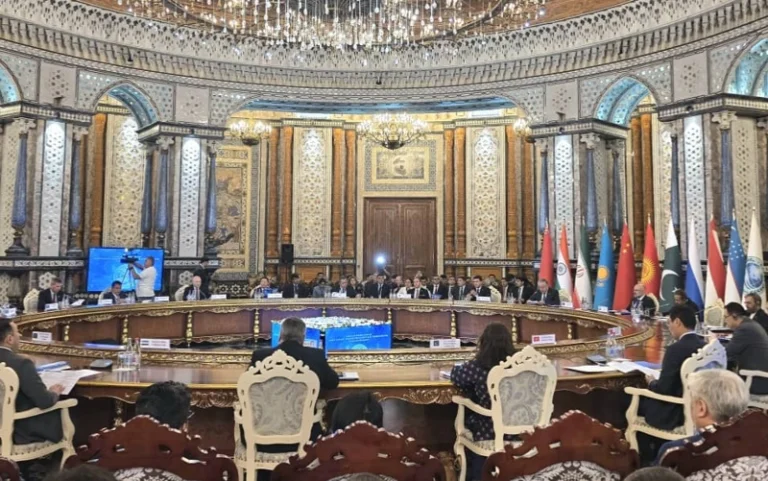
Both countries pay special attention to the development of effective relations within the framework of forums and organizations, in particular the Shanghai Cooperation Organization and ECO, and consider the development and strengthening of multilateral cooperation in the cultural and humanitarian spheres as priority areas of activity.
Thus, scholars and writers consider literary ties and friendship of peoples and nations to be cultural heritage between the peoples of the region and consider it important in the development of cultural diplomacy between these countries.
The Republic of Tajikistan, as an initiative country, has successfully launched the further development of mutually beneficial cooperation with these countries. At the initiative of the National Academy of Sciences of Tajikistan, the Southeast Asia Department was established at the Institute for the Study of Asian and European Countries of the National Academy of Sciences of Tajikistan.
Scientists, historians, and academics attach great importance to the development of language, literature, culture, tourism, trade, and economic relations with the South Asian region, especially India and Pakistan. Science and education in the countries of South and East Asia are the subject of special study by the scientists of the Institute.
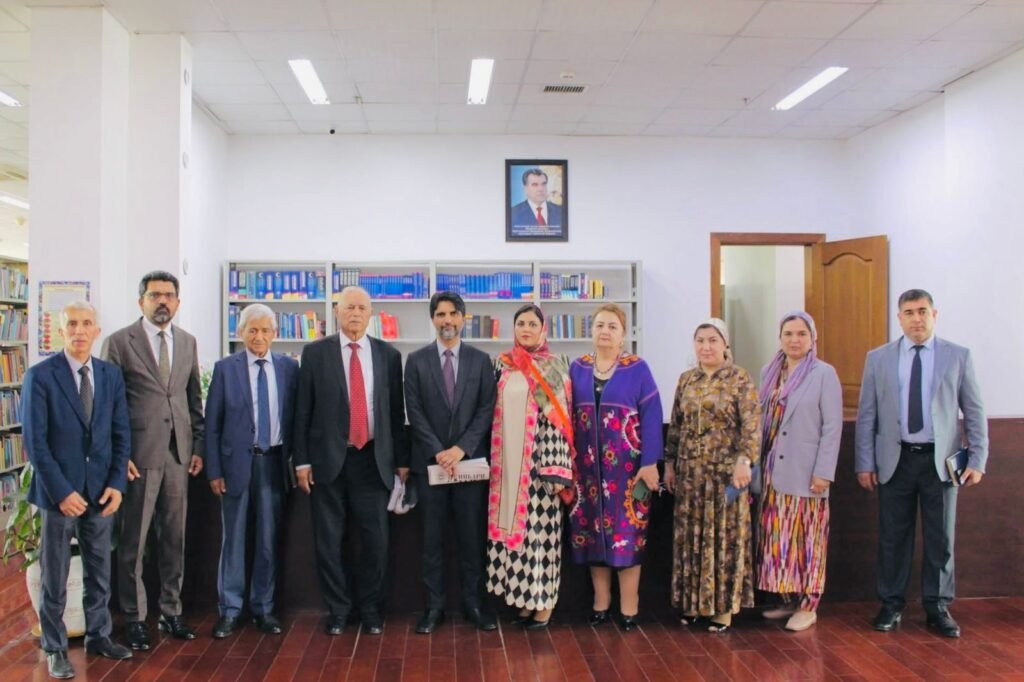
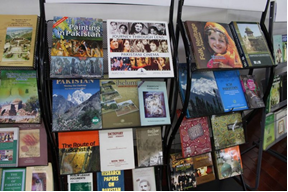
It is worth noting that the National Library of Tajikistan has established book corners of 19 countries of the world, where the history, culture, and national traditions of the countries are presented. In this regard, on April 29, 2026, at the initiative of the National Library of Tajikistan in cooperation with the Embassy of Pakistan, the “Pakistan Book Corner” was opened.
Read More: Pakistan Corner Inaugurated at Tajikistan’s National Library in Dushanbe
It should be noted that the “Pakistan Book Corner” is established within the framework of the Memorandum of Understanding on Cooperation between the two countries Tajikistan and Pakistan available to a wide range of readers, researchers, students and other interested parties obtaining detailed information about the region and its people.
According to the sources the National Library of Tajikistan has close cooperation with more than 60 institutions of international organizations and world-famous libraries, and signed Memorandums of Understanding. Because the expansion of beneficial relations, the implementation of programs, joint projects, the exchange of advanced experience and the use of modern information capabilities are among the priority areas of the library’s activities.
Within the framework of such historical ceremony, the newly elected Ambassador of the Islamic Republic of Pakistan to the Republic of Tajikistan, Irfan Ahmed, stated that the expansion of cooperation in the field of librarianship, the exchange of literature and the development of joint programs between cultural institutions can contribute to raising the level of public education and strengthening the friendship of peoples.
The President of Tajikistan, Emomali Rahmon, in his messages, meetings and consultations, constantly emphasizes that culture is the essence of every nation, and in order to further develop national culture, preserve national heritage, traditions and values, all existing opportunities should be used.
Because the revival of the spiritual heritage of the past, the preservation of historical monuments, the promotion of national culture, the globalization of ancestral celebrations and ceremonies, and similar good humanitarian measures are considered good humanitarian measures.
The country with its global public diplomacy in the light of unique school of peace intensified to promote harmony, prosperity, and sustainable economic projects, fostering cooperation and coordination to eliminate threats and public risks.
Consequently, the latest initiatives of Tajikistan, especially “Decade of Strengthening Peace for Future Generations” in the UN aims to inspire and unify diverse communities towards a progressive prosperity future of human beings and global environments protection.
Cultural and educational ties are an important factor in strengthening multilateral cooperation, and holding Cultural Days between member countries, including Tajikistan, Pakistan and Iran, will expand the foundations for geo-cultural development.
It is worth noting that Tajikistan and Pakistan have rich historical and cultural ties, and their cooperation has been developing year by year, and the establishment of such corners is considered one of the important forms of cultural diplomacy and will contribute to the strengthening of interstate relations.
In short, Tajikistan and Pakistan can, by implementing it, establish cooperation, continuously exchange constructive ideas, develop and organize more festivals and films and visits between each other’s peoples, develop trade, economy and tourism, and expand cooperation within the framework of the Shanghai Cooperation Organization, ECO and the Conference on Interaction and Confidence Building Measures in Asia (CICA) in creating energy and industrial integration of the countries of the region and reducing concerns.
Finally, a fragment of a friendship poem of the scholar and Iqbaliyat-lover, Sayfiddin Akramzoda, from Tajikistan is presented as a gift to the people of Pakistan:
Tajikistan ki subh se Pakistan ki sham munawwar hu,
Tajikistan atr se Pakistan ki taba muattar hu.
Dusti ki jilo, hamdardi aur derina vahdatu yagonagi,
Pakistan ki taraf se Tajikistan ku muyassar hu.
Taarikhi dusti ki rawish mi hamesha,
Tajiikistan ki vuhabbat se Pakistan ka dil musakkhar hu.
*The views presented in this article are the authors’ own and do not necessarily reflect the views of The Diplomatic Insight.

Mirsaid Rahmonov
Mirsaid Rahmonov is a Senior Research Analyst at the Institute of Asian and European Studies, Tajikistan.