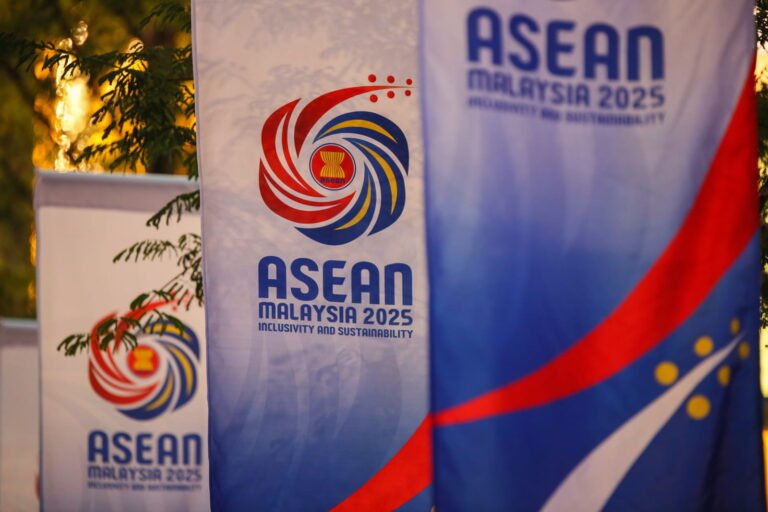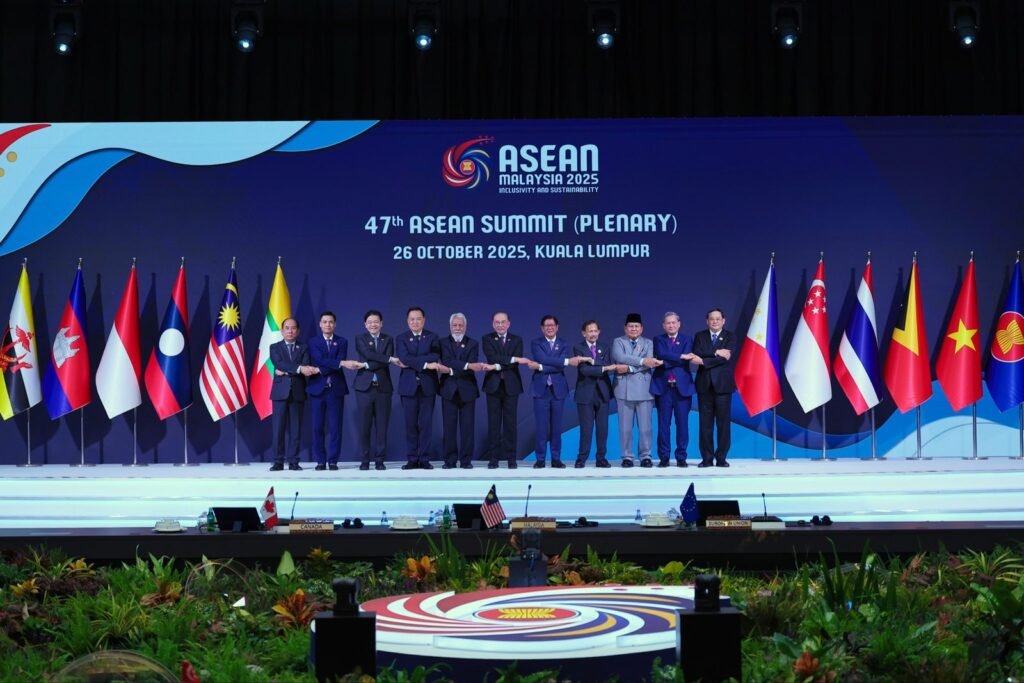
As the leaders of the Association of Southeast Asian Nations (ASEAN) convene for their summit this week, the spotlight falls on the bloc’s continued relevance in an era of great-power rivalry and global uncertainty. In the Indo-Pacific region, where strategic competition between the United States and China is intensifying, ASEAN has positioned itself as a pivotal force for stability and cooperation. Despite internal challenges and external pressures, ASEAN remains a key player in shaping regional norms and fostering dialogue.
This piece examines why ASEAN remains relevant in the current global geopolitical context – analyzing ASEAN as a regional bloc, highlighting the roles of important member states, and proposing concrete recommendations to strengthen ASEAN’s relevance and resilience.
ASEAN’s Strategic Significance in the Global Order
In a time of global fragmentation and geopolitical flux, ASEAN stands out as an economic and diplomatic bright spot. The bloc’s ten nations collectively form a significant market of roughly 690 million people with a combined nominal GDP of over $4.2 trillion. ASEAN’s economy has shown resilient growth – projected at 4.6% in 2024, outpacing growth in the United States (~1.7%) or the European Union (~1.1%).
This robust performance, coupled with a youthful demographic and critical position astride key maritime trade routes, underpins ASEAN’s global importance. ASEAN is already the EU’s third-largest trading partner outside Europe with bilateral trade of €258.7 billion, and it has attracted massive foreign investment (over $400 billion in the last two years, including a record $230 billion in 2023). Such figures underscore that Southeast Asia has become a rare economic bright spot amid global uncertainty.
Equally significant is ASEAN’s geopolitical role through its principle of “ASEAN centrality.” ASEAN has long served as the architect and convener of the Asia-Pacific’s multilateral institutions, providing neutral ground for great-power engagement. Since the 1990s, ASEAN-led forums like the ASEAN Regional Forum (ARF), East Asia Summit (EAS), ASEAN Plus Three, and ASEAN Defense Ministers’ Meeting-Plus (ADMM+) have formed a comprehensive regional architecture that places ASEAN at its core. ASEAN’s convening power – as the only neutral, credible broker trusted by all sides – allows it to bring major powers to the table and mitigate mistrust between rivals.
As scholar Amitav Acharya notes, despite the strains of U.S.–China rivalry, “ASEAN centrality remains relevant” in managing tensions, by restraining great-power behavior and promoting peaceful norms. Indeed, both Washington and Beijing see value in respecting ASEAN-led processes, recognizing that sidelining ASEAN would harm their own regional credibility. This convening role has helped prevent outright confrontation – for example, ASEAN unity has denied China legitimization of its expansive South China Sea claims and avoided major military clashes in those disputed waters.
Read More: After 14 Years Wait, Timor Leste Becomes 11th ASEAN Member
ASEAN also leverages strategic multi-alignment as a tool to remain relevant amidst geopolitical competition. Rather than choosing sides in a new Cold War, ASEAN today pursues pragmatic, interest-based engagement with all major powers. This “strategic multi-alignment” marks a proactive evolution beyond the reactive non-alignment of the Cold War era. In practice, Southeast Asian states collectively have expanded trade and diplomatic ties with China, the United States, the European Union, Japan, India, and more – diversifying partnerships without compromising autonomy.
For instance, ASEAN’s trade with China rose ~15% in 2024 while trade with the U.S. climbed 12%. At the same time, the bloc has deepened ties with new partners: the inaugural ASEAN–Gulf Cooperation Council Summit, hosted by Malaysia in 2023, opened a pathway for an estimated $50 billion in new ASEAN–Gulf trade by 2027. Investors from the Middle East, among others, are increasingly drawn to Southeast Asia’s infrastructure and digital sectors, reflecting ASEAN’s success in turning global tensions into economic opportunities. This balanced engagement – cultivating multiple partnerships deliberately – allows ASEAN to maximize economic gains while avoiding excessive dependence on any single power.
Roles of Key ASEAN Member States
ASEAN’s relevance is bolstered by the contributions and strategies of its major member states, each of which plays a unique role in the bloc’s cohesion and external relationships. Indonesia, as ASEAN’s largest member (with 280 million people and the bloc’s biggest economy), often serves as the de facto leader. Jakarta champions ASEAN as the cornerstone of its foreign policy and has invested diplomatic capital in ASEAN-led initiatives. In 2023, Indonesia’s ASEAN chairmanship focused on maintaining unity amid the Myanmar crisis and advancing the ASEAN Outlook on the Indo-Pacific (AOIP) – a collective vision of regional order emphasizing inclusivity and ASEAN centrality.
Analysts argue that Indonesia, now under President Prabowo Subianto, has the credibility and opportunity to be a regional leader and even a standard-bearer for the Global South, but must align its domestic reforms with this international role (East Asia Forum Editors, 2025). Notably, Indonesia co-chairs the RCEP free trade agreement’s Joint Committee and is pivotal in ensuring ASEAN remains the hub of regional economic cooperation. To fulfil this potential, however, Indonesia is encouraged to look beyond bilateral deals and take a more entrepreneurial lead in multilateral rule-making through ASEAN, which would both bolster the bloc and benefit Indonesia’s own economy.
Malaysia, which holds the ASEAN Chair in 2025, has also emerged as an important player in steering ASEAN’s agenda. Under Prime Minister Anwar Ibrahim, Malaysia has prioritized economic resiliency and regional integration. The May 2025 ASEAN Summit in Kuala Lumpur saw tangible progress on issues like tax modernization, trade facilitation, and governance reforms – moving from talk to action to keep ASEAN competitive and forward-looking. Malaysia has worked closely with Indonesia to lay the groundwork for an ambitious ASEAN vision, leveraging a strong personal rapport between Anwar and President Prabowo.
This partnership exemplifies how leadership coordination among key member states can reinforce ASEAN unity. Malaysia has also been active in broadening ASEAN’s external linkages – for example, hosting the first ASEAN–GCC Summit and advocating for deeper engagement with the Global South. Such initiatives not only diversify ASEAN’s partnerships but also reinforce ASEAN’s role in global economic resiliency.
Singapore provides another example of an ASEAN state enhancing the bloc’s relevance. As one of Asia’s leading financial and technology hubs, Singapore often acts as ASEAN’s bridge to developed economies and global markets. It exemplifies ASEAN’s multi-alignment strategy: even as it signed $8.2 billion in new agreements with China in 2024 (in areas like trade, tech and infrastructure), Singapore has simultaneously tightened defense cooperation with the U.S. and expanded trade ties with the EU.
This balanced approach by Singapore demonstrates how ASEAN countries can engage all sides for mutual gain – and how national initiatives can complement ASEAN’s collective autonomy. Singapore is also a proponent of high-standard economic integration (it was among the first ASEAN members in the CPTPP trade pact) and of digital economy cooperation, spearheading efforts like the ASEAN Digital Economy Framework Agreement. By pursuing innovation and rule-making in emerging domains, Singapore helps ASEAN remain economically dynamic and relevant to new global opportunities.
Read More: Indonesia Must Step Up as ASEAN’s Economic Integration Leader
Vietnam and the Philippines have, in recent years, played growing roles, especially in security and economic domains. Both Hanoi and Manila face intense pressure in the South China Sea disputes and have responded by strengthening their deterrence and external partnerships – actions that carry broader implications for ASEAN. Vietnam, a fast-growing economy and one of ASEAN’s most strategically vigilant members vis-à-vis China, has deepened security ties with powers like the U.S., India, and Japan while still engaging China economically. In 2023, Vietnam elevated relations with Washington to a Comprehensive Strategic Partnership, signaling its intent to balance Chinese influence with strong U.S. ties.
Meanwhile, the Philippines under President Ferdinand Marcos Jr. has revitalized its alliance with the United States, expanding American military access in the country from five to nine sites and hosting new U.S. missile defense systems. Many of these deployments face north toward the Taiwan Strait, aligning Manila more closely with U.S. Indo-Pacific strategy and reflecting a harder stance on Chinese expansionism. However, Manila’s pivot comes with trade-offs – it has already provoked economic countermeasures from Beijing, affecting Chinese tourism, infrastructure investment, and agricultural imports in the Philippines.
This illustrates a broader point: individual ASEAN states adopt different strategic postures, from bandwagoning with China to hedging or balancing against it. Those choices can at times diverge, but collectively they also demonstrate ASEAN’s importance as a regional balancer. The Philippines, for instance, has attracted $12 billion in manufacturing investments relocating from China since 2023 as companies seek alternatives. a benefit that aligns with ASEAN’s goal of regional supply chain resilience. By coordinating such diverse national strategies under the ASEAN framework, the bloc effectively harnesses its members’ strengths while mitigating the risks of great-power alignment.
At times, national interests do strain ASEAN unity – as seen when Cambodia or Laos, close partners of China, have obstructed joint statements on the South China Sea. But even these challenges highlight ASEAN’s relevance as the primary forum where Southeast Asian states, regardless of size or alignment, come together to negotiate common positions. ASEAN’s consensus-based decision-making gives every member a voice, which helps smaller states like Brunei or Laos ensure their concerns are heard in a region often dominated by larger economies.
The inclusion of all ten (soon to be eleven) Southeast Asian countries itself underscores ASEAN’s central idea that the region’s stability must be a collective endeavor. From Jakarta to Hanoi and Manila to Singapore, the choices of individual ASEAN members gain greater weight when channeled through a unified ASEAN platform.
Challenges to ASEAN’s Relevance and Cohesion
Despite its strengths, ASEAN faces significant internal and external challenges that test its relevance. Externally, the U.S.–China rivalry poses a direct challenge to ASEAN centrality. Both superpowers have advanced competing visions for regional order – from China’s Belt and Road Initiative to America’s Indo-Pacific Strategy – raising fears that Southeast Asia could be pulled into rival blocs or security arrangements that bypass ASEAN.
For example, the emergence of “minilateral” security groupings like the Quad (involving the U.S., Japan, India, and Australia) and AUKUS has caused unease in ASEAN, with some members worrying these groupings might undermine ASEAN-led mechanisms. ASEAN countries themselves are not united in views on such initiatives: some see them as complementary, while others view them as threats to ASEAN’s central role, reflecting each state’s divergent security alignments. If major decisions on Indo-Pacific security started occurring outside ASEAN forums, the bloc’s long-term centrality could indeed erode.
So far, ASEAN has responded by asserting its own Indo-Pacific Outlook (the AOIP) and by inviting all powers to engage under ASEAN-centric frameworks that emphasize inclusivity and rules. But maintaining strategic autonomy is a delicate balancing act as economic dependence on China grows (China has been ASEAN’s top trading partner for 15 years), even while many ASEAN members rely on the U.S. for security guarantees.
Internally, ASEAN’s consensus model and principle of non-interference – while foundational to its unity – can hamper timely and effective action on urgent issues. The Myanmar crisis since the 2021 military coup is a case in point. ASEAN’s inability to enforce its Five-Point Consensus (a peace plan agreed in 2021) has frustrated both ASEAN and external partners. Myanmar’s military junta has largely ignored ASEAN’s plan, and its continued obstructionism in ASEAN meetings threatens the bloc’s credibility. Singapore’s Defense Minister Ng Eng Hen warned in late 2024 that Myanmar’s behavior “risks undermining the ASEAN centrality that we have painstakingly built,” with ASEAN’s highest defense forum even at risk of losing credibility if consensus is continually blocked.
Read More: The Ukraine War Could Finally End, and Here’s Why It Matters for ASEAN
Indeed, at a recent ASEAN Defense Ministers’ Meeting, Myanmar’s objections caused key regional initiatives to stall, prompting ASEAN ministers to remind Myanmar not to use ASEAN for its “own politics of retaliation”. This incident highlights how internal divisions and norm violations can weaken ASEAN’s cohesion and international standing. Diversity among member regimes – ranging from democratic to authoritarian – means ASEAN sometimes struggles to present a united front on human rights, territorial disputes, or responses to internal conflicts. Without reforms, such challenges could widen the gap between ASEAN’s rhetoric of unity and the reality of limited action.
Another challenge lies in ASEAN’s institutional capacity. Despite a growing agenda of economic integration and security cooperation, the ASEAN Secretariat remains modest in resources and authority. Implementation of ASEAN agreements often relies on national follow-through, which varies across members. Analysts argue that to stay effective, ASEAN must upgrade its institutional mechanisms – for example, by strengthening the Secretariat’s mandate, adopting more flexible decision-making in crises, and improving compliance monitoring.
However, any reform bumps up against the “ASEAN Way” of strict sovereignty and consensus. Member states have historically been wary of delegating authority to a supranational body or voting by majority, fearing it could dilute national sovereignty. This tension between the need for effective collective action and the tradition of non-interference forms a core dilemma for ASEAN’s future relevance.
Despite these challenges, it is important to note that ASEAN’s track record is one of evolution and resilience. The bloc has weathered past crises – from Vietnam’s invasion of Cambodia in the 1980s to the Asian Financial Crisis in 1997 and regional haze and pandemics – often emerging with stronger frameworks for cooperation. Today’s tests (great-power rivalry, Myanmar’s crisis, post-COVID economic recovery, climate change) similarly present an impetus for ASEAN to adapt.
As observers have noted, ASEAN centrality is “neither predetermined nor guaranteed”– it requires continual renewal through collective leadership and problem-solving. The upcoming ASEAN Summit provides an opportunity for member states to candidly address these issues and to recommit to a shared vision for ASEAN 2025 and beyond. There are encouraging signs: for instance, ASEAN economic ministers, recognizing geo-economic uncertainties, have endorsed holding an RCEP Leaders’ meeting on the sidelines of the summit – aiming to fast-track implementation of the trade pact, address supply chain vulnerabilities, and champion WTO reforms. Such proactive steps suggest that ASEAN can adjust its course to remain the primary platform for regional cooperation.
Policy Recommendations to Strengthen ASEAN’s Relevance
To ensure ASEAN remains a relevant and resilient regional bloc in this evolving landscape, concrete actions are needed at both the institutional and national levels. The following policy recommendations offer steps that ASEAN and its member states can pursue:
Strengthen ASEAN’s Institutional Capacity and Cohesion: ASEAN should pursue targeted institutional reforms to improve its ability to respond to crises and implement decisions. This includes bolstering the ASEAN Secretariat with greater resources and expertise, and empowering it to monitor compliance with agreements more rigorously. Member states ought to consider relaxing the consensus rule in specific, sensitive cases – for example, by expanding the use of “ASEAN Minus X” decision-making, where a dissenting country can opt out while the rest move forward.
Adopting more flexible and timely decision-making mechanisms for urgent issues would help ASEAN address security flashpoints or humanitarian crises without being paralyzed by internal veto. These reforms will require collective political will: leaders must recognize that a modest pooling of sovereignty in agreed areas can enhance, not diminish, ASEAN’s collective influence. Additionally, greater coordination among ASEAN-led forums (ARF, EAS, ADMM+, etc.) should be pursued to avoid duplication and present a united front on key issues.
Reaffirm ASEAN Centrality in the Indo-Pacific: ASEAN must actively guard its role as the primary platform for regional diplomacy. One way is by fully operationalizing the ASEAN Outlook on the Indo-Pacific (AOIP). This ASEAN-crafted vision should be backed with concrete programs – for instance, cooperative projects on maritime security, infrastructure connectivity, and sustainable development – that demonstrate ASEAN’s leadership on Indo-Pacific priorities. At the same time, ASEAN should not view new minilateral groupings purely as threats; instead, it can engage and shape them.
Read More: Thailand, Cambodia Agree to ASEAN’s Monitoring of Ceasefire
The bloc could establish regular dialogue or coordination with forums like the Quad – for example, inviting Quad representatives to discuss humanitarian or infrastructure initiatives with ASEAN, or proposing joint exercises on disaster relief that include both ASEAN and Quad members. By constructively engaging external initiatives, ASEAN can ensure they complement rather than undermine ASEAN-led processes. It is also recommended that ASEAN strengthen its partnerships with other regional organisations (such as the African Union, EU, or GCC) to exchange best practices and present a stronger voice on global governance reforms. This will reinforce ASEAN’s image as an indispensable hub in the evolving multilateral system.
Enhance Strategic Autonomy through Diversified Partnerships: To avoid overreliance on any single major power, ASEAN should deepen its “strategic multi-alignment” approach. This means diversifying economic and security partnerships further – building on the momentum of recent years. ASEAN members should continue expanding trade and investment ties with partners like the EU, India, Japan, South Korea, Australia, and the Middle East, as well as within the bloc. Swift implementation of the Regional Comprehensive Economic Partnership (RCEP) is crucial to boost intra-ASEAN and ASEAN–Northeast Asia trade.
Likewise, ASEAN should pursue the upgrade of its free trade agreement with China (ASEAN-China FTA 3.0) and negotiate new economic agreements with other regions, while insisting on open, rules-based trade practices. In the security realm, ASEAN can explore observer or affiliate status with initiatives focused on maritime security or cybersecurity, ensuring it stays engaged in discussions that affect the region. The key is maintaining balance: by having multiple strong partners, ASEAN dilutes the pressure to choose sides and strengthens its collective bargaining position.
For example, continuing to welcome investment from both China and the West, or holding joint military exercises with various powers, can yield economic and security benefits without compromising ASEAN’s independent stance. Each member state, according to its capacity, should strive for this balance – e.g., smaller states can leverage development assistance from different donors, while bigger states like Indonesia and Vietnam can act as interlocutors equally comfortable in Washington, Beijing, or New Delhi.
Address Internal Divergence and Uphold ASEAN Norms: ASEAN’s credibility depends on its unity and adherence to its own norms. To that end, member states must collectively recommit to the fundamental principles: peaceful settlement of disputes, non-use of force, and mutual respect for sovereignty. When a member deviates grossly from these principles – as Myanmar’s junta has – ASEAN should consider more assertive measures. This could include setting clear benchmarks and timelines for compliance with ASEAN agreements (for instance, the Five-Point Consensus on Myanmar) and outlining consequences for non-compliance, such as suspension from certain ASEAN meetings or cooperation programs.
While punitive action goes against ASEAN’s traditional approach, a united stance in defense of ASEAN’s norms is necessary to prevent individual cases from eroding the whole bloc’s standing. Additionally, ASEAN should strengthen its regional conflict resolution tools. Revitalizing dormant mechanisms like the ASEAN High Council (a conflict mediation body envisioned in the Treaty of Amity and Cooperation) or empowering the office of the ASEAN Chair to mediate in disputes could provide intra-ASEAN avenues to manage disagreements before they fester. By proactively resolving internal differences and presenting a cohesive front, ASEAN will be better able to assert centrality in dealings with external powers.
Prioritise Emerging Issues and Public Goods: To stay relevant, ASEAN must also address the new transnational challenges that matter to its citizens and the world. Issues like climate change, public health, and digital transformation are increasingly vital in the geopolitical context. ASEAN should position itself as a leader in regional public goods provision – for example, coordinating disaster response and climate mitigation efforts, sharing best practices on pandemic preparedness, and developing common standards for the digital economy.
The bloc’s plans for a Digital Economy Framework Agreement are a step in this direction, aiming to harmonize regulations and spur a regional digital market by 2030. ASEAN should expedite such initiatives, with support from dialogue partners, ensuring that the benefits of the digital revolution and green transition are shared across all member states. By delivering tangible cooperation in these domains, ASEAN will reinforce its value proposition not just to elites but to the broader populace of Southeast Asia. It will demonstrate that beyond geopolitics, ASEAN is essential to managing complex issues that no single country can tackle alone.
Read More: What Does Trump Hope to Achieve on His Tour to Asia and Will He Succeed?
Final Remarks
Half a century since its founding, ASEAN remains a linchpin of the regional order in Southeast Asia – a testament to its adaptability amid changing geopolitical tides. In the current environment of strategic rivalry and uncertainty, ASEAN’s role as a convener, mediator, and integrator is as critical as ever. The upcoming ASEAN Summit provides a timely platform for the bloc to reassert its centrality, take stock of challenges, and chart a path forward for the next decade.
While ASEAN faces tests – from great-power pressures to internal strains – it has proven adept at leveraging its collective diplomacy to maintain regional peace and prosperity. By implementing targeted reforms, uniting in the face of internal and external challenges, and proactively engaging with the wider world, ASEAN can bolster its relevance and resilience.
As this piece has outlined, ASEAN’s continued importance lies in its ability to act as one when it matters, without losing the rich diversity that is its strength. In an era when multilateral cooperation is needed to address both traditional security issues and emerging transnational threats, ASEAN’s long-standing experience in consensus-building and dialogue is an invaluable asset. With enlightened leadership and a commitment to both continuity and change, ASEAN can remain what its founders envisioned: a cornerstone of regional stability and a dynamic hub of global engagement – in 2025 and for decades to come.
*The views expressed in this article are the author’s own and do not necessarily reflect the editorial policy of TDI.

Harry Myo Lin
Harry Myo Lin is a Myanmar-born peacebuilder, political analyst, and writer currently based in Vienna, Austria. Recognized by Time Magazine in 2019 as one of the “Young Leaders Shaping the Decade,” he has worked extensively on interfaith dialogue, human rights, and conflict transformation across Asia. He currently consults with international organizations and writes on diplomacy, governance, and Southeast Asian affairs.