The International Atomic Energy Agency (IAEA) has a “fragmented” safeguards regime, primarily drawing its mandate from the Treaty on Non-proliferation of Nuclear Weapons (NPT) Article III, to detect and prevent diversion of nuclear material from peaceful uses towards military programs.
It applies a three-tier safeguards regime, with notable exceptions: The Voluntary Offer of Agreement (VOA) for the Nuclear Weapon States (NWS), which is voluntary by nature. The Comprehensive Safeguards Agreement (CSA) for Non-Nuclear-Weapon States (NNWS) is not very “comprehensive,” as it relies only on state declarations and fails to detect clandestine facilities.
And the Additional Protocol (AP), which rescues the CSA by granting access rights to all facilities and materials, is too intrusive to be acceptable even to NPT members. And finally, the NPT outliers, such as India, have country-specific safeguards in tier III. In tier III, India has signed an exceptional AP tailored to its terms, which undermines the credibility and sanctity of safeguards as a means of independent verification.
India initially had a pre-NPT “item-specific” safeguards agreement with the IAEA, known as INFCIRC 66, which remains the model for safeguards applied outside the NPT. It announced a dubious Separation Plan in 2005, and converted its Item-specific agreement into a generic agreement under a tailored AP in 2009.
Read More: Pakistan Urges IAEA Probe into India’s Nuclear Material Thefts
Under this agreement, India can move safeguarded material in and out of safeguards to “optimize” fissile material production for weapons, which contradicts the international assurances that the IAEA safeguards are intended to provide.
The tailored AP India signed with the IAEA is too flexible to permit the movement of “safeguarded nuclear material in and out of its unsafeguarded facilities,” which the original AP (1997) aimed to prevent within the NPT. The IAEA also has a similar AP agreement with the US that carries a “national security exclusion” clause, under Article Ib and 1c, to restrict IAEA access.
These exceptional safeguard agreements question the sanctity and integrity of the IAEA’s safeguards regime, which is presented as a model for verifying the proposed Fissile Material Cut-off Treaty (FMCT). It also strengthens the stance of NPT members, such as Iran, that they are punished for the same alleged diversion of safeguarded material under the NPT, even as the IAEA is formally facilitating the same for India through safeguards outside the NPT.
The primary and stated purpose of these safeguards is to “detect and prevent diversion” of safeguarded nuclear material from civil power plants to unsafeguarded fissile material production for weapons; however, India’s safeguards agreement with the IAEA does the reverse, it allows it and legitimizes it.
Unlike Pakistan’s functionally clean separation between civilian and military facilities, the former remain under IAEA safeguards under a facility-specific arrangement, India has a dubious separation with mutual overlap between the three streams: Civilian Safeguarded, Civilian Unsafeguarded, and Military Facilities.
The flexibility in India’s tailored AP permits movement of material between civilian and non-civilian facilities, thus raising questions about the very sanctity of safeguards that are supposed to “guard against proliferation,” not to “guard the proliferation.”
Read More: Destabilizing Global Impacts of India’s Agni-VI
From a historical perspective, it was the flexibility of the safeguards and self-inspection-based verification that enabled India to divert fissile material from an imported reactor and use safeguarded material in a nuclear test in 1974.
This peculiar case of proliferation through circumvention violated the strongest pillar of the NPT, on detecting and preventing diversion of nuclear material and technology from peaceful uses to weaponization. It offers a classic example of proliferation through diversion and circumvention that continues to haunt the non-proliferation regime and the regional arms control efforts in South Asia.
India was the first country to violate safeguards, triggering the non-proliferation regime to strengthen regulation through the NSG, which now exempts India through exceptional safeguards flexibility. The fact that India announced the separation plan (2005) and signed the AP (2009) as its credentials for NSG membership makes cooperation under the NSG questionable, which requires a “clean and strict separation” of civil and military material and facilities.
For instance, under the tailor-made AP, India can flexibly move nuclear material between safeguarded and unsafeguarded facilities on a “temporary or campaign basis.”
John Carlson suggests that, under these safeguards, India has the flexibility to use safeguarded material to produce unsafeguarded nuclear material, which is inconsistent with the IAEA statute, which requires that the IAEA’s cooperation not further any military purpose. In this case, IAEA furthers India’s military program as the AP legitimizes cooperation with other countries.
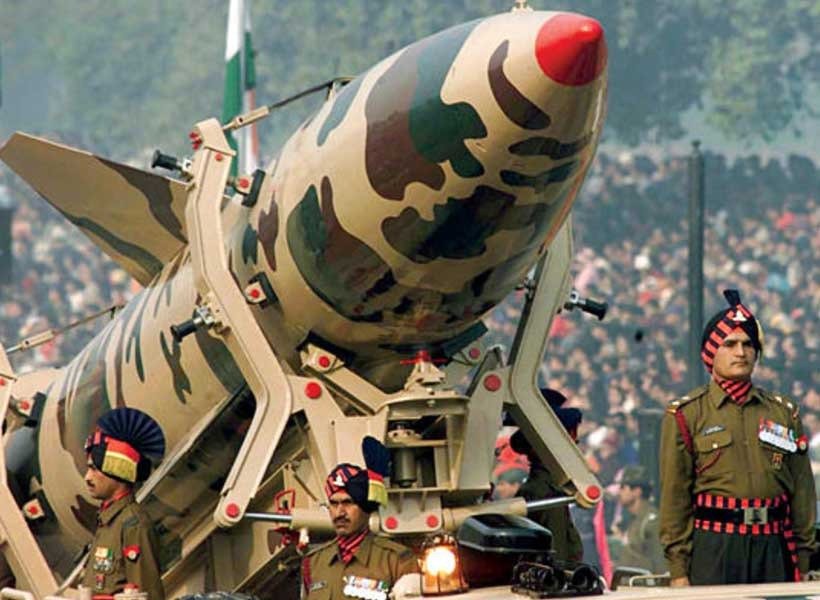
Additionally, India has one of the largest stocks of unsafeguarded reactor-grade plutonium and is the largest producer of fissile material outside the NPT, thereby enlarging its prospective arsenal. And the facility to move alternative sources of fissile material between strategic nuclear programs and to allow safeguarded material to be used to produce unsafeguarded nuclear material.
Read More: Pakistan, IAEA Sign Six-Year Framework for Peaceful Nuclear Cooperation
In fact, this loophole, used as a lure for a cut-off on fissile material production, which would add to India’s prospective arsenal once there is a ban on future production under lax and flawed regulations, has become a “palatable” rationale for India’s current stance on an FMCT.
The safeguards model that is imposed on the NPT NNWS members within the framework is used to legitimize India’s horizontal proliferation outside the regime.
It raises questions about the sanctity of IAEA safeguards as criteria for NSG membership, and about the effective and international verification of the proposed FMCT, which relies on a Model Additional Protocol to prevent diversion and inversion of fissile material once there is a ban on future production. It raises questions about the legitimacy and sanctity of the IAEA’s fragmented safeguards regime.
First, the current drafts on proposed FMCT, such as the Preparatory Group Report (2018), the Group of Governmental Experts Report (2015), and the International Panel of Fissile Material (IPFM) Draft (2009), among others, rely on IAEA safeguards, such as CSA and AP, where states may sign individual agreements appropriate to their nuclear program.
It raises the question of whether, if individual countries sign safeguards on their own terms, they may end up signing flexible and partial safeguards that allow diversion.
The volunteer nature of safeguards would not only fail to effectively verify but may also end up legitimizing fissile material for nuclear weapons, in violation of the NPT. Second, the membership of NSG requires a “strict and clean separation” without any overlap, and when safeguards permit what the regime prevents, it questions and undermines the credibility of the regime if it grants membership to the violators.
Read More: When Praise Outpaces Safeguards
Third, IAEA safeguards, governed by NPT Article III, aim to prevent proliferation through diversion and circumvention rather than to legitimize proliferation outside the regime. The inconsistency in IAEA safeguards not only undermines its credibility but also questions its sanctity as a global nuclear watchdog entrusted with the prevention of proliferation.
Entrusting it with the verification of the proposed FMCT would lack both effectiveness and legitimacy to carry out the task, which seems beyond its capacity.
Therefore, to uphold and normalize the non-proliferation regime, the IAEA safeguards regime would warrant a revisit before it can be presented as a model for governing other regimes. It needs to effectively regulate the existing non-proliferation regime before it is applied to another proposed treaty.
This, in turn, may help develop NPT-independent and uniform safeguards to effectively verify the proposed treaty regulating fissile material for weapons. Only a strong safeguards regime, without any exceptions, would be able to prevent circumvention of internationally effective verification and prevent proliferation through diversion and inversion loopholes.
*The views presented in this article are the authors’ own and do not necessarily reflect the views of The Diplomatic Insight.

Atta Ullah
Atta Ullah is a Research Fellow at Baluchistan Think Tank Network (BTTN), Quetta. He can be reached at atta.ullah@bttn.org.pk