Persona non grata is one of the clearest examples of how international law balances diplomatic privilege with host-state sovereignty. The phrase is often translated as “unwelcome person,” but in diplomatic practice it has a more precise function. It is the formal label a receiving state uses when it no longer accepts a foreign representative in a diplomatic or consular capacity.
The concept is not primarily about proving guilt in court. It is about consent. Diplomatic relations operate on the premise that a host state agrees to receive the representative of another state. When that acceptance is withdrawn, the sending state is expected to recall the person or end that person’s functions.
The result is removal through diplomatic status management, not through ordinary arrest or prosecution while immunity applies.
This distinction is essential. Individuals holding diplomatic passports can be declared non grata before entering the receiving state, or after already serving at the mission. The receiving state also does not need to publish detailed reasons.
In practice, however, governments often give public explanations when a declaration is connected to alleged intelligence activity, interference in domestic affairs, public attacks on host institutions, repeated protocol violations, or conduct described as incompatible with diplomatic status.
The Vienna Convention Framework
The core diplomatic rule appears in Article 9 of the Vienna Convention on Diplomatic Relations. It permits the receiving state, at any time and without having to explain its decision, to notify the sending state that the head of mission or a member of diplomatic staff is persona non grata.
For other mission staff, the corresponding formulation is that the person is “not acceptable.” If the sending state does not act within a reasonable period, the receiving state may refuse to recognize the person as a member of the mission.
Consular personnel are governed by a related but distinct treaty structure. Article 23 of the Vienna Convention on Consular Relations allows the receiving state to declare a consular officer persona non grata or another member of consular staff not acceptable.
If the sending state fails to recall the person or terminate the person’s functions, the host state may withdraw the exequatur or cease to regard that individual as consular staff.
This architecture also explains why persona non grata is practical. Diplomatic agents enjoy strong inviolability and broad criminal immunity. Consular officers receive more functional protection tied to consular acts. In both systems, the host state needs a lawful way to end recognized functions without breaching protected status.
Read More: What Does an Honorary Consul Actually Do?
Diplomatic and Consular Consequences
Although the phrase persona non grata is widely used in public reporting, the legal consequence depends on the person’s category. A diplomatic agent, an administrative or technical staff member, and a consular officer do not occupy the same legal position. The differences matter whenever status or immunity is assessed.
| Scenario | Declaration and legal basis | Key host-state leverage |
| Diplomatic agent or head of mission | Persona non grata under VCDR Article 9 | Refuse to recognize the person as a mission member if not recalled |
| Other mission staff | Not acceptable under VCDR Article 9 | Use the same refusal of recognition mechanism |
| Consular officer or consular staff | Persona non grata or not acceptable under VCCR Article 23 | Withdraw the exequatur or cease to consider the person consular staff |
Why Host States Use the Mechanism
Persona non grata is not a criminal verdict. It is a status decision. That is why it can be used even when the host state does not publicly identify evidence or when the relevant facts are classified. A government may conclude that continued presence is no longer acceptable while still observing the protected status of the mission and the individual.
The mechanism is also connected to the duty of mission personnel to respect local law and avoid interference in internal affairs. That duty is reflected in Article 41 of the Vienna Convention on Diplomatic Relations. Where a host state believes that duty has been breached, persona non grata offers a direct diplomatic remedy.
It allows the state to remove the individual from recognized functions while reducing the risk of unlawful coercive action against a protected person.
National authorities must still verify status before acting. The United Kingdom’s Crown Prosecution Service guidance on diplomatic immunity and diplomatic premises illustrates this practical point: immunity turns on rank, acceptance by the receiving state, and notification to the foreign ministry. A title used publicly, or a passport carried by the individual, is not enough by itself to settle the legal question.
Read More: Why Geneva and Vienna Are the Hubs of Multilateralism?
The Vienna Conventions state what a receiving state may do. Protocol practice determines how the decision is implemented. Procedures differ by jurisdiction, but a typical sequence begins with internal coordination. Foreign ministry officials, protocol departments, security agencies, immigration authorities, and sometimes prosecutors review the person’s status and the diplomatic consequences of the proposed action.
The next step is formal notification to the sending state, normally through a diplomatic note and sometimes a demarche. The treaty language uses “reasonable period,” but states often specify operational deadlines such as 24 hours, 72 hours, or several days. Those deadlines are practice-based, not fixed treaty numbers.
Once the sending state recalls the person or ends the person’s functions, departure and status wind-down follow. Privileges and immunities usually cease after the person leaves, or after a reasonable time to leave, although immunity for official acts can continue after functions end. The receiving state must also allow the practical facilities necessary for departure.
Recent Examples in State Practice
Recent examples show how the same legal instrument can be used in different political settings. On January 30, 2026, South Africa’s Department of International Relations and Cooperation declared Ariel Seidman, Israel’s Charge d’Affaires in Pretoria, persona non grata.
The DIRCO statement cited alleged violations of diplomatic norms and required departure within 72 hours. The case illustrates a formal declaration framed as a sovereignty and protocol response.
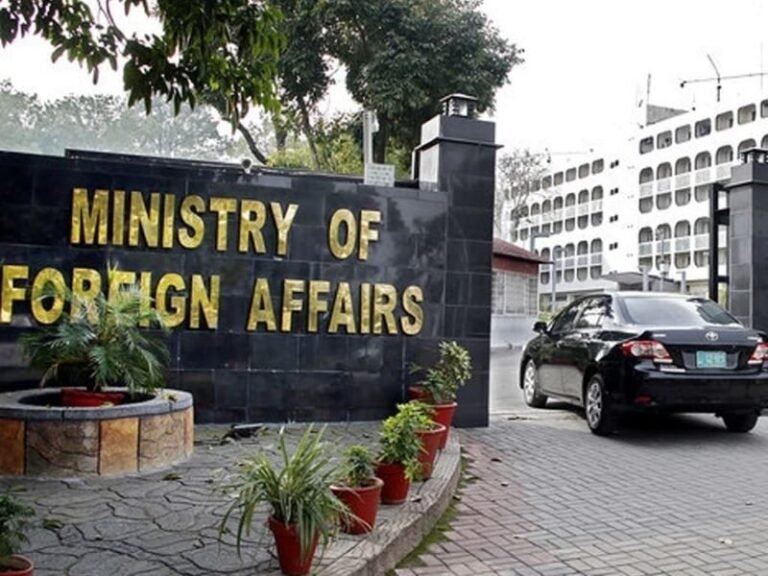
On May 13, 2025, Pakistan declared a staff member of the Indian High Commission in Islamabad persona non grata. The Pakistan Ministry of Foreign Affairs release said the official had engaged in activities incompatible with privileged status and directed departure within 24 hours. The same communication noted that India’s Charge d’Affaires had been called in for a demarche.
The United States and South Africa also experienced a high-profile diplomatic dispute in March 2025 involving Ambassador Ebrahim Rasool. South Africa’s Presidency statement described the expulsion as regrettable and called for diplomatic decorum. A U.S. Department of State press briefing later addressed official notification and the related timeline.
The example shows how persona non grata can affect ambassador-level representation and quickly become a bilateral political issue.
Implications for Missions and Host Governments
For a diplomat, a persona non grata declaration usually ends the posting immediately. For a mission, the result may be a staffing problem, a public messaging challenge, or a wider diplomatic escalation. Reciprocal measures are common, especially where the sending state views the declaration as politically motivated or disproportionate.
For the host government, the priority is disciplined execution. Authorities should confirm the person’s diplomatic or consular category, use the proper notification channel, coordinate with immigration and protocol systems, and avoid any conduct that breaches inviolability while privileges apply.
For the mission, the prudent response is usually controlled compliance: confirm the communication, coordinate recall or termination of functions, manage departure, preserve records, and avoid public statements that escalate the dispute unnecessarily.
Read More: How the Concept of Precedence Came About in Diplomatic Practice
If the underlying allegation involves criminal conduct, the host state may seek a waiver of diplomatic immunity from the sending state. If waiver is refused, persona non grata remains one of the principal diplomatic mechanisms for removing the person while keeping the dispute within the architecture of international law.
Persona non grata is a treaty-based instrument of diplomatic control. It allows a receiving state to withdraw acceptance, require recall, and set a departure window without converting a diplomatic dispute into an unlawful enforcement action against a protected person.
Its importance lies in that balance. It protects the host state’s right to decide who may represent a foreign government on its territory, while preserving the legal discipline that makes diplomatic relations possible even during serious political conflict.
For foreign ministries, missions, and advisors, the central lesson is verification. Status depends on category, accreditation, notification, and host-state recognition. The label persona non grata is simple; the legal and procedural context behind it is not.

Peter Kovacs
Peter Kovacs is Director of Strategy at William Blackstone Internacional, an independent private consultancy based in Panama City, Panama. The firm provides structured advisory support on diplomatic protocol, public-international legal frameworks, documentation readiness, and compliance-sensitive cross-border matters.He can be reached atinfo@wblackstone.net