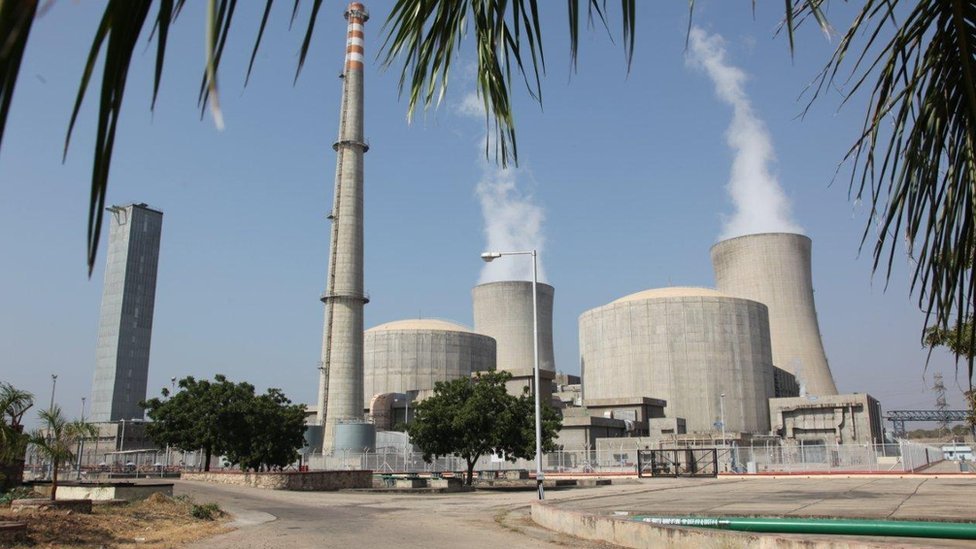
The Director General of the IAEA, Rafael Mariano Grossi, in his X post, has praised India for its so-called impressive progress and reiterated the IAEA’s support for the safe and secure development of the Indian Nuclear Program. However, the praise is unnecessary and illogical because India has not complied with the IAEA’s safeguards verification mechanism.
India is moving forward at a high pace in nuclear technology. It has successfully reached the 2nd crucial stage of its long-term three-stage nuclear program, which was initially conceptualized in the 1950s by Homi J. Bhabha. New Delhi announced the first criticality of its Prototype Fast Breeder Reactor (PFBR) at Kalpakkam on April 6, 2026.
The power output of PFBR is MWt (heat produced inside reactor), which is around 1250MWt, while the actual electricity that is sent to the grid is 500 MWe, according to the DAE and Press Information Bureau (PIB) descriptions. They also praised PFBR as a major and advanced technology that ensures energy security, sustainability of fuel, and an indigenous techno-capability.
To understand the politics behind this technological advancement, it is crucial to understand that three-stage nuclear program. The PFBR belongs to the second stage of India’s three-stage nuclear program that is sequenced as Pressurized Heavy Water reactors (PHWR), Fast Breeder Reactors (FBR), and Thorium-Based Reactors. In Stage-1, Plutonium is produced as a by-product (not waste), which is then used in Stage-2.
The PFBR then uses that Pu-239 and U-238 (MOX fuel) with a blanket of U-238 and Thorium, which results in the production of Pu-239 and U-233 (the new fuels), respectively. Both of these fuels (Pu-239 and U-233) will be used in Stage-2 and Stage-3 for power production. So far, it seems an advantageous, sophisticated technology which produces more fuel than it consumes, improves fuel efficiency, supports thorium utilization, waste reduction, ensures long-term energy security, and reduces dependency on imported uranium.
Read More: Kautilya’s Legacy and India’s Nuclear Age Foreign Policy
However, the question arises as to where this development becomes concerning. Technically, nuclear technology is useful both in civilian (the reactors already discussed) and military purposes. In the military domain, there are two different paths to nuclear capability that include the Uranium enrichment route and the breeder route.
Path-1 – Uranium Enrichment Route: As uranium enrichment progresses from natural uranium through Low Enrichment Uranium (LEU – < 20%) and High-Assay Low Enrichment Uranium (HALEU – 5%-19.75%) to Highly Enriched Uranium (HEU – ≥20%), particularly above 90%, it directly enables the production of weapons-grade material, thereby creating a clear pathway from civilian nuclear fuel cycles to nuclear weapons capability.
Path-2 – Breeder Rout: This route does not need the uranium enrichment process for the nuclear weapon. In the PFBR, fast neutrons strike U-238 and convert it into fissile material that is Pu-239. The converted Plu-239 can then be extracted through reprocessing of spent fuel, which can be reused in the reactor as well as for strategic purposes, potentially.
So, the emphasis on enriching uranium around the world tends to overlook a more important route to nuclear capability: breeder reactors such as the PFBR can produce plutonium, which offers a less visible but equally important path to developing fissile materials.
The PFBR is not a power reactor alone – it is a fuel multiplier, at the intersection of energy security and strategic capability. So, enrichment is a visible ladder to nuclear capability, but breeder reactors are a hidden engine, quietly manufacturing fissile material without climbing that ladder.
Read More: Pakistan Urges IAEA Probe into India’s Nuclear Material Thefts
This is not about technological advancement but about an uneasy politics around this advancement that seems to be outpacing institutional protection, especially when global acknowledgment seems to be leading in this regard. The Indian decision to operationalize (not under the supervision of the IAEA) such breeder reactors as the PFBR forms a structural fault in the global non-proliferation regime, since no one measures safeguards as a token, but rather as the main tool by which the international community can ensure that nuclear operations are peaceful.
Notably, India’s 11 reactors are unsafeguarded, which include 3 reactors in Madras Atomic Power Station (Kalpakkam), 6 reactors in Kaiga Generating Station, and 2 reactors in Tarapur Atomic Power Station. Without IAEA’s comprehensive safeguards, no plausible guarantee can be given, and this is all the more delicate with fast breeder reactors, which are by their very nature capable of producing more fission material than they are consuming.
Such facilities of strategic importance, being in use without safeguards yet garnering international accolades, strengthen fears that the line between civilian and military nuclear space is not as distinct as commonly depicted.
In the long run, such ambiguity poses a threat to undermine the normative imperative of the non-proliferation regime, where it implies that the application of rules can be influenced by geopolitics, and not a steady adherence to transparency and accountability.
Finally, it is an issue of ensuring the credibility of the world nuclear order; without uniform compliance with safeguards as a universal norm, international trust is lost, and what is supposed to be a rules-based system risks becoming a selective acceptance based on political expediency rather than principled governance.
*The views presented in this article are the authors’ own and do not necessarily reflect the views of The Diplomatic Insight.

Pairman Bazai
Pairman Bazai is a Research Officer at Balochistan Think Tank Network (BTTN), Quetta.