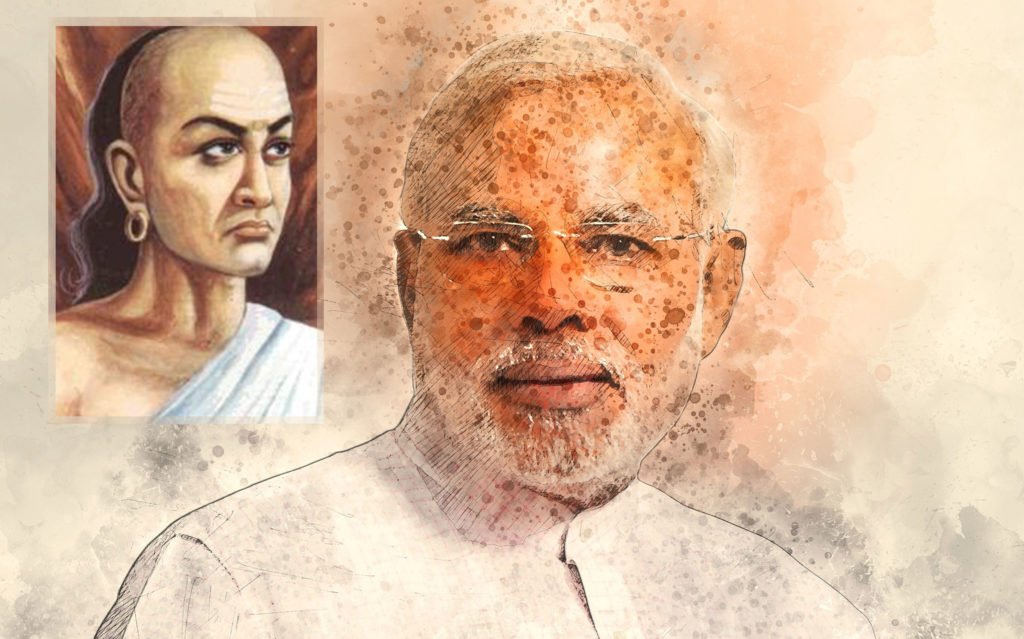
One of Kautilya’s primary doctrines is represented by the phrase “War is peace, peace is deception, and alliances are opportunities,” which he articulated in his political and military treatise Arthashastra more than 2,000 years ago. The literature from that era still has an impact on contemporary research on New Delhi’s foreign policy. The question still has to be answered: does India function in accordance with Kautilya’s ideals, or has his name become a myth used to justify current power struggles?
The Kautilyan lens has been used for decades by pundits to analyze India’s security and diplomatic actions, including establishing selective alliances, hedging with competitor countries, harboring animosity toward neighbors, and preserving doctrine ambiguity.
Its nuclear policy, too, is frequently portrayed as a result of this age old wisdom: cautious in theory, adaptable in reality, and ultimately intended to keep enemies guessing. However, if you look more closely, the picture becomes much more realistic. Scripture has less of an influence on India’s decisions than the demands of domestic politics, prestige, and geopolitics.
The Kautilyan Frame
The six fold policy of Kautilya peace, war, neutrality, marching, alliance, and double policy has come to be used as a catch all to describe India’s tactics. Analysts refer to New Delhi’s increased defense cooperation with the US as “double policy” since it also purchases cheap Russian petroleum. The terms “marching” and “neutrality” are used carelessly when it presses Pakistan on terrorism while avoiding escalation with China in Ladakh.
However, these designations run the risk of hiding the fundamental motivations behind India’s actions. Its inclination toward Washington is not merely a reflection of antiquated thinking, but rather a reaction to Beijing’s assertiveness. Its Gulf alliances are based on diaspora relations and energy security. Drones, missile defense, and cyber cooperation have been the cornerstones of transactional engagement with Israel.
Kautilya provides a useful metaphor, but India’s policymakers are not reading from a manual written in Sanskrit. They are responding to shifting power balances, domestic expectations, and economic imperatives.
Officially, India adheres to a No First Use pledge and a doctrine of “credible minimum deterrence.” But over the years, hints from officials have muddied the waters. Senior defense leaders have suggested NFU may not be an eternal promise. Strategic debates in New Delhi openly question whether Pakistan’s battlefield nuclear systems, such as the Nasr missile, can be countered without revising doctrine.
Read More: Confrontational Policies of India and Pakistan Under the Nuclear Shadow
This ambiguity is often framed as Kautilyan deception keep rivals uncertain, deny them clarity. Yet it reflects practical anxieties. Pakistan’s nuclear posture is explicitly first use. China’s arsenal is growing in sophistication and reach. India, caught between two nuclear armed rivals, must maintain credibility at home and deterrence abroad. Ambiguity is not just ancient cunning; it is contemporary necessity.
India has been accused of waging what Kautilya might have described as “undeclared war.” The arrest of Kulbhushan Jadhav in Balochistan, allegations of Indian support for separatists, and its influence campaigns in Afghanistan are often cited as evidence.
But covert operations and influence building are hardly unique to India. Washington, Moscow, Beijing, and others employ similar tools. To brand these as uniquely “Kautilyan” risks romanticizing what is, in fact, the modern statecraft of intelligence and covert leverage.
May 2025: A Test of Resilience
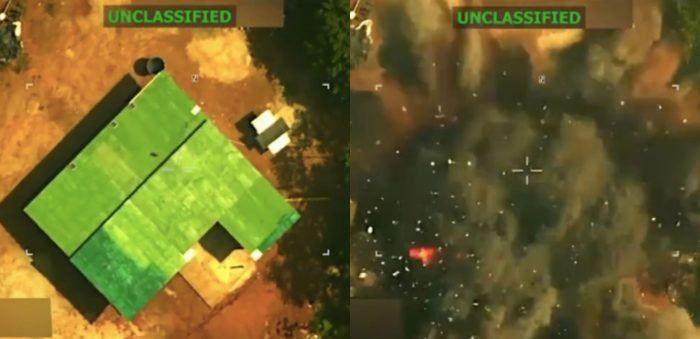
The Pahalgam terrorist attack in Indian administered Kashmir set events into motion. Within hours, India claimed the attack had links to Pakistan and dismissed Islamabad’s offer for an impartial investigation. Then came escalation: Indian jets struck Bahawalpur, deep in Pakistan’s Punjab province. This was not the familiar pattern of Kashmir skirmishes it was a strike on Pakistan’s mainland, a direct challenge to sovereignty.
For three tense days, Pakistan held fire. Silence, however, was misread in New Delhi as hesitation. On May 10, Pakistan launched Operation Bunyan ul Marsoos, a large scale aerial counteroffensive. Pakistani Air Force fighters intercepted and destroyed multiple Indian aircraft, including Rafales that India had showcased as technological game changers. Reports varied, but at least five Indian planes were confirmed downed; former U.S. President Donald Trump went further, declaring publicly: “It’s seven now.”
The clash reversed the intended narrative. India had sought to demonstrate superiority. Instead, Pakistan exposed the limits of that superiority, signaling both resilience and advanced capabilities. The use of cutting edge platforms from JF17 Block III fighters to upgraded F16s with advanced electronic warfare systems showed Islamabad’s ability to contest the air domain despite India’s larger inventory.
The May confrontation may not have spiraled into nuclear exchange, but it underscored how quickly South Asia’s deterrence balance can be tested, and how dangerous assumptions of superiority can prove.
Read More: Between Mediation and Manipulation: China’s Role in the India-Pakistan Rivalry
Kautilya’s Shadow in the Modern Arena
If New Delhi’s calculation was Kautilyan strike first when superior, exploit covert means, and destabilize adversaries it carried within it a flaw. In the modern nuclearized subcontinent, adversaries are not static pieces on a mandala diagram. They react, adapt, and sometimes retaliate in unexpected ways.
India’s nuclear doctrine, too, is not simply a reincarnation of ancient statecraft. It is a balancing act under immense pressure: deterring Pakistan without over escalating, hedging against China without overextending, and projecting toughness for domestic politics while reassuring foreign partners. Kautilya may provide rhetoric; the reality is improvisation.
Why does this matter to the international community? Because South Asia is one of the few regions where two nuclear armed rivals remain locked in recurring crises. For the West, India is a partner in balancing China. For China, India is both competitor and neighbor. For Pakistan, survival and sovereignty remain paramount.
The May 2025 clash showed how fragile this balance is. Misinterpretations, political posturing, and faith in outdated strategic templates can transform manageable tensions into dangerous brinkmanship.
India’s foreign policy continues to be described as Kautilyan theatre: secret wars, double policies, ruthless alliances. But myth can be misleading. The reality is less about ancient wisdom than about modern dilemmas: economic growth versus defense spending, domestic nationalism versus international credibility, regional dominance versus global cooperation.
Kautilya’s ghost may still hover over New Delhi’s rhetoric, but the real drivers of India’s choices are structural China’s rise, Pakistan’s resilience, and the demands of a multipolar world.
For India, the danger is not in quoting Kautilya, but in believing that his maxims can substitute for the complexity of modern deterrence. For Pakistan, the lesson of May 2025 was clear: resilience and adaptation remain the strongest counters to assumptions of superiority. For the world, the reminder is sobering, South Asia’s nuclear rivalry is not ancient history. It is a live, volatile reality.
*The views presented in this article are the author’s own and do not necessarily reflect the views of The Diplomatic Insight.

Mian Masood Tariq
Mian Masood Tariq is an independent researcher and policy commentator, based in Islamabad. He can be reached at masoodtariqqq@gmail.com