The peace of South Asia has become increasingly fragile due to conflictual doctrinal approaches pursued by Pakistan and India, as both states continue to engage in conventional military strategies under the looming shadow of the mushroom cloud. Pakistan and India have implemented two major policies in the 21st century; Cold Start Strategy by India and Quid pro Quo plus policy by Pakistan.
These policies had become the basis of armed conflicts between two nuclear-armed states. After the December 2001 Parliament attack in India, the Indian government blamed two militant groups, namely Jaish-e-Mohammed (JeM) and Lashkar-e-Taiba (LeT), for it, which, according to the Indian government, is supported by Pakistan’s secret service ISI. India responded with Operation Parakaram, which was actually a massive mobilisation of Indian troops. The Eastern Command Troops from the eastern borders deployed at the western fronts.
This led to a crisis, and both India and Pakistan came to the verge of a nuclear war. Anyhow, through the efforts of big powers and especially by the shuttle diplomacy of the U.S, the crisis de-escalated and eased the tension on both sides. But India learned two lessons from Operation Parakaram.
First, that they need to focus on a fast mobilization of Indian military to conduct operations inside Pakistan, to punish Pakistan in case of any terror attack conducted by militant groups that are based in Pakistan, before International intervention came to stop India to do it or before Pakistan prepare to tackle the attack, and second lesson was to conduct this attack inside Pakistan territory in a limited manner, So it does not cross Pakistan’s Nuclear threshold, And somehow escalation to nuclear war could be prevented.
So India decided to deploy troops, instead of in the centre of India, near the Pakistan border areas, to punish Pakistan and to conduct a limited, quick response and maybe capture some land of Pakistan to change the status quo. This strategy of India is termed the “Cold Start Strategy” by many policy analysts.
Read More: Between Mediation and Manipulation: China’s Role in the India-Pakistan Rivalry
The main propellers of this doctrine are stability-instability paradox. The leaders assumed that, as the full-fledged war between two nuclear states in the 21st century had become almost unrealistic due to the concept of Mutual Assured Destruction (MAD), they could limit these kinds of crises and conventional conflicts.
Pakistan also responded with one major doctrinal response known as the “Quid pro Quo plus” Strategy. It is characterized by the disproportionality of attack, where a retaliatory strike would be more destructive in nature than the initial attack launched by India to maintain the status quo and deter Indian conventional limited strikes inside Pakistan’s territory.
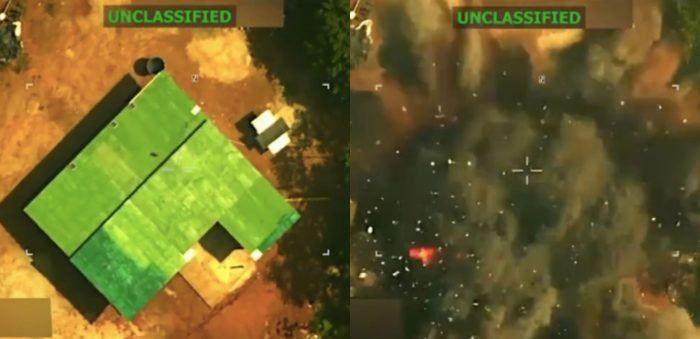
In the recent crisis between the two states, they had shown persistence in these doctrines. In cases like the Uri-Balakot crisis, India’s response in the Balakot air strike and Pakistan’s response in the swift retort operation showed examples of these two doctrines, and it could also be seen in the recent Operation Sindoor by India. And a response from Pakistan as well in the form of downing Indian fighter jets, which includes Rafael, as Pakistan claimed, and Operation Banyaan UL Marsoos. So these two strategies or policies played a major role in the crisis between Indian and Pakistan.
With the advancement in technology, these attacks and counterattacks will be more destructive in future. That could be seen in the recent conflict between India and Pakistan, where 5th-generation fighter jets like Rafael and a very potent defensive system like S-400 enable India to carry out bigger attacks than it executed in the last crisis. With increased capability and public pressure on leaders to attack or counterattack more aggressively, the chances of the nuclear threshold of either state being crossed due to these conventional small-scale warfare conflicts can increase.
There are so many uncertainties in war, as Clausewitz has written extensively, even about the conventional conflict, that the fog of war is such that you cannot anticipate the actions of your adversary, and even your own soldiers can upset all your plans. So all the pre-war peacetime plans go out of the window once the first bullet is fired. And coming to the nuclear conflict, it’s very difficult to predict whether escalation can be controlled because there is no precedent, there is no historical experience, no power on earth has gone through that experience.
Read More: Pakistan Draws Renewed Global Attention After May Conflict with India: Envoy
The only use of nuclear weapons was in 1945, and that was a unilateral situation where only the US had the monopoly over nuclear weapons, so those two bombs were dropped without any retaliatory capabilities on the other side. But in a situation where the two sides are armed with nuclear weapons, it is very difficult to predict whether an escalation can be controlled because, even though there are redundancies, the hardening of communication, that is, the softened value of nuclear command and control.
And if there is a nuclear use, as by the consequences of the nuclear explosion, the communications are going to be badly affected, and then you never know whether you’ll be able to effectively command your forces or not. So it is very hard to imagine that a nuclear escalation cycle can be prevented or stopped at any stage.
A change in these doctrines is essential to limit the conflict and pave the way to form a sustainable peace through conflict resolution and resolving bordering issues. The better options and strategy are need of time for peace of South Asia. With the advanced technology, less channels of communication and more emergence of hate across border, the chances of mutual destruction are more likely. The peaceful solutions had become necessarily for a sustainable future.
*The views presented in this article are the author’s own and do not necessarily reflect the views of The Diplomatic Insight.