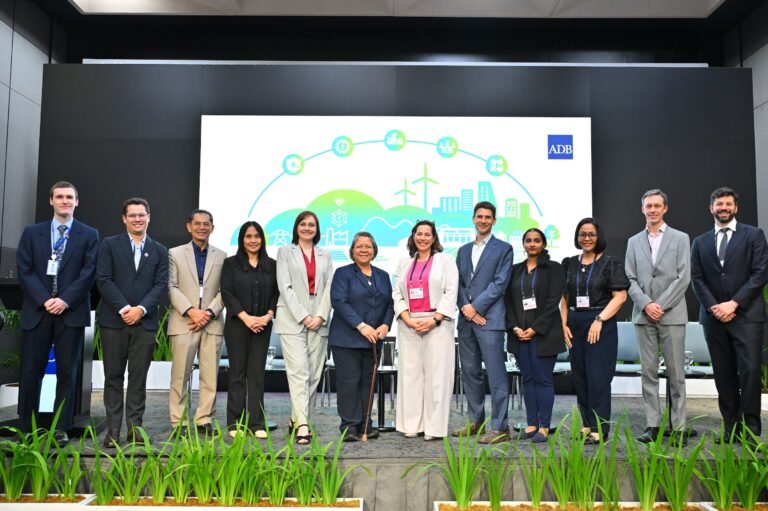
Manila (TDI): The Asian Development Bank (ADB) has offered the Philippines up to $1.75 billion in emergency financing as the country grapples with the economic fallout of the ongoing Middle East conflict.
ADB President, Masato Kanda, met Philippine President Ferdinand R. Marcos Jr. at Malacañan Palace on Friday, where he announced the bank’s readiness to provide the additional funds through policy-based and countercyclical lending, as well as trade finance if needed.
“The Philippines is ADB’s home, and we see the strain this crisis is placing on Filipino families, workers, and businesses,” Kanda said.
“ADB will act swiftly to support the government to protect vulnerable communities, manage fiscal pressures, and strengthen the economy’s resilience.”
The crisis has its roots in the United States and Israel’s attack on Iran in late February, which effectively closed the Strait of Hormuz; a waterway that normally handles roughly one-fifth of global oil shipments.
Read More: Uzbekistan Showcases Reforms at ADB Annual Meeting in Samarkand
Global crude prices have since surged past $100 a barrel, up from $60–$70 before the conflict. The Philippines imports over 90% of its oil from the Middle East, leaving it acutely exposed to the price spike.
Headline inflation accelerated to 7.2% in April, up sharply from 4.1% the previous month, the fastest pace since March 2023, as rising fuel costs pushed up food and utility prices well beyond the central bank’s 2–4% annual target.
In response, the Marcos administration declared a national energy emergency and launched the Unified Package for Livelihoods, Industry, Food, and Transport (UPLIFT), which includes fuel subsidies, excise tax reductions on select oil products, and direct cash assistance for transport workers, farmers, fishers, and repatriated overseas Filipino workers.
The $1.75 billion offer comes on top of approximately $2 billion in policy-based loans already being prepared for the Philippines this year.
Beyond immediate financial relief, the ADB said it is working closely with several Philippine agencies on longer-term resilience measures.
Read More: ADB Issues First Disaster Relief Bonds for Kyrgyzstan, Tajikistan
These include advisory support to the Department of Agriculture on domestic fertilizer security, assistance to the Department of Social Welfare and Development on social protection programs, and support for energy security, clean energy, energy efficiency, and mass transit investments to reduce the country’s exposure to future fuel-price shocks.
The Philippines received $6.81 billion in loans, grants, and co-financing from the ADB last year, making it one of the bank’s largest borrowers.
The latest pledge signals the institution’s intent to deepen that partnership precisely when economic headwinds are at their most intense, and before they translate into a broader humanitarian crisis for the country.