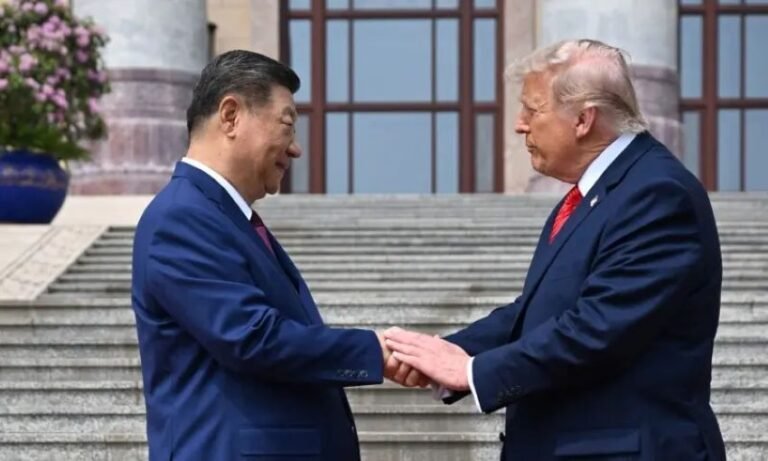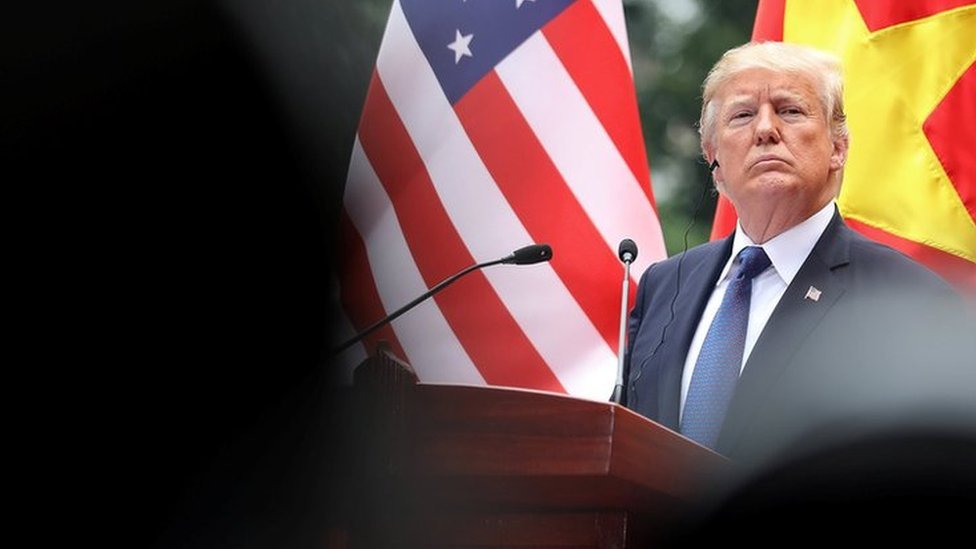
On Sunday, 26th November, the US President Donald Trump began his much-anticipated tour of Asia. In this weeklong trip, the president is making a stop in Malaysia, Japan, and South Korea. During the trip, Trump is seeking to push for peace between Cambodia and Thailand, secure Japanese investment in US manufacturing, make a deal with South Korea, and meet with the Chinese Premier, Xi Jinping, to negotiate a mutually beneficial trade deal with China.
Trump at ASEAN
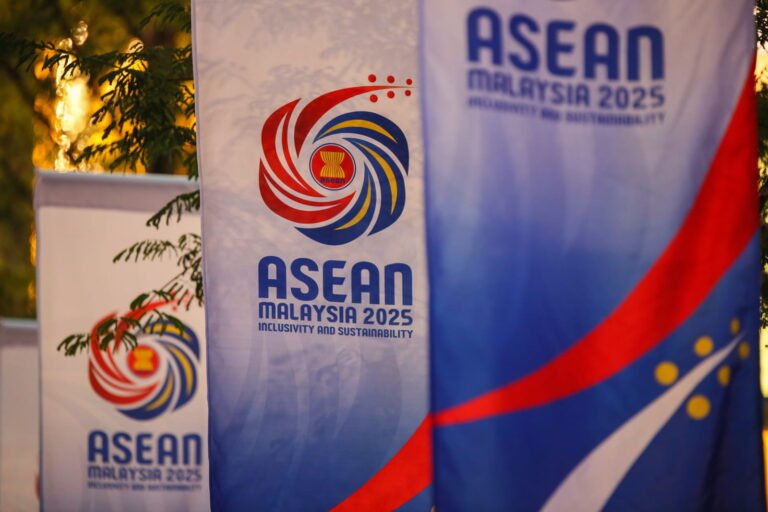
Trump made his first stop at Kuala Lumpur on Sunday at the annual summit of ASEAN, a bloc of 11 Southeast Asian nations. At the summit, Trump oversaw, and took credit for, the peace deal signing ceremony between Cambodia and Thailand. The peace deal, dubbed the Kuala Lumpur Accords, would require both nations to remove landmines and release prisoners in the first phase.
Furthermore, Trump also met leaders from across the region gathered at the summit in hopes of negotiating a deal with the US President. Trump has imposed 20 percent tariffs on the export-oriented Southeast Asian nations. For many ASEAN states like Vietnam, the Philippines, Thailand, and Cambodia, the US represents a top export destination. However, despite the optimism, only Malaysia and Cambodia were able to secure a trade deal with Trump.
Trump’s deals reflect his attempts to balance his America First policies with the longstanding US tradition of close economic partnership with ASEAN nations. Southeast Asia also represents an important bulwark against China. Hence, Trump could not entirely ignore the region and let the rising Chinese influence completely take over the regional economy. So, engagement with the region became necessary to maintain American influence in the region.
Meeting the First Female Prime Minister of Japan
After concluding his visit to Kuala Lumpur, Trump is visiting Japan and has met the newly elected Japanese Prime Minister, Sanae Takaichi, who is also the first woman to serve as the Prime Minister of the country. In Japan, Trump will negotiate an important investment deal with Takaichi that involves a $550 billion Japanese investment in the US economy.
It should also be noted that Japan is already the biggest foreign investor in the US economy; last year alone it invested $750 billion in the United States. Though the US automotive industry was initially decided by the Trump administration to benefit from the injection of additional Japanese investment, the White House has not confirmed anything yet.
Read More: Trump’s Asia Tour Turns Regal: Meeting Japan’s Emperor After Six Years
However, as part of the deal, Trump imposed just 15% tariffs on Japanese products entering the US market, much lower than he initially threatened in April this year. The Trump administration was also concerned about the imbalance of trade in the automotive industry between the US and Japan.
Where Japanese auto brands such as Nissan, Honda, and Mitsubishi exported 1.37 million vehicles to the US, the US brands like Ford and Tesla sold only 17,000 vehicles in Japan. Therefore, to woo President Trump amid contentious trade talks, Japan has considered purchasing Ford F-150s.
Moreover, Takaichi announced on Friday that Japan will increase its military spending in line with the US demand of 2 percent of GDP by next year. The move comes against the backdrop of growing Chinese assertiveness in the region. Takaichi, therefore, is also seeking a renewed US guarantee of military and economic alliance to counter the Chinese offensive.
Meeting Xi in South Korea
From Japan, the US president would head towards South Korea on Thursday and attend the Asia Pacific Economic Cooperation (APEC) summit. The summit, which includes the gathering of leaders from across the Asia Pacific region, will be hosted by the South Korean President Lee Jae Myung. However, most South Koreans will be looking forward to a possible trade deal with the US as the Myung government’s biggest challenge at the event.
Unlike Japan, which successfully got around Trump’s tariffs by invoking the possibility of additional investment, South Korea had struggled to replicate the success. The US has imposed a 25% tariff on the South Korean automotive industry, putting it at a significant disadvantage vis-à-vis European and Japanese industries.
Read More: Trump Seeks Breakthrough with China’s Xi During Asia Visit
The main event of the summit, nevertheless, will be the meeting of US President Donald Trump and Chinese Premier Xi Jinping. Since the return of Trump to the White House, the United States has been involved in an economic war with China, but like the majority of states who eventually had to bend the knee against Trump’s bullying, China has resisted the pressure so far by leveraging its near monopoly of critical minerals and refusal to buy soybeans from the US.
The move has put the American tech and farming industries, which form the electoral base of Trump, in a vulnerable position. This has also put Trump, who always likes to be in charge, in a vulnerable position vis-à-vis his Chinese counterpart. Therefore, the summit also represents the biggest challenge to Trump’s negotiating skills as of yet.
Despite this, Trump remains optimistic about making a deal with China, maintaining strong ties with Japan and South Korea amidst the tariffs, and reviving US influence in Southeast Asia. Whether he succeeds in this endeavor, however, will depend on his willingness to cede ground on his America First doctrine, make fair deals with US allies in Asia-Pacific, and treat China as an equal power rather than as peasants that could be bullied into submission.

Muhammad Omer Rafiq
Muhammad Omer Rafiq is a student of politics with a passion for making sense of our tumultuous political world that always seems to be on the edge. He recently graduated in International Relations from Lahore Garrison University. He can be reached at muhammadomerrafiq@gmail.com