Washington went to war against Iran with a premise embedded deep in its strategic culture, that enough economic pain would eventually translate into political collapse or at minimum, political compliance. This premise has been tested.
While American military and financial pressure has imposed real costs on Iranian society, it has failed to dismantle the institutional architecture that keeps the Islamic Republic functional, the IRGC operationally capable, and the state structurally intact.
The reason for this failure is not mysterious: it sits at the intersection of Chinese economic architecture and Russian military enablement, both of which have outpaced the instruments Washington chose to wield.
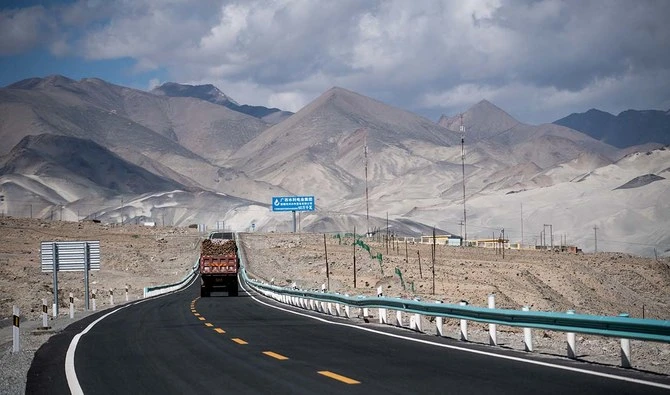
The foundation of Iran’s economic endurance is a structured, deliberate trade relationship with China that long preceded the current confrontation and was consolidated precisely in anticipation of it.
On March 27, 2021, Iran and China signed a 25-year strategic accord committing China to invest a reported $400 billion in Iran’s energy, banking, telecommunications, and transportation sectors in exchange for a regular supply of Iranian oil at presumed discount.
Read More: Will Lindsey Graham Sanctions Bill Disturb Putin’s Russia?
This was not a reactive arrangement. It was a treaty-level commitment that created a structural floor under the Iranian economy, immune in principle to American designation cycles.
The operational mechanism that makes this treaty live in practice has now been documented with some precision. Iran has used a barter-like arrangement to bypass sanctions on its oil sales and buy billions of dollars’ worth of goods from China, including military gear.
The secretive trade mechanism, in which Iranian oil is exchanged for credits for Chinese imports, has provided a financial lifeline for Tehran in recent years as the United States stepped up economic and military pressure over its nuclear program.
Decades of US sanctions have left Iran with few oil customers. China is the main buyer, accounting for more than 80% of Iran’s shipped oil in 2025, or an average 1.4 million barrels per day. The mechanism was also used at least once in the past year in connection with contracts to supply Iran with air defense equipment worth millions of dollars.
The intermediary structure reveals how Beijing has managed to sustain the relationship while preserving ‘plausible deniability.’
A buyer acting on behalf of Chinese state-owned oil trader, Zhuhai Zhenrong, was at least until this year depositing hundreds of millions of dollars a month with an obscure, China-based financial entity known as ChuXin, covering purchases agreed with a Hong Kong-registered company linked to Iran’s national oil company.
Read More: Iran Vows to Overcome ‘Unjust Sanctions’ as US Escalates Economic Pressure
ChuXin would then send funds to Chinese exporters and companies that build infrastructure in Iran. Roughly 70% of the Iranian oil proceeds handled by ChuXin are allocated to infrastructure projects.
The Wall Street Journal reported in October 2025 on an oil-for-infrastructure arrangement involving Chinese state-owned enterprise Sinosure that may have secretly facilitated up to $8.4 billion worth of investment in 2024.
Iran’s export figures corroborate this picture on the macro level. Iran’s oil and non-oil exports started to rebound in 2021 and exceeded levels under the nuclear agreement by 2024.
These trends continued through 2025 and even held up during the first two months of 2026. The growing oil exports allowed the government in Iran to increase its military capabilities and bolster its domestic security apparatus.
The Stanford Iranian Studies analysis concludes that the rebound reflects both Washington’s deliberate relaxation of enforcement under the Biden administration to facilitate nuclear negotiations, and China’s progressive economic decoupling from American financial architecture, decoupling that gave Beijing the structural capacity to absorb the risk of the relationship.
While China underwrote Iranian economic survival, Russia provided something equally decisive: operational military enablement that tilted the battlefield calculus against the Americans.
Read More: How Iran Survives? A ‘Beyond Collapse’ Narrative
Dan Caine, chairman of the Joint Chiefs of Staff, confirmed Russia has been aiding Iran during the 2026 war. This backing has included expanded intelligence sharing as well as satellite imagery to aid Tehran’s targeting of US forces.
Ukraine revealed that Russian orbital surveillance assets captured images of the UK–US base on Diego Garcia, NATO’s Incirlik base in Turkey, Al Udeid Air Base in Qatar, and oil and natural gas fields in Saudi Arabia, all locations subsequently attacked by Iran.
The deeper form of Russian contribution predates the war and points toward genuine strategic convergence rather than tactical opportunism.
An investigation by the Financial Times revealed a covert, multi-year military assistance program between Russia and Iran, codenamed Project C430L, intended to assist Tehran in developing ramjet propulsion systems for a new generation of supersonic cruise missiles.
The program concerns the transfer and refinement of ramjet technology, which enables a cruise missile to sustain supersonic speeds during atmospheric flight. The technology could be applied to long-range anti-ship and land-attack systems, with initial activity dating back to 2023.
Tehran received its first Yak-130 trainer jets from Moscow, with more aircraft delivered in 2025. Additionally, new details emerged about the contract to supply Su-35 fighter jets: forty-eight aircraft are to be delivered by Russia in 2026–2028. In January 2026, evidence surfaced that Iran was also in possession of up to six Russian Mi-28 attack helicopters.
The relationship is a genuine exchange shaped by mutual utility. Russia and Iran have been cooperating for at least three years on missile and drone technology, with Iran providing Russia with Shahed drones and short-range ballistic missiles to target Ukraine and helping to set up a massive drone factory inside Russia.
Iran has in turn sought Russia’s help to bolster its nuclear program. The architecture of this partnership structurally insulates Iranian military capability from the attrition that American pressure, kinetic and financial, was designed to impose.
The Exhaustion of Dollar Coercion
Washington’s response to this dual scaffolding has been to double down on the instrument that has demonstrably failed to produce the intended result.
Treasury Secretary Scott Bessent announced plans for a wave of new sanctions aimed at further isolating Iran, threatening institutions that “maintain ties with Iran with exclusion from the dollar-based financial system,” targeting shipping, oil, crypto, gold and aviation sectors, in what Bessent called an “economic onslaught” designed to “sever every economic pipeline” until Tehran “stands alone.”
Bessent warned Chinese banks that they will be sanctioned if they “facilitate transactions and are part of the ecosystem that turns Iranian oil into money,” while China said it would “take all necessary measures” to protect itself.
Yet the very architecture of the Chinese–Iranian arrangement, the use of state-linked intermediaries, non-dollar credits, and commodity barter, was constructed specifically to avoid the chokepoints that dollar weaponization requires.
“Economic pain is not the same as political compliance.” That sentence from OMFIF’s analysis identifies the central conceptual error in American strategy: the assumption that an adversary population’s suffering creates elite pressure toward concession, rather than elite consolidation around resistance.
Decades of pressure cycles have repeatedly failed to convert economic pressure into political concession, in part because the Iranian leadership has insulated itself institutionally from the domestic pressures that sanctions theory assumes will translate into elite bargaining.
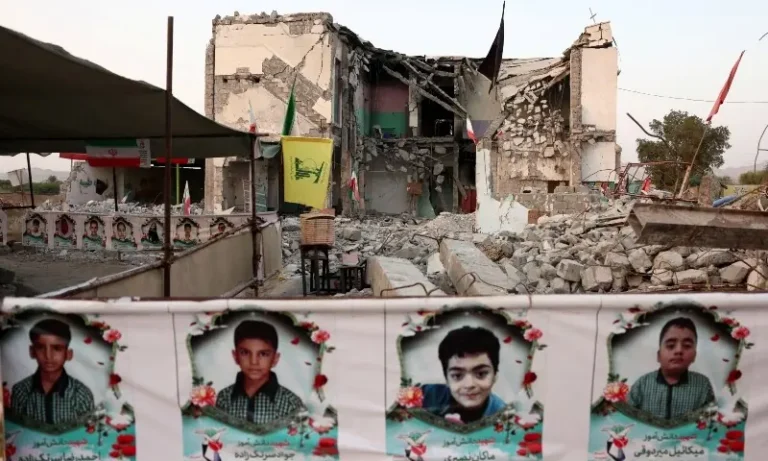
Iran has learned that it can survive massive US and Israeli airstrikes that annihilate its leadership and inflict significant damage to its military and civilian infrastructure. Despite all that, its drone and missile capabilities remain intact enough to allow it to retaliate and stop maritime traffic through the Strait of Hormuz.
What emerges from this record is a story about the structural limits of coercive instruments applied against a state that has had decades to build alternative economic arteries and has found partners with both the motive and the capacity to sustain those arteries under fire.

Muhammad Mahad Samija
Muhammad Mahad Samija is a student of Political Science at Government College University, Lahore. He can be reached at [email protected]