Disasters have become a defining reality of today’s world. They do not ask for permission, and almost every country remains vulnerable to them but some face far greater risk than others.
Pakistan is one of those countries. The world, as a whole, needs to prepare for these catastrophic events, because any country can be struck by them without warning. Pakistan has taken this lesson seriously.
Pakistan’s geography places it among the top vulnerable countries. Northern Pakistan alone holds over seven thousand two hundred glaciers, many of which are now melting due to climate change. In regions such as Pasu and Astor, this melting has made local communities highly susceptible to Glacial Lake Outburst Floods, or GLOFs.
In 2022, several such areas were devastated: entire villages disappeared, livelihoods collapsed overnight, and displaced families were forced into refugee camps with little realistic hope of ever returning to their original settlements. Given current trends, this pattern is likely to repeat, and possibly worsen, in the years ahead.
Read More: Pakistan, China Symposium Puts Science at the Heart of Disaster Preparedness
This glacial melt, combined with increasingly intense monsoon rainfall, has turned climate-driven disaster into an almost continuous condition for the country rather than an occasional event.
The 2022 floods submerged a third of Pakistan, affecting every province and resulting in significant loss of life, livestock, and livelihood. A national emergency was declared, and by 2025, Pakistan found itself facing an eerily similar crisis. This repetition is not coincidental; it is the direct signature of climate change.
What makes this especially unjust is scale: Pakistan contributes less than one percent of global emissions, yet bears some of the heaviest consequences of a crisis it did little to create. Nepal’s recent floods show this same pattern, a country responsible for a negligible share of global emissions, absorbing a disproportionate share of the damage.
Pakistan’s Experience with Disaster Management
The 2005 earthquake exposed a critical gap: Pakistan had no dedicated institution equipped to manage a disaster of that scale. In response, the National Disaster Management Act was passed in 2010, formally establishing NDMA as the country’s central disaster management authority.
Rather than treating this as a finished task, NDMA absorbed the lessons of successive disasters and continued building on them, gradually evolving into a technologically capable, internationally engaged institution.
Much of this progress rests on its ability to coordinate effectively across federal government, provincial governments, and private-sector stakeholders and establishing a coordination structure that today makes it one of the more effective institutions within the Pakistani state.
Pakistan once stood as an appellant, appealing for help during the 2005 earthquake and again during the 2010 floods. Over time, however, that position has reversed. Pakistan now sends not just financial aid but full rescue teams to other nations in crisis.
It has provided assistance to Türkiye, Colombia, Malaysia, Nepal, Sri Lanka, and several other countries, and has deployed rescue teams specifically to Türkiye, Nepal, and Sri Lanka.
Read More: UK Development Agency Launches AI Platform for Disaster Resilience in Pakistan
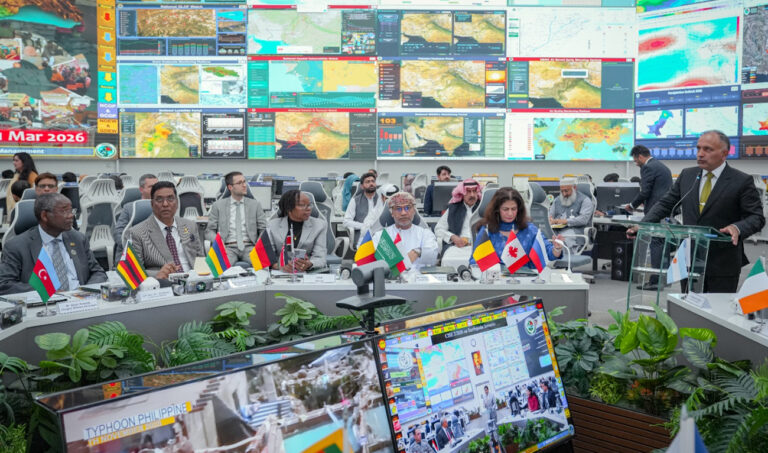
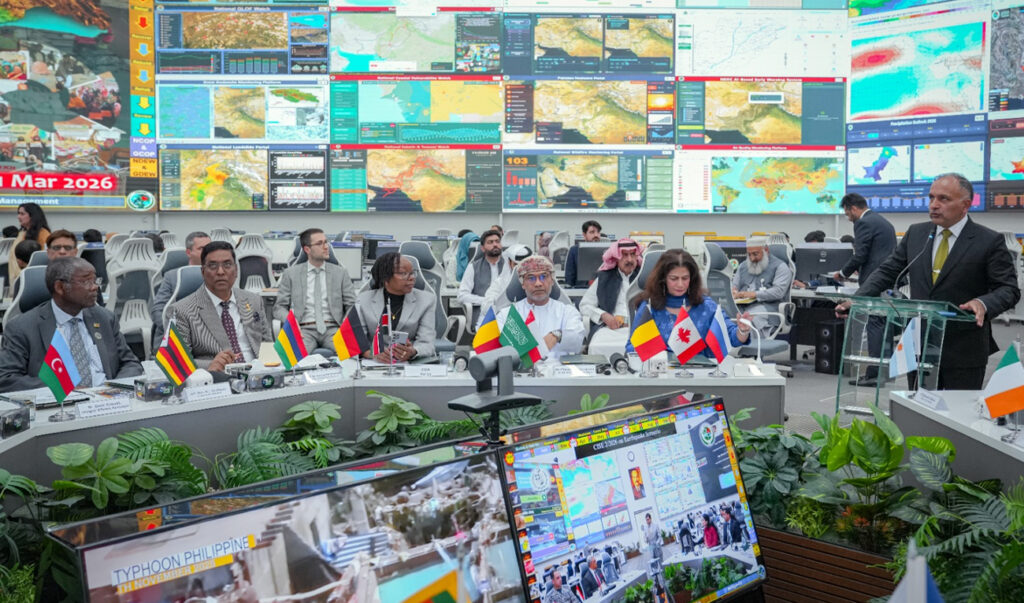
NDMA’s international footprint extends well beyond emergency response. It regularly conducts training programs and simulation exercises for foreign defense personnel, diplomats, and officials, and runs a year-round Coordinated International Simulation Exercise (CISE), bringing together ambassadors and military representatives from multiple countries to exchange insight on disaster management and resilience.
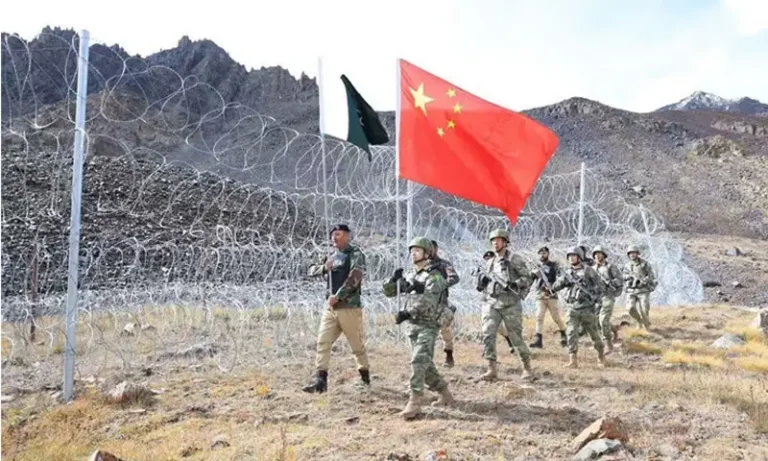
This engagement has produced tangible diplomatic outcomes. Pakistan and China have signed an agreement specifically aimed at jointly combating weather-related disasters. Oman has expressed interest in replicating Pakistan’s disaster management model within its own borders.
Delegations and institutions from Indonesia and Switzerland, alongside the United States, China, Russia, Bangladesh, Türkiye, Iran, and Nepal, have all held direct meetings with NDMA at its National Emergency Operations Centre (NEOC).
In total, more than sixty-five countries have taken part in NDMA’s meetings, training programmes, workshops, and courses.
NDMA has also worked to mobilize Pakistan’s diaspora as a resource rather than a bystander, signing Letters of Understanding with major diaspora organizations including the Association of Physicians of Pakistani Descent of North America (APPNA) and the British Pakistani Welfare Association (BPWA) — and organizing knowledge-sharing workshops and training programs with both domestic and international institutions and universities.
At the multilateral level, NDMA’s relationship with UN agencies has visibly matured. During the 2022 floods, the UN jointly appealed for aid alongside the Pakistani government, rather than issuing an appeal unilaterally as it had during the 2010 floods which is a clear sign of Pakistan’s deepening integration into the international humanitarian system.
Read More: Pakistan’s Disaster Management Warns High Temperatures to Speed Up Glacier Melt
NDMA has also co-authored its Host Nation Support Guidelines with the Australian High Commission and the Asian Disaster Preparedness Centre, and represents Pakistan at international and regional forums including UN, COP climate summits and ASEAN engagements.
Taken together, this body of work reflects a deliberate practice of disaster diplomacy, carried out through NDMA. As disasters grow more frequent, what comes in decades or centuries have now become near-annual occurrences and this form of diplomacy is becoming less optional and more necessary.
Every state now faces the same basic obligation: to protect its people and territory from these escalating threats, and to manage crises with composure rather than panic.
Pakistan has moved deliberately toward a proactive disaster strategy, preparing before disaster strikes rather than only reacting afterward. Its efforts to remain disaster-ready, along with a dedicated workshop held with INSARAG, the global search-and-rescue advisory body, reflect this shift.
The logical next step is for Pakistan to establish its own standing, UN-standard rescue team, ready for immediate international deployment, rather than assembling a team reactively each time a new disaster occurs abroad to grow its impact in the international arena.
*The views presented in this article are the authors’ own and do not necessarily reflect the views of The Diplomatic Insight.*

Hadia Ahmad
Hadia Ahmad is a student of International Relations at National Defence University, Islamabad.