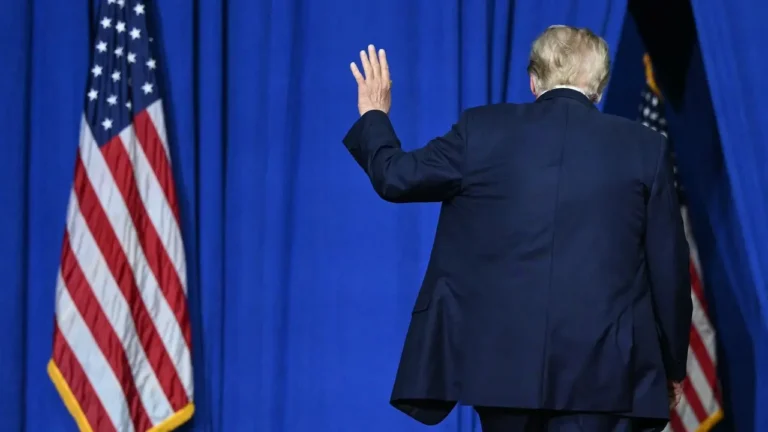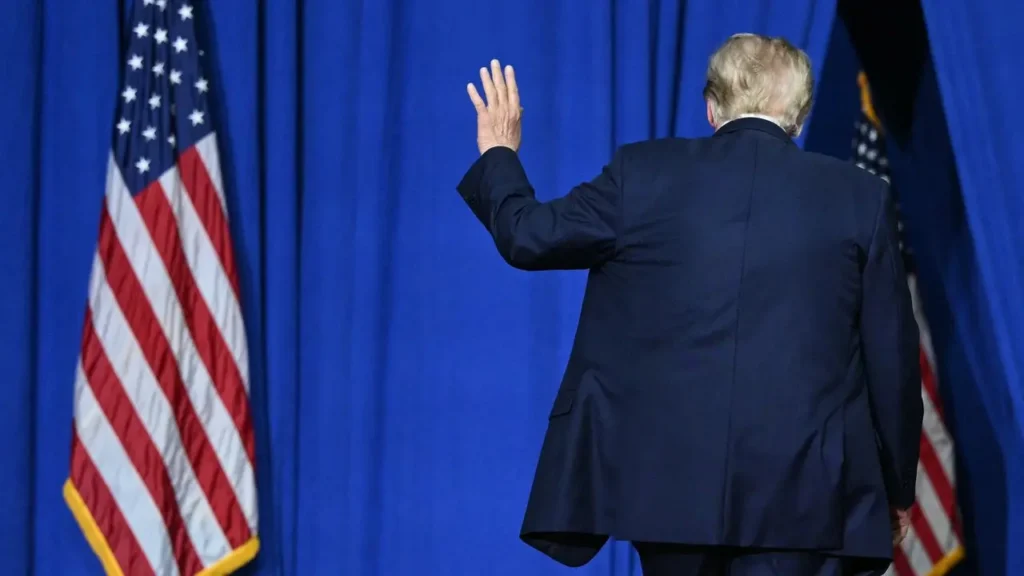
On August 16, Donald Trump announced at the last minute that he’d ordered a substantial scaling down of a joint US-South Korea military exercise, which began on Monday August 10th 2026.
Trump said the exercises sent a totally inappropriate and hostile signal to North Korea, and just hours earlier had posted an old photo of himself and North Korean leader Kim Jong Un, adding that they get along great.
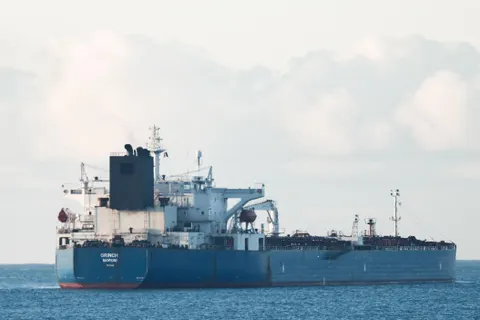
In other news, it was confirmed that the US was temporarily relocating the USS George Washington from the Western Pacific to the Middle East. While bolstering the US military’s presence near Iran and helps relieve the troubled USS Abraham Lincoln, it also leaves the US without an aircraft carrier in the Asia Pacific, a worrying sign for allies in the region facing down China.
Let’s start by explaining the so-called pivot to Asia, which is a phrase you’ve probably heard a lot in discussions of US foreign policy. During the Barack Obama presidency, the US sought to shift the focus of its foreign and security policy away from Europe and the Middle East towards Asia, namely East Asia.
It was a bid to counter the growing military, diplomatic, and economic influence of China, but the pivot didn’t meet its ambitious goals. For instance, persistent crises like the Syrian and Libyan civil wars and the rise of ISIS kept dragging American attention back to the Middle East, while at the same time, US endeavors in the Asia Pacific, like the ill-fated Trans-Pacific Partnership, fell apart.
There was some substantial refocusing towards the Asia Pacific during the Biden administration though. Biden oversaw the withdrawal from Afghanistan in 2021 and strengthened the US’s security architecture with Asia Pacific allies like Japan, South Korea, the Philippines, and Australia and adopted a more hawkish line on Taiwan. But of course, the wars in Ukraine and Gaza meant US attention and resources were spread thin.
It appeared as though Trump’s return to office might continue the pivot towards Asia and accelerate the US confrontation with China. As in his first term, Trump filled his new cabinet with renowned China hawks, including perhaps most notably Under Secretary of Defense for Policy Elbridge Colby, who had long argued that the US needs to extricate itself from other theaters in order to focus all its strategic energies on China.
And yet, things have panned out quite differently. After a brief tit-for-tat trade war in the aftermath of Liberation Day, Trump quickly sued for peace.
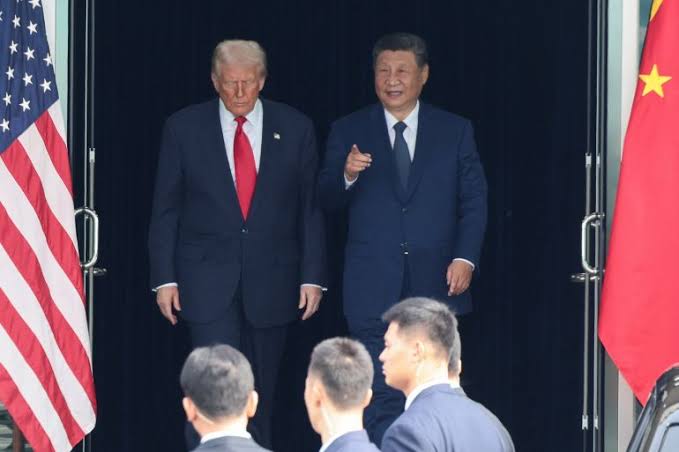
A trade truce was formalized at a meeting between Trump and Chinese President Xi Jinping in October 2025, where Trump hailed Xi as a great leader and told reporters afterwards that he rated the quote “amazing meeting” a 12 on a scale of 1 to 10.
Trump’s 2025 National Security Strategy avoided labeling China as America’s foremost strategic competitor and instead focused more on purported threats to European civilization. In December 2025, Trump irked even congressional Republicans by allowing tech giant Nvidia to sell its high-end H200 chips to China, so long as the US government received 25% of revenues.
During his visit to China in May, Trump spent much of the trip gushing over his host and was apparently unable to extract any meaningful concessions.
He claimed afterwards that Xi had committed not to supply weapons to Iran during the war, but it’s worth noting that Trump made an identical claim in April and that in July, Reuters reported that China was planning to sell Iran hundreds of shoulder-launched missile systems anyway.
Conversely, Xi was apparently able to convince Trump to withhold final approval for $14 billion arms sale to Taiwan. And of course, through all of this, Trump has elevated the Western Hemisphere, that is, the Americas, as his primary area of interest, and has also got bogged down in yet another American war in the Middle East, this time against Iran.
The relocation of the USS George Washington from the Asia-Pacific to the Middle East is a particularly stark demonstration of the fact that the US is not able to be totally militarily omnipresent, and that the seemingly all-consuming and unending war against Iran means less resources for US forces and allies in Asia.
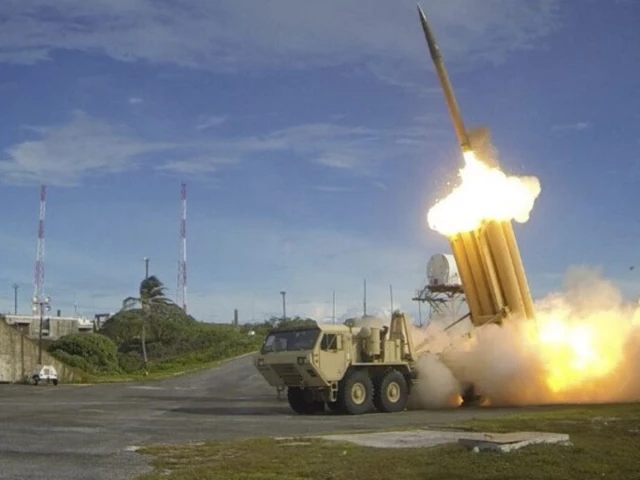
As the US has burned through its weapon stockpiles to fight Iran, key bits of hardware, such as advanced air defense interceptors, have been diverted to the Middle East from the likes of South Korea and elsewhere in Asia.
Trump’s order to scale back US-South Korea exercises aren’t likely an even greater concern for the US’s Asian allies. That’s because Trump indicated that at least part of his reasoning for downsizing the drills was because South Korea had refused to join the US war against Iran.
Trump has publicly reminisced about his meetings with Kim Jong-un during his first term, and suggested that North Korea had been unthreatening and respectful while he’s been US president. But this does not square with the experience of South Korea, which has witnessed Kim’s increasingly bellicose rhetoric, deepening of its military partnership with Russia, building up of its nuclear and non-nuclear capabilities, and gaining combat experience in Ukraine.
Days before Trump’s announcement, North Korea had denounced the upcoming military exercise as a provocation and a rehearsal for an aggressive war. All this poses a significant challenge for the US’s Asian allies. They’re still trying to remain on Trump’s good side, most evident is Japanese Prime Minister Sanae Takaichi’s interactions with the US president.
However, on the other side of the fence is also the attempt to take up more responsibilities in ensuring their own defense and security in order to diversify their arrangements, as they now begin to question the willingness and ability of the US to defend them should any war happen.
For instance, Japan has strengthened its defense partnership with South Korea and the Philippines, while at the same time establishing unofficial ties with Taiwan. On the other hand, Trump’s relations with Xi Jinping have been classified as G2, much to the discomfort of the Asian allies.
Perhaps the hardest thing for US allies in the region is that Trump’s pull away from Asia does not seem to be a particularly planned, clearly communicated drawdown of the US presence in the region, one that would be easier to work around and adapt to.
Rather, Trump’s turn appears to be sporadic and poorly communicated, with the Trump administration labeling countries as model allies one month and then acting against them the next.
And instead of being based entirely on a formulated strategy, it’s at least in part based on personal grievances and feelings towards certain leaders. For now, Kim Jong-un and Xi Jinping appear to be in Trump’s good books.
*The views presented in this article are the authors’ own and do not necessarily reflect the views of The Diplomatic Insight.*

Muhammad Haseeb Sulehria
Muhammad Haseeb Sulehria is a researcher in Defense and Strategic Studies with a strong interest in international security, geopolitics, and strategic affairs. His work focuses on problem-solving and evidence-based research aimed at understanding contemporary security challenges and global conflicts.