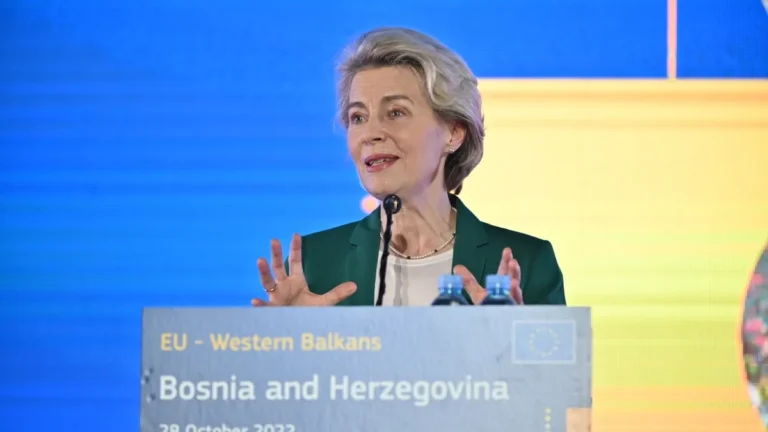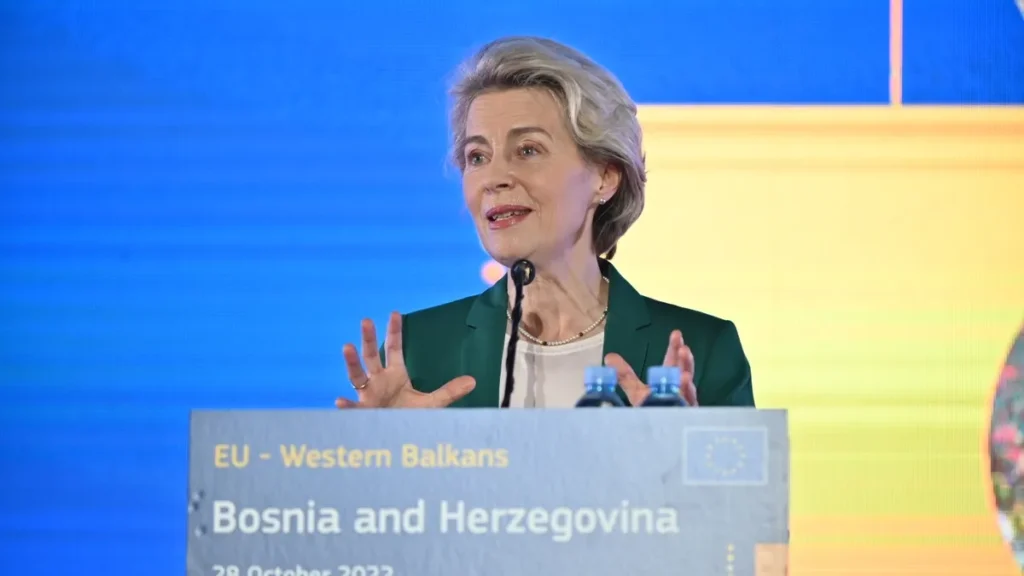
Strasbourg (TDI): European Commission President Ursula von der Leyen has announced that the European Union is opening the door for Canada to become the bloc’s first “associate member,” proposing a new form of partnership that is not currently defined in EU treaties.
Von der Leyen made the announcement during her annual State of the European Union address to the European Parliament in Strasbourg on Wednesday, describing closer partnerships as a strategic response to growing strains on the international rules-based system.
“Partnerships are a strategic choice for Europe. But they also respond to the fracture in the international rules-based system,” von der Leyen said.
She highlighted the growing alignment between the EU and Canada on issues ranging from artificial intelligence and climate change to the Arctic and geopolitics.
“We see the world with the same eyes,” she said, pointing to cooperation on Ukraine, defense, raw materials and supply chains. She added that both sides share a commitment to democracy.
Canadian Prime Minister Mark Carney said earlier this week that Ottawa was seeking a “unique alliance” with the EU rather than membership of the bloc.
Read More: Finland’s President Proposes EU Expansion to 40 States, Including Canada
Von der Leyen invited Carney to Strasbourg, where he attended her address and is scheduled to deliver his own speech to the European Parliament on Thursday.
“I said we must urgently reimagine our partnerships. So, I would like to work with you on opening the door for Canada to be the first associate member of the EU,” von der Leyen said.
The proposal represents a significant shift in the EU’s approach to flexible forms of integration. Associate membership is not currently provided for under the bloc’s treaties, while EU governments have previously shown limited enthusiasm for similar proposals.
Germany, for example, proposed in May that associate membership could be considered for Ukraine as a potential step toward full EU accession, but the idea received a cautious response from member states.
Von der Leyen said the EU and Canada would seek to deepen cooperation across a wide range of sectors, including manufacturing, artificial intelligence, critical minerals and energy.
“We will work on intelligent manufacturing. We will create a tech alliance. We will integrate defense industrial bases. We will make the Arctic a flagship joint project,” she said.
The initiative would build on existing cooperation between Canada and the EU at a time when both sides are seeking stronger partnerships on strategic resources, defense capabilities, technology and supply-chain security.
Read More: Uzbekistan Joins Key EU, Canada Critical Minerals Alliances
Carney’s European visit comes shortly after a major deterioration in Canada-US relations following the collapse of trade talks last month and the subsequent imposition of reciprocal tariff measures.
Against this backdrop, closer EU-Canada ties could give Ottawa another major international partnership while allowing Brussels to strengthen cooperation with a close Western ally.
Von der Leyen stressed that the proposed partnership was not directed against another country. “This is a partnership not against anyone else,” she said, in an apparent effort to emphasize that closer EU-Canada cooperation should not be viewed as a move against the United States.