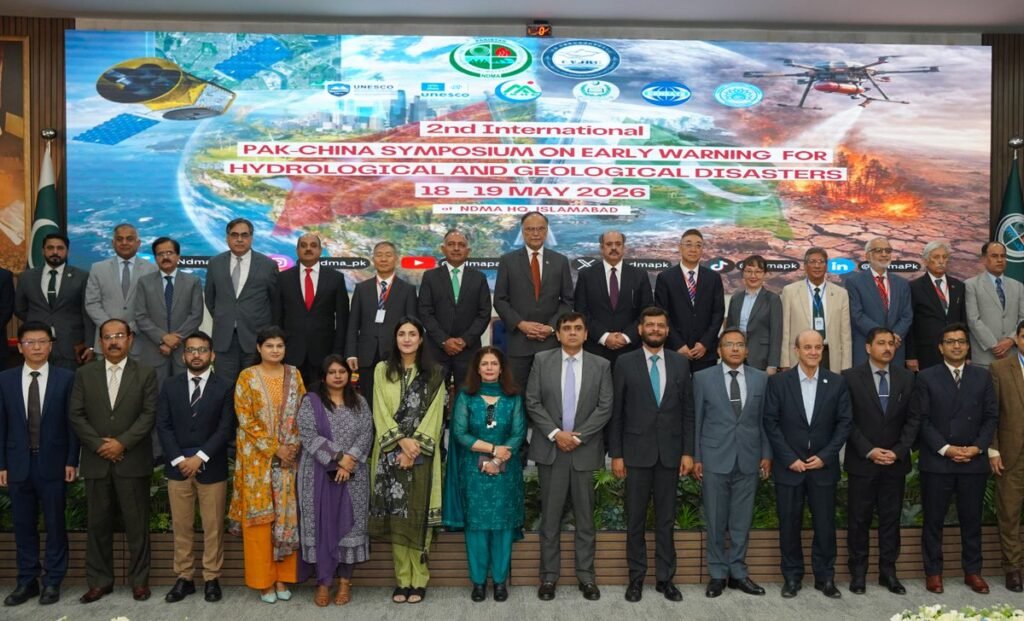
Islamabad (TDI): Pakistan and China have concluded a two-day symposium focused on the growing threat of climate-driven catastrophes along their shared geography.
The second Pak-China Symposium on Early Warning for Hydrological and Geological Disasters wrapped up at the National Disaster Management Authority (NDMA) headquarters on Tuesday.
It brought together scientists, researchers and policymakers from both countries to address an increasingly urgent challenge.
The event, which opened on Monday, with Planning Minister Prof Ahsan Iqbal as chief guest, built on the foundation of the first such symposium held in August 2025.
The gathering featured five parallel technical sessions where delegates exchanged research findings and operational experiences covering floods, landslides, glacial hazards and early warning technologies.
Pakistan ranks among the world’s most disaster-prone nations, sitting at the intersection of the Hindu Kush, Karakoram and Himalayan mountain ranges; a region home to more glaciers than anywhere outside the polar caps.
Read More: Pakistan-China Cultural Evening Celebrates 75 Years of Enduring Friendship
Climate change is accelerating glacial lake outburst floods and intensifying monsoon patterns, risks that spill across borders and demand coordinated responses.
NDMA Chairman Lt Gen Inam Haider Malik used the closing session to call for monthly meetings of joint working groups to monitor progress on integrating technology into disaster management systems, a proposal that signals a move from periodic diplomacy toward sustained operational collaboration.
He described the symposium as an important platform for practical cooperation and shared learning, stressing the need to leverage scientific innovation and collaborative partnerships to protect vulnerable communities from future climate-induced hazards.
A panel discussion chaired by Dr. Lei Yu addressed climate change and hazard warning systems in both countries, with participants pressing for enhanced regional cooperation, knowledge sharing and technological integration to build resilience against climate-related risks.
The symposium’s emphasis on science-driven policymaking reflects a broader shift in how both governments are approaching disaster risk; moving away from reactive emergency response toward predictive systems that can warn communities before floods or landslides strike.
For Pakistan, where the 2022 mega-floods submerged a third of the country and caused over $30 billion in damage, that shift cannot come fast enough.
The event closed with a networking session attended by representatives from academia, research institutions, government organizations and international partners from both countries.