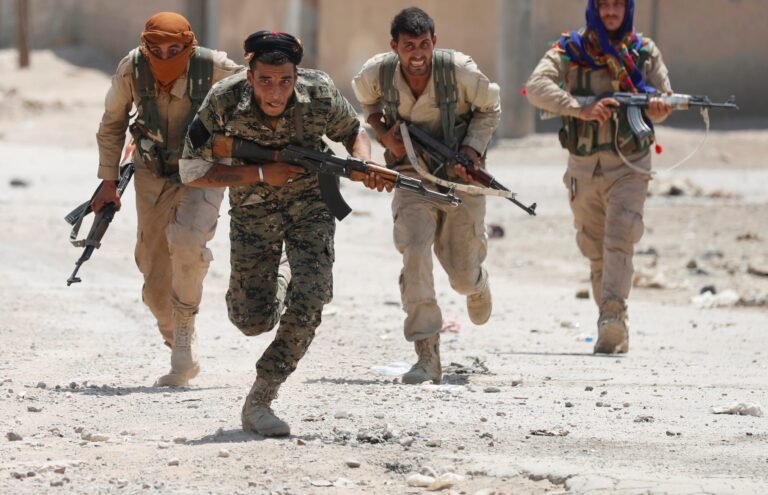
In the landscape of modern conflict, nation-states increasingly leverage non-state armed groups to advance their strategic objectives. This approach allows sponsoring states to project power while avoiding the immense political, financial, and military costs associated with direct intervention.
From the Middle East and Africa to Eastern Europe and South Asia, proxy relationships have become a defining feature of contemporary warfare. However, delegating violence to an external group is inherently risky. Proxies frequently pursue localized agendas, misuse resources, disobey explicit commands, or, in severe cases, turn their weapons against their original benefactors.
Recent conflict research indicates that foreign state sponsorship is far more structured and regulated than commonly assumed. Rather than relying on vague or informal influence, sponsoring states deploy specific, institutionalized mechanisms designed to maintain compliance and mitigate the risks of delegation.
The relationship between a sponsoring state and an armed group is best understood through the framework of Principal-Agent Theory, where the state acts as the principal and the armed group serves as the agent. The core vulnerability of this dynamic stems from two persistent friction points: misaligned interests and information asymmetry.
Read More: Strategic Design or Structural Accident? Iran’s Proxy Architecture and the Deterrence Trap
Sponsors and proxies rarely share identical end states; armed groups are frequently driven by local grievances, survival, or territorial ambitions that diverge from the grand strategy of their foreign backers. Furthermore, proxies operate directly on the ground and possess superior knowledge of battlefield realities.
This information gap limits the sponsor’s ability to accurately supervise activities, creating opportunities for strategic manipulation, disobedience, or outright defection. To manage these vulnerabilities, states rely on a sophisticated suite of control mechanisms.
Control begins long before the first shipment of aid or weaponry is delivered. Sponsoring states engage in rigorous vetting processes to select armed groups whose foundational motivations align most closely with their own strategic interests. This selection is typically guided by shared ideology, ethnic or religious ties, historical partnerships, or mutual political enemies.
Historical precedents illustrate this calculus, such as Pakistan’s targeted backing of specific Afghan Mujahideen factions during the Soviet-Afghan War, or the United States’ extensive efforts to vet and isolate “moderate” Syrian opposition groups during the Syrian Civil War.
By choosing partners with deeply embedded, compatible preferences, states attempt to minimize future friction and policy divergence from the outset.
Indoctrination and Alignment
Because initial alignment rarely guarantees long-term loyalty, states actively attempt to reshape the political, organizational, and military identity of their proxies. This process, known as programming, goes beyond basic tactical instruction to include political indoctrination and institutional development.
During the Cold War, the Soviet Union, China, and Cuba regularly brought foreign revolutionary fighters to their soil to train them in Marxist-Leninist ideology, ensuring their local campaigns mirrored broader geopolitical objectives.
Similarly, Libya under Muammar Gaddafi provided comprehensive ideological and paramilitary training to various non-state actors across Africa. The ultimate objective of programming is to internalize the sponsor’s values within the proxy’s leadership, cultivating a deeper sense of institutional loyalty that outlasts immediate material rewards.
Financial and material incentives are the most baseline tools used to secure compliance and build structural dependence. Sponsors provide steady funding, advanced weaponry, specialized equipment, and logistical pipelines to tie the proxy’s survival directly to the sponsor’s goodwill.
A critical distinction exists between immediate inducements and future promises. Inducements involve upfront benefits, such as regular salaries paid directly to fighters to ensure operational continuity. Promises, conversely, are conditional assurances of future rewards—such as the delivery of advanced anti-aircraft systems, formal diplomatic recognition, or long-term financial backing—triggered only when specific milestone objectives are achieved. Both mechanisms ensure that the proxy cannot maintain its operational capacity without strict cooperation.
To enforce ongoing compliance, sponsoring states utilize a continuous cycle of reinforcement and deterrence. Armed groups that successfully execute missions, respect operational boundaries, or deliver strategic victories are systematically reinforced with expanded funding, upgraded equipment, or elevated political backing.
Conversely, explicit threats serve as a powerful deterrent against insubordination. Sponsoring states routinely warn proxy leadership that support will be throttled, paused, or permanently terminated if they deviate from established parameters. Because the vast majority of non-state armed groups lack diversified supply chains, the existential threat of abandonment is often sufficient to correct wayward behavior.
Imposing Sanctions: Punishing Operational Defiance
When verbal or material threats fail to alter a proxy’s behavior, sponsors will escalate to punitive sanctions. These measures range from targeted financial freezes and the restriction of critical ammunition supplies to harsher interventions, such as the arrest of defiant commanders, the closure of cross-border safe havens, or direct military action against the non-state group.
While sanctions are inherently risky—as they can permanently fracture the alliance or provoke a violent backlash—states regularly deploy them to preserve their authority.
Historically, sponsors have forcibly engineered leadership changes or entirely dismantled proxy networks when an armed group’s local agenda actively compromised the sponsor’s broader international standing.
Sponsoring states frequently avoid the strategic vulnerability of relying on a single, monopolistic proxy. Instead, they often fund and arm multiple overlapping groups simultaneously, deliberately engineering a fragmented environment of controlled competition.
This multi-proxy strategy prevents any single non-state actor from accumulating enough independent power to defy the sponsor. Because these sub-groups must compete against one another for finite external resources and political validation, they are highly incentivized to prove their loyalty and efficiency to the foreign principal.
Pakistan’s historical management of competing Afghan factions underscores how state actors use internal fragmentation as a structural lever to maintain overarching leverage.
To counter the inherent information asymmetries of proxy warfare, where armed groups may hide battlefield failures, inflate metrics, or conceal illicit behavior, sponsors implement rigorous oversight frameworks.
These frameworks rely on a combination of intelligence networks, embedded military advisers, mandatory real-time communication protocols, financial audits, and independent operational assessments.
By placing state personnel directly inside or alongside the proxy’s command structure, the sponsor can independently verify compliance and gather the accurate intelligence necessary for high-level decision-making, effectively reducing the proxy’s capacity for strategic deception.
Read More: America’s Trap: A War of Imbalance
Implications for International Security
These dynamics challenge the conventional view that proxy warfare is inherently chaotic, unpredictable, or loosely managed. Rather than an erratic environment, state sponsorship represents a highly calculated, bureaucratic, and adversarial system of management defined by strategic checks, structural incentives, and coercive oversight.
For policymakers and security analysts, decoding these hidden mechanics is essential, as the specific structure of a sponsor-proxy relationship directly influences conflict duration, regional stability, and the prospects for peace.
Furthermore, these highly structured control mechanisms carry profound legal and ethical implications, specifically regarding the state’s sovereign liability when its managed proxies violate international humanitarian law or commit war crimes.
As the geopolitical landscape shifts toward great power competition, proxy warfare is expanding through three distinct technological transformations.
First, the digitalization of monitoring is eliminating information gaps. By deploying encrypted biometric tracking, real-time satellite reconnaissance, and proprietary communication networks, sponsoring states can now track proxy movements, weapon deployments, and ammunition usage remotely, reducing the need for physical advisers.
Second, the integration of advanced weaponry is creating an inescapable technological dependence. By supplying proxies with complex systems like loitering munitions, drone networks, and cyber tools, sponsors secure deep leverage; these assets require continuous software updates, specialized technical support, and proprietary parts to remain operational.
Finally, the erosion of plausible deniability is sparking intense legal and attribution battles. As international bodies use digital data to expose state control over armed groups, sponsors are forced to engineer highly sophisticated financial and legal front organizations, shifting the struggle for accountability into international courts and regulatory frameworks.
*The views presented in this article are the authors’ own and do not necessarily reflect the views of The Diplomatic Insight.

Usman Anwar
Usman Anwar is a prospective M.Phil. scholar in Politics and International Relations. His research interests include security studies, maritime affairs, comparative politics, human rights, and climate change. His academic portfolio includes 7 published articles in reputable journals (Category Q-2 and Y) and a book review (Category Q-3). He can be reached at usmananwar2023@gmail.com