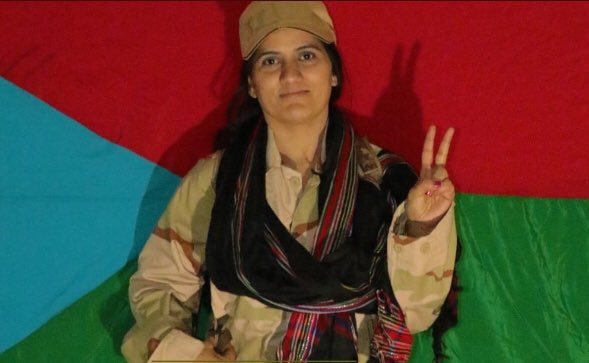
The phenomenon of female suicide bombers originated not within religious extremism but in secular and ethno-nationalist struggles. During the 1980s and 1990s, militant organizations engaged in territorial conflicts began incorporating women into violent operations as part of a broader strategy of total societal mobilization. In these movements, women were not merely symbolic participants but were framed as equal revolutionary actors whose involvement demonstrated the collective commitment of the nation to liberation.
A landmark case was that of Sana’a Mehaidli, a 16-year-old member of the Syrian Social Nationalist Party (SSNP), who carried out a suicide car bombing in Lebanon in 1985. Her attack was framed as an act of patriotic martyrdom rather than religious sacrifice, establishing a secular precedent for female suicide missions.
Similarly, the Liberation Tigers of Tamil Eelam (LTTE) in Sri Lanka institutionalized the use of women through their elite “Black Tigers” unit. Female operatives were trained and deployed systematically, most notably in the 1991 assassination of Indian Prime Minister Rajiv Gandhi by Thenmozhi Rajaratnam (Dhanu). The LTTE effectively exploited gender norms and security gaps, recognizing that women were less likely to be searched thoroughly, thereby increasing operational success.
Expansion and Emotional Narratives: The Rise of “Black Widows” (2000s)
In the early 2000s, the tactic of female suicide bombing spread geographically and began to acquire new socio-cultural and emotional dimensions. Conflicts in the Middle East and the Caucasus witnessed the emergence of female bombers motivated not only by political objectives but also by personal trauma, grief, and revenge.
During the Second Intifada, Palestinian groups such as the Al-Aqsa Martyrs Brigade began deploying women in suicide operations, beginning with Wafa Idris in 2002. This shift was partly pragmatic, as Israeli security measures increasingly restricted male mobility, making women a more effective alternative.
Initially controversial within conservative religious circles, female participation was gradually legitimized through reinterpretations of Islamic doctrine, framing such acts as part of a defensive jihad.
In Chechnya, the so-called “Black Widows” (Smertnitsy) became emblematic of this phase. Many of these women had lost male relatives in the conflict with Russian forces, and their actions were driven by a potent mixture of personal vengeance and nationalist sentiment.
Their involvement in high-profile attacks, including the 2002 Moscow theater hostage crisis and the 2004 airline bombings, underscored the psychological and symbolic power of female perpetrators.
Read More: Kurdish PKK Disbands, Ends 40-Year Armed Insurgency
The Jihadist Reconfiguration: Al-Qaeda’s Strategic Adaptation (2000s–2010s)
Initially, transnational jihadist organizations such as Al-Qaeda resisted the use of women in combat roles due to rigid patriarchal interpretations of gender roles within Islam. Women were primarily confined to supportive functions, including caregiving and ideological propagation. However, the intensification of conflict and operational pressures led to a gradual shift in this stance.
Al-Qaeda in Iraq (AQI), under the leadership of Abu Musab al-Zarqawi, became a pioneer in integrating female suicide bombers into jihadist operations. This marked a significant doctrinal evolution, as necessity began to override ideological constraints.
The case of Sajida al-Rishawi, who attempted a suicide attack in Amman in 2005, exemplified this transition. Although her mission failed, her subsequent execution was used as propaganda to legitimize female participation.
Jihadist ideologues further reinforced this shift by reinterpreting Islamic jurisprudence, arguing that in situations of foreign occupation, jihad becomes an individual obligation (fard ‘ayn) for both men and women. This theological reframing provided a moral and religious justification for the expanded use of female operatives.
Institutionalization and Mass Deployment: Boko Haram and ISIS (2010s–Present)
The 2010s marked a turning point in the scale and nature of female suicide bombing, characterized by systematic and large-scale deployment. Groups such as Boko Haram and ISIS transformed female participation from a tactical option into a central component of their operational strategies.
Boko Haram, operating in Nigeria and the Lake Chad Basin, has utilized more female suicide bombers than any other group in history. Notably, many of these attacks involve coercion, with abducted women and girls forced into suicide missions, often without their full awareness. This represents a significant departure from earlier cases where ideological commitment or personal motivation played a central role.
ISIS initially emphasized women’s roles as “mothers of the Caliphate,” but territorial losses between 2017 and 2019 led to a strategic recalibration. The group began encouraging women to engage directly in combat and suicide operations, framing it as a defensive necessity.
ISIS also introduced the concept of “family suicide bombings,” as seen in the 2018 Surabaya attacks in Indonesia, where entire families carried out coordinated attacks, reflecting a new level of radicalization and normalization of violence.
The Baloch Insurgency: Gendered Transformation in Pakistan
A recent and significant development in the evolution of female suicide bombing is its adoption by the Baloch Liberation Army (BLA) in Pakistan. This marks a profound shift within a traditionally conservative and tribal society where women have historically been excluded from direct participation in violence.
The 2022 attack at Karachi University by Shari Baloch, a highly educated woman and mother, challenged prevailing stereotypes about female suicide bombers.
Her profile indicated that such participation is no longer limited to marginalized or coerced individuals but can also involve educated and ideologically motivated actors. This suggests a deliberate strategic shift by the BLA to signal the intensification of the Baloch insurgency.
Furthermore, the establishment of a female wing within the BLA’s Majeed Brigade indicates the institutionalization of women’s roles in militant operations. These attacks are often directed at high-value targets associated with economic projects such as the China-Pakistan Economic Corridor (CPEC), highlighting the intersection of insurgency, geopolitics, and economic disruption.
Read More: Female Suicide Bombers and the Evolution of Baloch Militancy
Strategic Logic Behind the Use of Female Suicide Bombers
The deployment of female suicide bombers is not merely an ideological choice but a calculated strategic decision shaped by operational, psychological, and symbolic considerations. One of the primary advantages is tactical stealth, as cultural norms in many societies discourage thorough searches of women, enabling them to bypass security measures.
Additionally, attacks carried out by women tend to receive disproportionate media attention, amplifying their propaganda value. This aligns with the concept of the “propaganda of the deed,” where the symbolic impact of an attack is as important as its physical consequences. The use of women also serves as a form of psychological warfare, challenging traditional gender roles and potentially shaming men within the community into greater participation.
Moreover, female operatives can access spaces that are typically restricted to women, such as certain social gatherings or gender-segregated environments, thereby expanding the range of potential targets. This operational flexibility enhances the strategic utility of female bombers.
Looking ahead, the role of women in terrorist organizations is likely to become increasingly complex and multifaceted. Rather than being confined to suicide missions, women are expected to assume hybrid roles that combine physical operations with digital engagement, including online recruitment, propaganda dissemination, and cyber coordination.
Advancements in surveillance technologies and artificial intelligence may reduce some of the tactical advantages currently associated with female operatives. However, militant groups are likely to adapt by exploiting new vulnerabilities, particularly those rooted in social and cultural norms. The continued evolution of this phenomenon underscores the adaptive nature of non-state actors in asymmetric warfare.
Policy, Security, and Research Implications
The future trajectory of female suicide bombing will depend heavily on how states, societies, and international institutions respond to this evolving threat. One immediate implication is the need for gender-sensitive counterterrorism frameworks. Traditional security approaches, which often rely on profiling male suspects, are increasingly inadequate.
Law enforcement agencies must recalibrate their operational protocols, including search procedures, intelligence gathering, and risk assessment models, to account for the growing involvement of women without reinforcing harmful gender biases.
Another critical dimension is prevention through social policy. The pathways that lead women into violent extremism—whether ideological commitment, coercion, personal trauma, or socio-economic marginalization—require targeted interventions.
This includes expanding access to education, psychological support for conflict-affected populations, and community-based deradicalization programs that engage women as both potential victims and agents of prevention. In cases like Boko Haram, where coercion is prevalent, responses must also prioritize victim protection and rehabilitation rather than purely punitive measures.
From a technological standpoint, the integration of AI and digital surveillance will reshape both militant tactics and counterterrorism responses. As extremist organizations increasingly use online platforms for recruitment and propaganda targeting women, states must invest in digital literacy campaigns and counter-narrative strategies that are specifically tailored to female audiences. At the same time, ethical concerns surrounding surveillance, privacy, and profiling must be carefully managed.
Finally, there is a pressing need for academic and policy research to move beyond simplistic narratives of female perpetrators as either victims or anomalies.
Future research should adopt interdisciplinary approaches, integrating gender studies, psychology, security studies, and critical terrorism studies (CTS) to better understand the agency, motivations, and structural conditions shaping women’s participation in political violence. This will not only improve theoretical understanding but also inform more effective and humane policy responses.
*The views presented in this article are the author’s own and do not necessarily reflect the views of The Diplomatic Insight.

Usman Anwar
Usman Anwar is a prospective M.Phil. scholar in Politics and International Relations. His research interests include security studies, maritime affairs, comparative politics, human rights, and climate change. His academic portfolio includes 7 published articles in reputable journals (Category Q-2 and Y) and a book review (Category Q-3). He can be reached at usmananwar2023@gmail.com