The remote desert town of Nokundi in Balochistan’s Chagai district rarely attracts national or international attention. Yet on 30 November 2025, it became the focal point of a significant transformation in the trajectory of the Baloch insurgency.
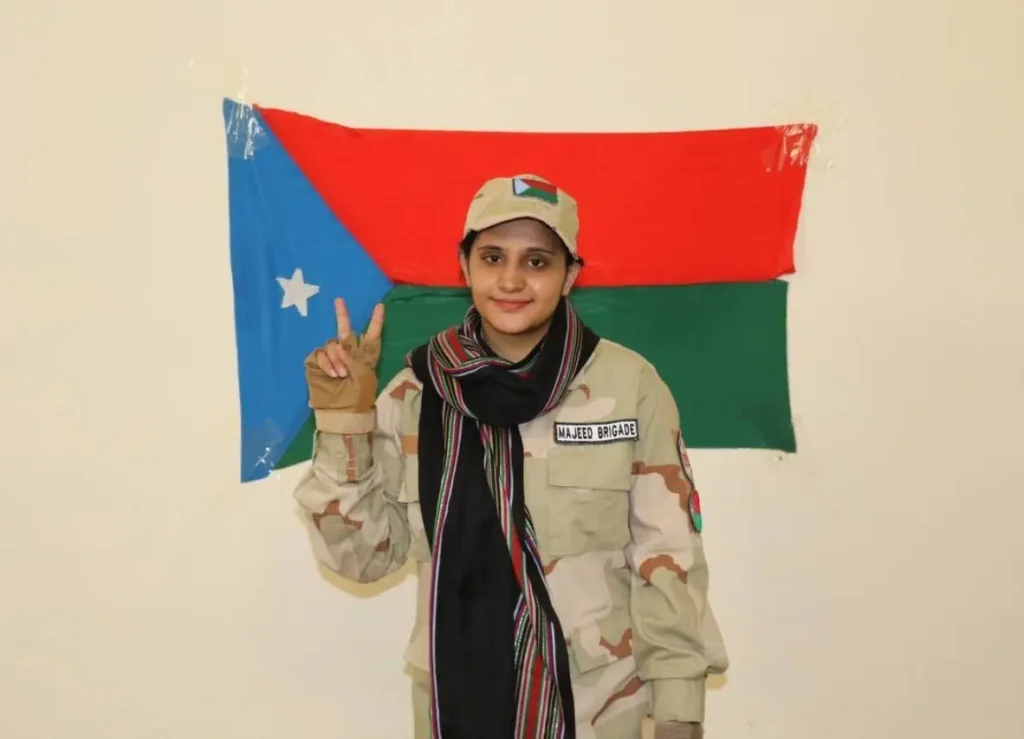
At dawn, Zareena Rafiq approached the gates of a Pakistani army brigade headquarters and detonated herself, becoming the fifth known female suicide bomber associated with Baloch militant organizations. Her action marked the opening phase of a coordinated assault and symbolized a broader strategic recalibration within the insurgency.
Rafiq’s detonation was not an isolated act of violence but the initial stage of a carefully planned operation. The explosion created a breach that enabled five armed militants to storm the compound, triggering a prolonged confrontation that lasted nearly twenty-four hours and involved intermittent gunfire and explosions.
The operation was claimed by the Balochistan Liberation Front (BLF), which described it as the inaugural mission of its newly established Saddo Operational Battalion (SOB). The term Saddo, meaning “morning” in Balochi, was presented as a symbolic reference to a renewed militant campaign—an insurgent “new dawn” in Chagai District.
Read More: US Voices Support for Pakistan After Deadly Balochistan Attacks
The Nokundi assault occurred on the same day that the Balochistan Liberation Army (BLA) carried out a suicide vehicle-borne attack against a convoy of Chinese engineers in the same district. The operation marked the apparent revival of the BLA’s elite suicide unit, the Majeed Brigade, following a period of relative operational inactivity.
Chagai’s strategic importance lies primarily in its mineral wealth. The district hosts the Saindak copper-gold project operated by MCC Resources Development Company, a Chinese state-linked enterprise, as well as major mining initiatives led by Barrick Gold. These ventures are closely associated with the broader framework of the China-Pakistan Economic Corridor (CPEC), making the region a critical node in Pakistan’s economic partnership with China.
The near-simultaneous attacks carried out by rival insurgent factions underscored Chagai’s emergence as the epicenter of a renewed militant offensive. More significantly, these operations connected local insurgency dynamics to intensifying global competition over critical minerals essential for renewable energy technologies and advanced industrial production. In this sense, the insurgency increasingly intersects with global geopolitical and economic transformations.
From Student to “Jindnadrig”
Zareena Rafiq’s personal trajectory provides a revealing insight into evolving recruitment strategies. A university student from Kech district and the daughter of a schoolteacher, she reportedly joined the BLF in 2022 and volunteered for its suicide wing in 2024. Her pathway suggests a deliberate organizational effort to recruit, indoctrinate, and prepare women for operational roles over an extended period.
Militant narratives have framed Rafiq’s action not through the language of religious extremism but through the secular nationalist concept of Jindnadrig, a Balochi term meaning “self-sacrifice for a cause.” Initially popularized by the BLA and later adopted by the BLF, the concept deliberately avoids jihadist terminology. Instead, female suicide bombers are portrayed as martyrs of a national liberation struggle.
This ideological framing serves two strategic purposes. First, it legitimizes women’s participation in violent operations within a deeply patriarchal social environment where female public roles remain limited. Second, it situates the insurgency within a secular anti-colonial narrative rather than a religious one, thereby distinguishing Baloch militancy from Islamist insurgent movements operating elsewhere in Pakistan and Afghanistan.
Tactical and Organizational Evolution
The November 30 assault illustrates key trends in the evolving Baloch insurgency. Women are increasingly integrated into coordinated, multi-stage attacks rather than used as symbolic actors, as demonstrated in the Nokundi operation where a female suicide bomber enabled a complex assault.
The creation of the Saddo Operational Battalion reflects the institutionalization of suicide operations and indicates long-term strategic planning. At the same time, the targeting of foreign interests, including Chinese and Western-linked mining projects, signals a shift toward internationalizing the conflict. As women’s participation becomes more routine, insurgent groups may increasingly incorporate them into leadership, recruitment, propaganda, and operational roles.
The Nokundi attack represents more than a tactical achievement; it marks a watershed in the evolution of Baloch militancy. By integrating female suicide bombers into coordinated assaults and expanding its declared adversaries, the insurgency has demonstrated a capacity for strategic adaptation and organizational innovation.
Read More: UNSC Condemns Balochistan Attacks, Urges Accountability
The attack challenged long-standing assumptions regarding gender roles within the insurgency and highlighted the movement’s expanding strategic ambitions. Female suicide bombers, once considered exceptional or symbolic, are increasingly becoming operational assets within militant strategy.
At the same time, the conflict in Balochistan is becoming more deeply embedded in broader geopolitical processes. Resource competition, foreign investment, and infrastructure development projects are increasingly shaping insurgent targeting decisions and strategic narratives.
The explosion at the brigade headquarters disrupted more than a physical security perimeter; it symbolized the erosion of traditional assumptions about the insurgency’s operational limits and ideological boundaries.
Predictive Outlook: What Happens Next?
Several plausible trajectories are likely to emerge in the aftermath of the November 30 attack. Insurgent organizations may further institutionalize the recruitment and deployment of female operatives, building on the tactical surprise and propaganda value generated by women’s participation in high-profile operations.
This expansion is likely to extend beyond suicide missions into intelligence gathering, logistical coordination, facilitation networks, and media operations, embedding women more deeply within insurgent organizational structures.
At the same time, Pakistani security forces are likely to recalibrate defensive protocols, particularly around military installations and foreign-operated mining and infrastructure sites. Enhanced surveillance systems, stricter access controls, expanded intelligence operations, and tighter movement restrictions are likely to follow. While these measures may strengthen defensive capabilities, they could also intensify local grievances and potentially reinforce insurgent narratives centered on repression and marginalization.
Read More: Emerging TTP–BLA Nexus and Its Implications for Pakistan’s Security Landscape
If foreign investment in Balochistan’s mining sector continues to expand, militant organizations may further broaden their target profiles. Western-linked ventures could increasingly be targeted alongside Chinese projects, reinforcing insurgent narratives that frame the conflict as an anti-colonial struggle against external exploitation of local resources.
The near-simultaneous operations conducted by rival factions suggest a pattern of competitive signaling between insurgent organizations such as the BLF and the BLA. This rivalry may drive escalation, as each group seeks to demonstrate operational capability and ideological relevance through increasingly ambitious attacks.
Over time, the sustained deployment of women in frontline combat roles may reshape internal insurgent hierarchies. Women could gradually assume more significant roles in recruitment, propaganda, operational planning, and command structures. In this sense, the gendering of the insurgency is not merely symbolic but strategic.
It reflects an adaptive militant movement seeking to maximize operational impact, refine its ideological narratives, and assert influence over Balochistan’s contested political and economic future.
*The views presented in this article are the author’s own and do not necessarily reflect the views of The Diplomatic Insight.

Usman Anwar
Usman Anwar is a prospective M.Phil. scholar in Politics and International Relations. His research interests include security studies, maritime affairs, comparative politics, human rights, and climate change. His academic portfolio includes 7 published articles in reputable journals (Category Q-2 and Y) and a book review (Category Q-3). He can be reached at usmananwar2023@gmail.com