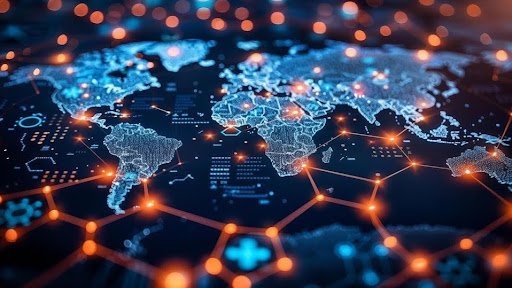
The term Techno Feudalism was coined by Greek economist Yanis Varoufakis in his famous book ‘Technofeudalism: What Killed Capitalism’ (2017). But, even before it surfaced as a theory, technology had already penetrated every aspect of our lives; specifically in international politics and the military domain, challenging the sovereignty of states, security, and modern warfare.
In 2010, Iran’s nuclear enrichment infrastructure became the target of one of the earliest cyber operations in modern history. Hundreds of centrifuges at the Natanz facility began malfunctioning and destroying themselves due to manipulated operating speeds, despite no visible physical attack or internal sabotage.
The cause was later identified as Stuxnet, a highly sophisticated malware widely believed to have been developed jointly by the United States and Israel, although neither government officially acknowledged responsibility. It became the first clear demonstration that a cyberattack could produce direct physical destruction, blurring the boundary of digital and physical domains.
Read More: Mythos AI Has Raised Serious Cyber Security Concerns
But Stuxnet’s arrival was just the beginning of a Revolution in Military Affairs (RMA) and a new domain of warfare. Until then, modern warfare was fought in four domains: Land, Air, Sea, and Space in the 20th century. But cyber warfare became the fifth and only domain that reshaped the rules of warfare, challenging all previous domains at once.
It is challenging because this technological revolution, like AI, Big Data, and Cyber World wasn’t made by any particular state but rather by private companies and big corporations.
The changing nature of warfare and the adoption of cyber attacks have been repeatedly shown in the Russo-Ukrainian war, where the Ukrainian military uses Elon Musk’s private satellite Starlink to navigate and conduct precise drone attacks. But it also changed the traditional way of state sovereignty.
The traditional philosophy of deterrence was the threat of using forces, which kept the enemies away. In the Cold War, it was ‘Mutually Assured Destruction’ (MAD). The USA and the Soviet Union both knew that any attack by each other may occur into Nuclear Warfare. But, how can a state know or suspect anyone if the attack is launched by codes and algorithms by anonymous actors?
Read More: Digital Guerillas: The Cyber Battlefield in Iran and US-Israel Conflict
It can be a state actor, a private company, AI, or a malicious hacker group operating for profit. And in that uncertainty, the old rules of deterrence and collective defense begin to break down. A notorious example can be ‘The Bangladesh Bank Heist 2016’ where individuals robbed at least 100$ million dollars by hacking. As of now, only four of them have been identified, and more than $66 million remains unrecovered.
Second, this new domain marks the end of borders. This is the ultimate challenge to sovereignty. A hostile power can now shut down a country’s financial systems, hospitals, and transportation networks without a single soldier crossing a border.
Geography, or fortification, no longer offers protection from attack. An attack can come from anywhere on Earth at the speed of light. It’s a fundamental shift from the traditional state-centric notion of deterrence into a complex and multidimensional vulnerability to state sovereignty.
States Losing Monopoly Over Rules and Violence
The monopoly of orchestrating violence, once considered the defining characteristic of the modern state according to sociologist Max Weber, is now gradually declining in the age of cyberspace, AI, and big tech.
In 2021, the ransomware group DarkSide launched a cyber attack and shut down the USA’s largest fuel pipeline, and demanded 4.4 million dollars. It was the largest cyberattack on oil infrastructure in the history of the United States, and the violence wasn’t orchestrated by any state but rather by anonymous criminals.
In 2018, the United Nations fact-finding committee says Facebook was used as a determining tool to incite hatred and violence towards Rohingya which led to genocide and ethnic cleansing for millions of Rohingya minorities. These actions and violence are either directly or indirectly linked with big-data corporations and cyber warfare.
Companies like Apple, Google, Meta, which owns Facebook and Instagram, Amazon, and Microsoft are now acting more like geopolitical actors rather than service industries. Mainly because they control the new territory called ‘digital infrastructure’ and are part of our digital life.
Read More: Amazon Internet Outage Affects Major Websites and Apps Including Snapchat
They own the cloud where public data is stored, like Amazon Web Services, along with phone operating systems like Apple and Google. These corporations control digital public spheres where the public gets news and forms opinions.
Second, these companies also set the rules for everyone. When a company like Facebook or Twitter decides to ban a sitting US president, Donald Trump, from their platform for the capitol hill incident, it shows how ‘sovereign’ these tech giants have become while the state becomes gradually vulnerable and exposed to these techno-lords.
Facebook’s third-party fact-checking in COVID misinformation is another way of making government decisions by private tech giants, which has had a significant impact on billions of people worldwide. This is an act of sovereignty. And third, they’ve become the new East India Companies, as states now depend on them for critical state functions and security affairs.
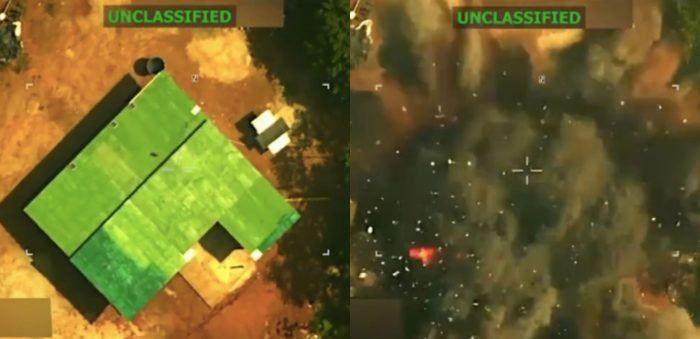
The abduction of Venezuela’s President Nicolás Maduro is the perfect example, where the US administration used ‘Anthropic AI’ for war simulations. This was again used in the Iran War to calculate risk factors, possible casualties, operational measurements, and overall strategic assistance.
AI Companies and State Sovereignty
Unlike traditional industries, AI corporations control the very infrastructure of information, surveillance, communication, and military technology and intelligence. Palantir, one of the biggest military intelligence AI companies, now provides large-scale data and intelligence to the US Department of Defense, CIA, and the military.
According to many sources, the US Department of Defense is the biggest client of Palantir. This shows how the state’s critical and military intelligence are now governed not by the government but by private companies. But Palantir doesn’t only work for the US military or defense but also for international commercial clients.
Which means, it can also sell the state’s secretive data and military intelligence to other international clients if it wants. This places the state in a vulnerable position, where critical intelligence and security infrastructures are no longer fully under sovereign control.
Lastly, these AI corporations, Big-techs, and software companies work globally and collect subscriptions, shares, and partnerships from individuals to the state and regional levels, like the European Union. These companies have become the techno-feudal lords, as the Bank of America coined the term ‘Magnificent Seven’ to indicate the top seven global tech giants that are controlling the world’s flow of data, communication, and military intelligence, not by the states.
Therefore, in this complex reality, sovereignty is no longer measured only by the state’s control over territory, borders, and armies but also by its command over the algorithmic infrastructures and cyberworld on which power now depends. If AI corporations and Big Tech increasingly govern data, communication, intelligence, and even states’ own digital security, can the modern state still claim to be truly sovereign?
*The views presented in this article are the authors’ own and do not necessarily reflect the views of The Diplomatic Insight.

Muhammad Irfan Sadik
Muhammad Irfan Sadikis a researcher, currently serves as the Senior Foreign Policy Analyst atYouth Policy Forum - YPF. Sadik holds a M.S.S. and B.S.S. from Department of International Relations at Jahangirnagar University. His research focuses on Intra-State Conflicts, Strategic Studies, International Security Studies, Disarmament and International Arms Control, and Maritime Affairs. He can be reached atrajinsadik110@gmail.com