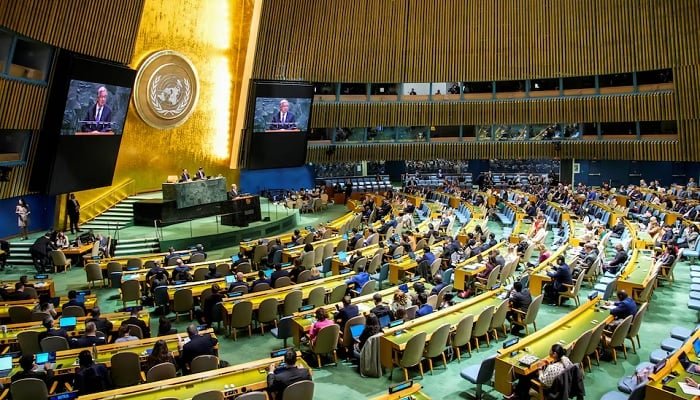
United Nations (TDI): Talks at the United Nations aimed at reaffirming global commitments to nuclear nonproliferation and disarmament ended without agreement on Friday after four weeks of negotiations, dealing another setback to the international arms control framework.
The conference reviewed the Treaty on the Non-Proliferation of Nuclear Weapons (NPT), widely regarded as the cornerstone of global nuclear weapons control, amid growing fears of a renewed global arms race and rising geopolitical tensions.
Conference president Do Hung Viet announced that member states had failed to reach consensus on a final outcome document.
“Despite our best efforts, it is my understanding that the conference is not in a position to achieve agreement on its substantive work,” he said, adding that he would not put the draft document forward for adoption.
The collapse marks the third consecutive failed review conference after similar breakdowns in 2015 and 2022, reflecting deepening divisions among nuclear and non-nuclear states over disarmament commitments and regional security disputes.
Negotiators had worked on a heavily revised and diluted draft text, but disagreements persisted over references to Iran, North Korea, nuclear testing and future arms control commitments between major powers.
Read More: Russia Conducts Nuclear Exercises as Ukraine War Raises Tensions with NATO
The text only stated that Iran “must never” develop nuclear weapons, while earlier references to Tehran’s alleged “non-compliance” with nuclear obligations were removed following objections from several countries, according to AFP.
References expressing concern over North Korea’s nuclear program and calls for the denuclearisation of the Korean Peninsula were also omitted from the final draft under discussion.
In addition, language urging the United States and Russia to negotiate a successor agreement to the expired New START treaty was removed from the revised version.
Read More: NPT RevCon 2026 and the Crisis of the Global Nuclear Order
Despite the watered-down language, the text still included references to concerns over possible resumption of nuclear testing by Russia, China and the United States, along with growing nuclear arsenals and threats to nuclear infrastructure.
Analysts warned that repeated failures to produce consensus documents could weaken the credibility of the NPT regime even if the treaty itself remains in force.