This article analyzes the emerging tactical partnership between the Tehreek-i-Taliban Pakistan (TTP) and the Balochistan Liberation Army (BLA) and assesses its implications for Pakistan’s internal security and regional stability.
Although the two groups are rooted in fundamentally different ideological manifestos, recent intelligence and security assessments (2024–2025) indicate a growing pattern of pragmatic cooperation driven by shared operational interests, common adversaries, and overlapping militant ecosystems.
This evolving nexus marks a significant shift from isolated insurgent movements toward a loosely networked militant environment, increasing the complexity and lethality of security threats faced by Pakistan.
Recent analyses indicate that the TTP and the BLA have entered into a tactical, non-ideological partnership designed to maximize operational impact against the Pakistani state, despite their fundamentally divergent ideologies—where the BLA pursues a secular Baloch ethno-nationalist insurgency and the TTP functions as a right-wing Islamist extremist organization seeking to impose its interpretation of Sharia law.
This pragmatic alignment has emerged in response to intensified counterterrorism pressure, shrinking operational space within Pakistan, and opportunities created by cross-border sanctuaries in Afghanistan, enabling both groups to temporarily set aside ideological contradictions in favor of mutual tactical gains.
The convergence has coincided with a marked escalation in militant violence, particularly in Balochistan, reflecting improved planning, coordination, and an overall increase in operational and tactical sophistication.
Evidence of Collaboration
Shared infrastructure and direct operational coordination between militant groups have become increasingly evident, with UN Security Council monitoring reports from January 2025 identifying at least four joint training and facilitation camps in southern Afghanistan—particularly in the Walikot and Shorabak districts—used for weapons handling, explosives training, small-unit tactics, cross-border logistics coordination, and planning synchronized attacks inside Pakistan.
Intelligence briefings from March 2025 further highlight Al-Qaeda’s critical facilitative role in this ecosystem, as its operatives provided ideological justification for tactical cooperation, delivered advanced militant training, and acted as trust-brokers between TTP and BLA cadres, reinforcing Al-Qaeda’s enduring function as a connector organization linking ideologically diverse militant actors.
Beyond shared infrastructure, Pakistani security agency field reports from February 2025 indicate direct operational training conducted by the TTP for BLA militants in January 2025 within Balochistan, focusing on coordinated attack timing, diversionary tactics to overstretch security forces, safe-house management, and post-attack withdrawal.
Leadership-level cooperation has also been substantiated through interrogations following the mid-2024 arrests of senior TTP commanders Nasrullah (Maulvi Mansoor) and Idrees (Irshad), which revealed a January 2024 coordination plan with Bashir Zeb, commander of the BLA’s Majeed Brigade, including detailed arrangements for militant movement from Afghanistan into southern Balochistan via specific routes, facilitators, and logistical support, indicating strategic and command-level collaboration rather than ad hoc battlefield coordination.
Read More: Afghan Nationals and the Dynamics of Terrorism in Pakistan
Ideological Divergence and Convergence
Despite their sharply different manifestos, the TTP and BLA have identified pragmatic convergence points that enable collaboration.
| Dimension | Balochistan Liberation Army (BLA) | Tehreek-i-Taliban Pakistan (TTP) |
| Core Identity | Ethnic Baloch insurgent group | Islamist extremist, right-wing militant organization |
| Ideological Orientation | Secular, ethno-nationalist | Religious, jihadist (Salafi-influenced) |
| Primary Objective | Autonomy or independence for Balochistan | Enforcement of Sharia law in Pakistan |
| View of the Pakistani State | Sees the state as an occupying and exploitative power | Rejects Pakistan’s constitutional and political order as un-Islamic |
| Key Grievances | Resource exploitation, political marginalization, enforced disappearances | Implementation of Islamic governance, opposition to state authority |
| Position on Religion in Governance | Religion is secondary; nationalism is central | Religion is central; nationalism is rejected |
| Alignment with Global Movements | Locally focused; limited transnational ambitions | Ideologically aligned with transnational jihadist networks |
| Ideological Compatibility | Fundamentally incompatible with Islamist governance models | Rejects secular nationalism as illegitimate |
Points of Convergence and Tactical Collaboration
| Convergence Area | BLA Role / Benefit | TTP Role / Benefit |
| Common Adversary | Targets Pakistani military and security apparatus | Targets Pakistani state institutions |
| Operational Complementarity | Provides local terrain knowledge, ethnic networks, and access to targets in Balochistan | Supplies expertise in suicide bombings, urban terrorism, and coordinated attacks |
| Shared Safe Havens | Uses cross-border sanctuaries for regrouping and logistics | Benefits from overlapping sanctuaries in southern Afghanistan |
| Transnational Facilitation | Gains legitimacy for cooperation through al-Qaeda mediation | Uses al-Qaeda framing of “tactical alliance” to justify cooperation |
| Mutual Tactical Gains | Access to advanced training and suicide-attack capabilities | Expands operational footprint into Balochistan |
| Strategic Trade-Off | Temporarily suspends ideological rigidity | Prioritizes operational reach over ideological purity |
| Nature of Alliance | Transactional, short-term, and reversible | Pragmatic, tactical, and non-ideological |
Despite deep ideological incompatibility, both the BLA and TTP subordinate doctrinal purity to short-term operational gains, enabling a transactional alliance centered on a shared adversary, complementary capabilities, and cross-border logistical ecosystems. This convergence reflects strategic pragmatism rather than ideological fusion, making cooperation effective but inherently unstable.
Latest Coordinated Attacks and Security Implications for Pakistan
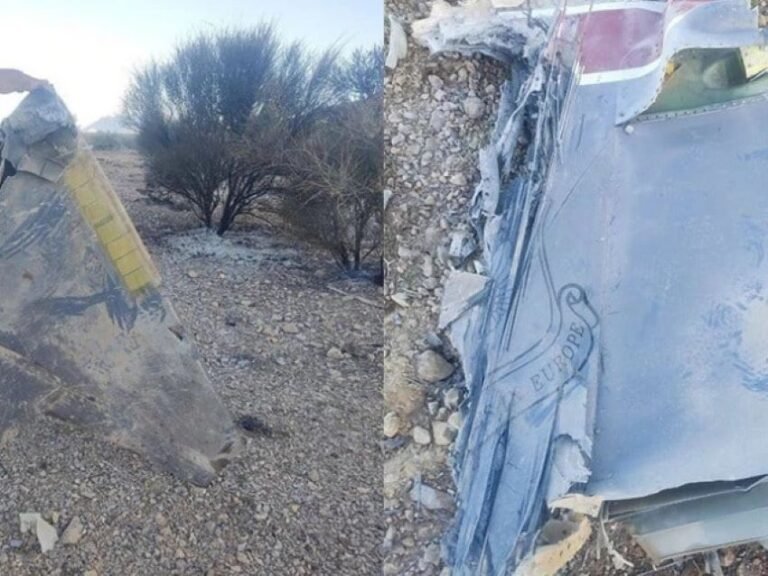
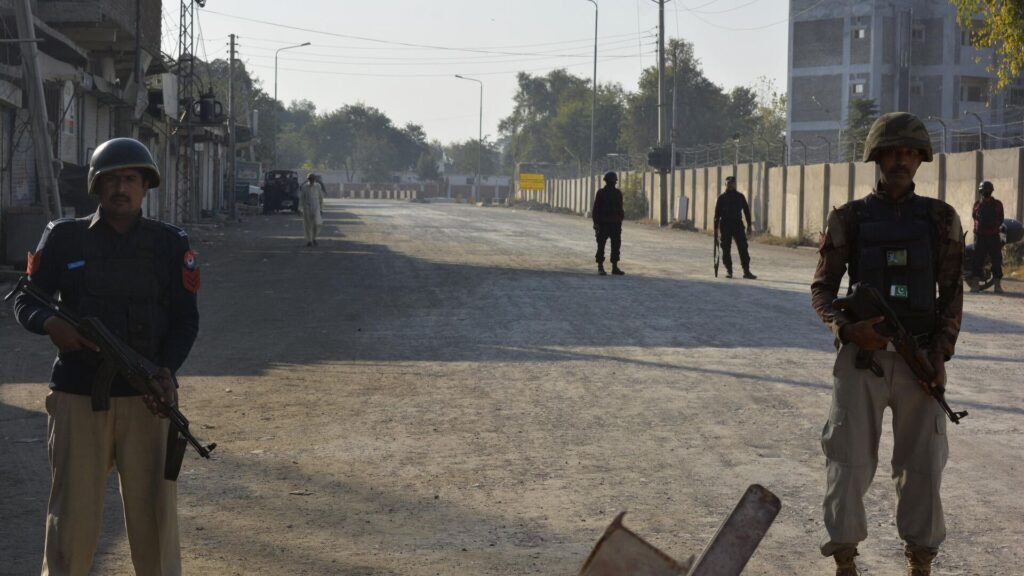
In the largest insurgent offensive in recent years, the Balochistan Liberation Army (BLA) conducted synchronized, multi-pronged attacks across Balochistan from late January to early February 2026, striking at least 10–12 locations including Quetta, Gwadar, Mastung, Nushki, Dalbandin, Kharan, Panjgur, Tump, and Pasni, where militants engaged security forces through gunfire, attempted suicide bombings, assaults on police stations and military posts, and the sabotage of critical infrastructure.
The coordinated violence resulted in dozens of deaths, including both civilians and security personnel, while Pakistani authorities reported killing approximately 145–177 militants during subsequent counter-operations. Branded by the BLA as “Operation Herof,” the offensive featured notable tactical innovations such as militants disguised as civilians, the deployment of suicide bombers—including female attackers—and simultaneous strikes on high-security installations, hospitals, and public markets.
The Pakistani government described the attacks as “unprecedented” and responded with an extensive military crackdown, while also alleging foreign backing for the militants—claims that were formally denied by the accused states. Overall, the offensive marks a significant escalation in the BLA’s operational capacity, reflecting improved planning, coordination, and execution, as well as the possibility of external facilitation.
Read More: TTP’s Quest for a ‘Brother Emirate’ and Why Pakistan Must Respond
Implications of this coordination between TTP and BLA are numerous for Pakistan:
- Increased Lethality and Attack Frequency
- Combined capabilities amplify the scale, coordination, and impact of militant operations.
- Expanded Target Spectrum
- Joint operations increase risks to:
- Security forces and government installations
- Strategic infrastructure and economic assets
- Foreign interests linked to development and investment projects
- Complex Cross-Border Threat Dynamics
- Shared sanctuaries undermine conventional counterterrorism approaches and require enhanced regional coordination.
The evolving militant landscape presents multiple risk pathways and strategic implications going forward: the scale and coordination of recent attacks indicate a shift toward more sophisticated, networked operational models, with enhanced joint training and tactical synchronization—potentially involving TTP elements—enabling wider reach and higher-casualty operations; simultaneously, allegations of foreign support from neighboring states risk intensifying regional tensions and complicating diplomatic efforts, making cross-border cooperation with Afghanistan and sustained engagement with international partners increasingly critical.
In response, Pakistan is likely to continue large-scale counterterrorism measures, including intelligence-driven targeting, special operations, and strengthened border security, but the effectiveness of these efforts will depend on a dual strategy that combines hard security with addressing local grievances such as economic marginalization.
Ongoing pressure may also drive splintering within militant groups or the formation of new tactical alliances with other extremist factions, alongside adaptive shifts toward urban insurgency, cyber activities, and expanded recruitment beyond traditional strongholds. At the international level, deeper intelligence sharing and counterterrorism cooperation will be essential to disrupt transnational networks.
Overall, the trajectory of the conflict will hinge on state responses, regional diplomatic dynamics, and militant adaptability; without integrated political, economic, and security initiatives, the risk of further escalation and wider destabilization remains high.
*The views presented in this article are the author’s own and do not necessarily reflect the views of The Diplomatic Insight.

Usman Anwar
Usman Anwar is a prospective M.Phil. scholar in Politics and International Relations. His research interests include security studies, maritime affairs, comparative politics, human rights, and climate change. His academic portfolio includes 7 published articles in reputable journals (Category Q-2 and Y) and a book review (Category Q-3). He can be reached at usmananwar2023@gmail.com