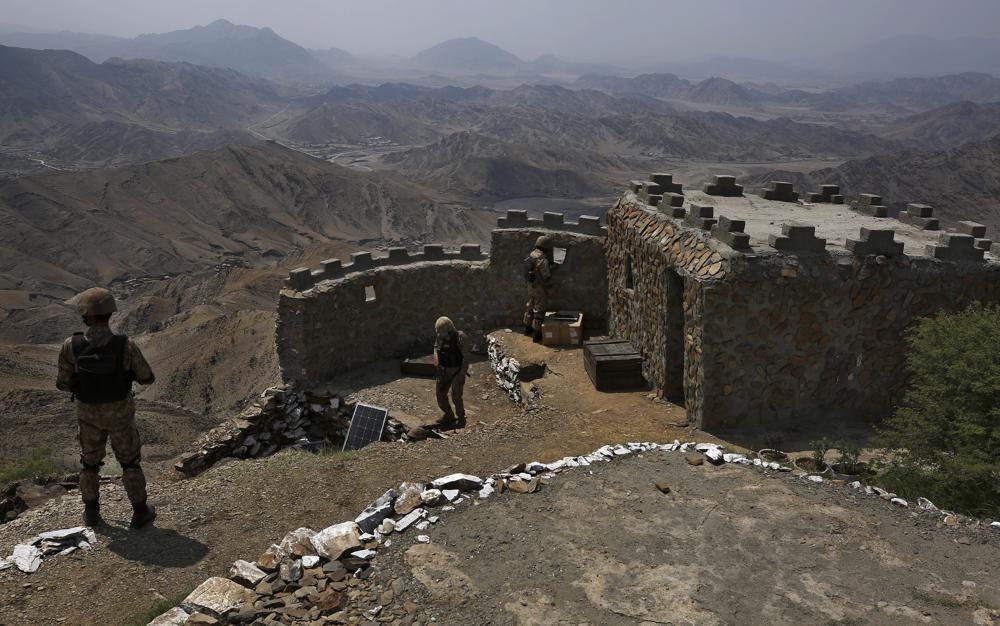
The security situation in South Asia changed when the Taliban came back to Kabul in August 2021. It looked like the end of a 20-year war in Afghanistan, but it actually started a new one in Pakistan. The Tehrik-e-Taliban Pakistan (TTP) has been kept down by Pakistan’s military for a long time, but they got stronger, more confident, and free to move around again. The group’s activities along the border between Pakistan and Afghanistan have grown considerably since August 2021, and its leaders now openly talk about building a “Brother Emirate” in Pakistan’s tribal areas.
This is a major problem for Pakistan’s security; with direct implications for national sovereignty, regional peace, and economic stability. The trajectory of these past four years clearly suggests that Islamabad needs to take a strong, multi-faceted approach that includes hardline counterterrorism, border diplomacy, and socioeconomic revival in order to stop this threat before it spreads further.
There is no doubt that the TTP and the Afghan Taliban (TTA) have similar ideas. Each has its roots in a strict framework of religious thought, which seeks to build a government based on their own understanding of Sharia law. The TTP wants the same things for Pakistan as the Afghan Taliban aspired for Afghanistan. Because of this coming together of ideas, the TTP has been able to reorganize since 2021.
According to a United Nations Security Council report, over 6,000 TTP fighters are free to roam across Afghanistan. In the Pakistani regions of Khyber Pakhtunkhwa and Balochistan, these fighters set up ambushes and assaults using vulnerable locations along the border. Despite their public promises, Kabul’s Taliban officials have done little to curb these safe havens. The TTP is seen by the Taliban as a historical ally rather than an opponent. After twenty years of fighting together against foreign countries, they became close.
Even now, their ideological connections and political refuge demonstrate this closeness. The reintroduction of the TTP in Pakistan’s northwest has sparked fresh concerns. By creating their own laws and collecting taxes, terrorists have attempted to restore “shadow governance” in both North and South Waziristan. Police officers, educators, and development workers attempting to reconstruct their lives after years of conflict have been targeted by these fanatics. In 2024, there were more than 1,500 terrorist incidents countrywide, the highest since 2014, according to the Pakistan Institute for Peace Studies.
Read More: The Crossfire Moment in Pakistan versus the Twin Taliban Front
Pakistan’s law enforcement and military personnel have reacted by undertaking concentrated operations to eradicate terrorist organizations and defend border communities. These operations, in contrast to earlier campaigns, now concentrate on intelligence-led campaigns meant to limit civilian deaths and eliminate rebel command infrastructure. Additionally, the government has strengthened coordination with tribal elders and local Jirgas to deny militants social space. However, the process is still exceedingly difficult: it will take time and effort to rebuild governance, business, and education in these afflicted areas.
The savagery of the TTP has damaged the social fabric by compelling families to flee, closing schools for females, and weakening public-state trust. Despite their reservations, most people in Khyber Pakhtunkhwa continue to support the ongoing counterterrorism efforts. The majority of residents agree that long-term employment, education, and growth are critical to ending extremist cycles. Nonetheless, they also believe that the military’s activities are critical to bringing about order and averting a return to chaos. Numerous tribal elders and youth leaders assert that inclusive governance and socioeconomic justice are the only paths to peace.
People in North Waziristan, Bajaur, and other tribal regions bear the largest fallout of terrorist activities and counterterrorism operations. Markets open and shut abruptly during curfews, schools are sometimes closed, and families are still compelled to relocate, making daily living precarious for the inhabitants. People are becoming more and more dissatisfied, civilians bemoaned the difficulty of coping with curfews and blockades, and the failure of previous offensives to establish enduring peace with new enterprises; as demonstrated in Bajaur’s Lowi Mamund Tehsil’s protest.
Repeated military actions, according to many locals, might worsen the situation by leaving people more frustrated. The elders and political leaders of Mohmand and Bajaur vehemently opposed major fresh offensives, arguing that achieving true peace requires striking a balance between local community involvement and safety.
Despite this criticism, many pledged to cooperate with the government in dismantling terrorist organizations by exchanging information and supporting their local communities. Local administrations in sections of Bajaur and Dir have admitted that public confidence in state institutions is still weak. They say that improved governance, prompt compensations for impacted families, and development initiatives that enable young people to oppose extremist narratives are all necessary for long-term stability.
Read More: Afghanistan-Based TTP Fighters Reignite Violence in Khyber Pakhtunkhwa
The Taliban’s hold over Kabul has affected the region. Afghanistan’s economy remains in tatters and its governance remains incompetent. Allowing terrorist networks to operate in Pakistan, Afghanistan, Iran, and Central Asia might result in the creation of a corridor of instability. Recent border confrontations and refugee influx have shown how unstable the situation has become. Pakistan is still home to millions of Afghan refugees, many of whom were forced to flee their country due to economic collapse and fear of reprisals. Pakistan cannot keep its humanitarian commitments while ignoring the security risks presented by unfettered mobility.
Regional collaboration with governments in China, Iran, and Central Asia must be enhanced to stop extremist organizations from exploiting these movements. Pakistan’s strategy has to be supported by three well-balanced pillars. Firstly, continue to strengthen border security and local law enforcement while conducting intelligence-driven, targeted operations to eliminate terrorist strongholds. Secondly, so that radicals cannot exploit poverty or neglect, rebuild and invest in jobs, health care, and education in the tribal communities. Thirdly, work with the Taliban government, China, and international allies to create accountability and limit cross-border safe havens.
TTP’s intention to establish a “brother emirate” is not only symbolic but strategic. Permitting the development of such a parallel state on Pakistani soil would instill confidence among extremists in the region. The TTP has become more determined as a result of the Taliban’s ascent in Kabul, but Pakistan still has options. Pakistan should halt the TTP’s progress by implementing planned security operations, maintaining governance in areas that are at risk, and engaging strategically in the region. Fighting extremism is a struggle for the nation’s social order, economy, and reputation in the area, not only a military conflict. Pakistan’s actions today will determine whether Waziristan remains the center of another never-ending conflict or a border of peace.
*The views expressed in this article are the author’s own and do not necessarily reflect the editorial policy of TDI.

Hamdan Ahmed
Hamdan Ahmed is a student of International Relations at NUML, Islamabad. He can be reached at hamdanahmed319@gmail.com