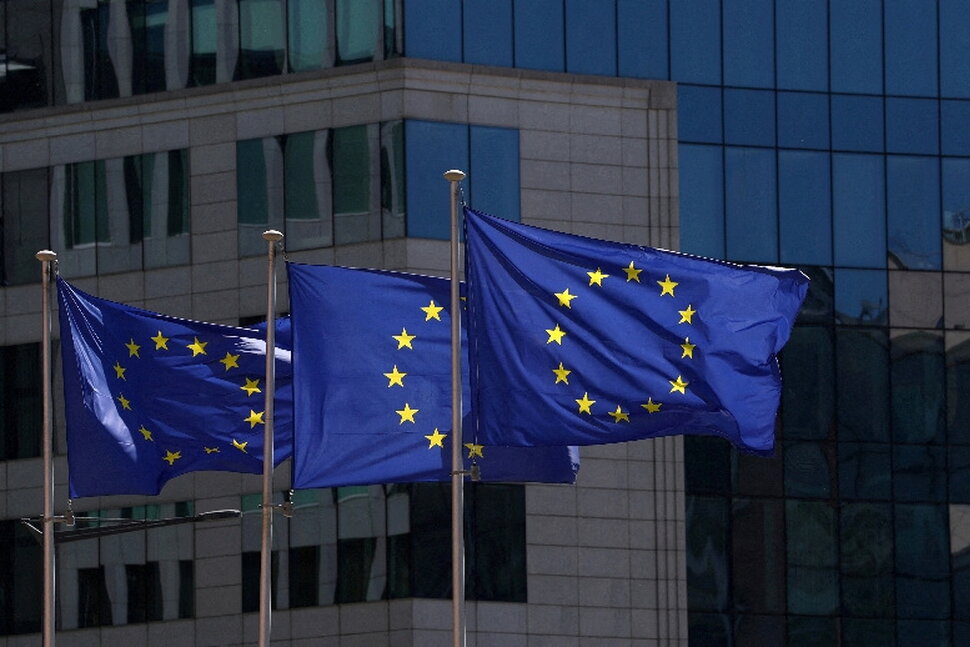
European Union envoys have pushed back the expiry of Russia sanctions listings by seven days until September 22, after failing to agree on a six-month renewal.
EU ambassadors meeting in Brussels on Monday agreed to keep the measures in effect until September 22, avoiding their scheduled expiry on September 15 but leaving the underlying disagreement unresolved.
The Danish EU presidency confirmed that envoys have opted for the short extension after failing to secure the unanimity required for a standard six-month renewal.
At issue is whether to de-list Russian-Uzbek billionaire, Alisher Usmanov. France has joined Slovakia in a call to remove him, citing national security concerns, an anonymous EU diplomat told EuroNews.
The stated rationale from Paris “We have a separate issue related to national security, and we would like to respond positively to our international partners who are approaching us regarding MR Usmanov” has offered little transparency and generated considerable disquiet among the bloc’s remaining twenty-five members.
Read More: Half of the Europeans Fear War With Russia, Survey Finds
On September 9, Committee of Permanent Representatives (Coreper) failed to reach an agreement on the proposed extension, and on September 11, negotiations again ended without a final decision.
France’s arrival changes the arithmetic. One state holding out can be pressured into folding. Two is a different negotiation, particularly when one of them is among the largest members and has been among Ukraine’s most vocal backers.
The decision turns what would normally be a largely procedural sanctions review into a test of the EU’s ability to maintain a common Russia policy when individual governments use the unanimity requirement to seek changes to the blacklist. It was an unprecedented move since the start of the full Ukraine war in 2022.
Ukrainian President Volodymyr Zelensky did not equivocate. In a social media post on September 12, he called out Fridman and Usmanov by name, demanding that the EU mount pressure against Russia’s business sector rather than ease sanctions: “When the Ukrainian economy is simply a target for Russia, it is certainly not the time for Europe to view Russian oligarchs as friends. When Russia uses every euro and dollar to prolong the war, it is immoral and self-destructive to give Russian businesses the opportunity to live in a way that allows them to avoid the consequences of the war.”
The fracture over sanctions is not occurring in a vacuum. It is occurring inside a Europe that has progressively hollowed itself out.
Equipment stocks in European NATO countries are still below their 2021 levels, the headline conclusion of McKinsey’s February 2026 defencs dashboard, drawn from official procurement data across the alliance.
Read More: France’s Doctrinal and Institutional Dilemma in European Defense
European NATO countries have spent more on defense in the past three years than at any comparable period since the Cold War.
They have donated weapons to Ukraine, signed new procurement contracts and launched emergency production programs. Their combined equipment inventory has shrunk regardless. The money is real. The output is not.
Europe is not facing a spending crisis, it is facing an allocation crisis. Raising defense spending to sufficient levels could result in a doubling of current primary deficits to just over 3 percent of GDP on average, a fiscally unattainable goal for this group of countries.
The EU’s individual sanctions regime, theoretically one of its lowest-cost instruments of pressure, now cannot even clear the procedural bar of unanimous renewal without a weeklong extension bought under duress.
EU countries frequently debate Russia sanctions renewals until the last moment, in the past largely due to demands from Hungary’s former leader Viktor Orbán and Slovakia, which has better relations with Moscow than most other EU states.
In June, EU countries agreed for the first time to renew the bloc’s sectoral sanctions, such as those on energy, for a year to reduce the opportunity for such debates.
The structural workaround, however, has not held for the individual listings regime, which remains fully exposed to the unanimity requirement, and, apparently, to geopolitical side-bargaining by member states pursuing undisclosed bilateral agendas.
Unless France, Slovakia and the other member states reach a compromise over Usmanov and Fridman, the EU will again face the question it avoided this week: whether individual national demands can be accommodated without putting the wider Russia sanctions regime at risk.

Muhammad Mahad Samija
Muhammad Mahad Samija is a student of Political Science at Government College University, Lahore. He can be reached at [email protected]