On February 7, 1968, American bombs, rockets, and napalm destroyed much of the South Vietnamese provincial capital of Bến Tre during the Tet Offensive.
Later that day, an unnamed American officer gave Associated Press reporter Peter Arnett what became the defining utterance of that war: “It became necessary to destroy the town to save it.” The quote’s precise attribution has been disputed over the decades, but its analytical content has not.
It captured, with inadvertent precision, the terminal contradiction of attrition warfare: when the means of defending a place become indistinguishable from its destruction, the doctrine generating those means has lost coherent connection between action and purpose.
That contradiction is not a relic of Vietnam. It is now embedded, quietly and without adequate public examination, into the tactical nuclear posture that Elbridge Colby’s Pentagon is assembling for the next great-power war.
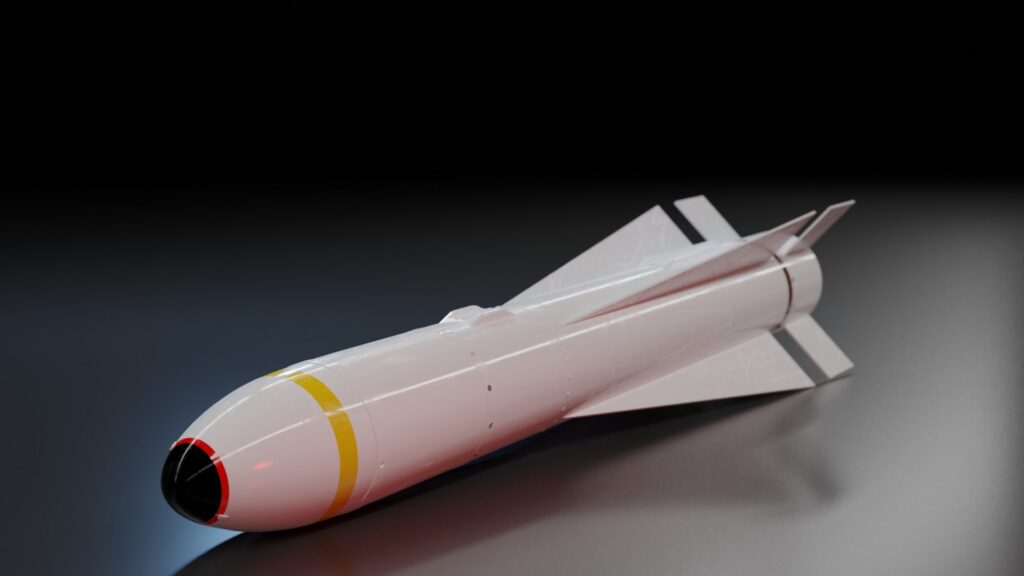
Stripped of its deterrence vocabulary, the logic runs as follows: because American conventional forces are insufficient to defeat a peer adversary’s advance in a regional theater, tactical nuclear weapons will serve as the compensatory instrument. They will be used on advancing forces.
Read More: Trump Effect and America’s Shrinking Footprint in Asia
Those advancing forces will be advancing through allied territory — through Taiwan, through the Korean Peninsula, through the Baltic states. The weapon that saves the ally detonates on the ally. Bến Tre, scaled to the civilizational proportion.
The Journal of Strategic Studies published in October 2025 the most rigorous peer-reviewed examination of this question in the Taiwan context. Its conclusion was unambiguous: a shift to limited nuclear war strategy in the Taiwan Strait “is unlikely to deter Beijing” and “if implemented, the policy is likely to spark dangerous escalatory dynamics in the event of conflict, expanding beyond the Straits, alarming and unsettling regional allies, and undermining broader U.S. foreign policy goals.”
The journal’s assessment was not ideological. It was geometric. And the geometry of the three primary theaters where this doctrine would be applied is worth examining without euphemism.
Taiwan is an island of 36,000 square kilometers with a population of 23 million concentrated along its western coastal plain. That same western corridor — where an amphibious assault force would concentrate its lodgment — is where TSMC’s fabrication plants in Hsinchu, Taichung, and Tainan produce over 90 percent of the world’s most advanced semiconductors.
As the Atlantic Council’s analysis of nuclear weapons in a Taiwan crisis notes, once an amphibious force moves ashore and off the beaches, “the landing force’s vulnerability diminishes, and the potential collateral damage to Taiwan increases.” T
here is no gap between the military target and the civilian and industrial landscape. A tactical nuclear strike on a PLA beachhead in western Taiwan does not distinguish between the advancing force and the semiconductor infrastructure whose preservation is the stated strategic rationale for American commitment in the first place. The doctrine destroys the object it exists to protect.
The question then is whether such a strike would even halt the advance. Beijing’s military planning has for decades incorporated nuclear use scenarios as an operational contingency, not an exception. China’s nuclear forces “potentially play both deterrence and warfighting roles in a Taiwan invasion scenario,” including explicitly deterring American limited nuclear use.
A tactical American strike does not present Beijing with a signal to negotiate. It presents it with a decision: absorb the strike and continue, or escalate.
The dispersal protocols for a PLA amphibious force under nuclear attack are not improvised; the answer to the first strike is already written. The defender’s hope that one detonation will produce a pause for reflection assumes a command architecture calibrated for restraint under conditions of maximum pressure — an assumption that has no evidentiary basis in any serious war-gaming exercise conducted over the past forty years.
The Korean Peninsula is geometrically the most brutally honest case. Seoul, a metropolitan area of nearly ten million people, sits approximately 25 to 35 miles from the demilitarized zone — the point from which any KPA conventional advance would originate.
A tactical nuclear strike on DPRK forces advancing southward detonates in the same corridor that Seoul’s northern suburbs occupy. The DPRK’s September 2022 Nuclear Forces Policy Law formally authorizes pre-emptive nuclear strikes if the leadership or command-and-control infrastructure is threatened.
Kim Jong Un stated in October 2024 that the DPRK would use its forces, including nuclear weapons, “without hesitation” if sovereignty were encroached upon. A tactical American nuclear strike on forces advancing from DPRK territory does not, within that doctrine’s logic, register as a proportionate battlefield response.
It registers as the opening of a strategic exchange, and the response — directed at Seoul — arrives before any American follow-on action can be calibrated. A single 250-kiloton strike on the city would kill over 700,000 people and eliminate one of Asia’s primary economic centers. The tactical nuclear defense of South Korea and the incineration of South Korea’s capital are, under these conditions, a single operational sequence.
In Europe, the lesson was absorbed through bitter institutional memory — the entire arc from ‘Carte Blanche’ in 1955 through ‘Flexible Response’ in 1967 was driven by European insistence that the continent should not be made a ‘sacrifice zone’ for American nuclear credibility.
MC 14/3, NATO’s 1967 strategic concept, preserved nuclear weapons as a final resort precisely because European members understood that forward use of those weapons over their own territory meant the end of the thing being defended.
The current Colby posture is being drafted by a policy architecture whose mental geography is the Indo-Pacific, not the North European Plain. The eastern flank members — Poland, Estonia, Latvia, Lithuania — now constitute NATO’s forward zone.
They are countries of dense population, shallow strategic depth, and proximity to Russian territory that forecloses any meaningful distinction between a tactical nuclear exchange and the physical destruction of their inhabited centers. The Bến Tre logic does not require Vietnam for its operation. It requires only geography and a doctrine that has lost track of what it is defending.
What each of these three theaters shares is the same structural feature: the advancing force and the territory being defended occupy the same physical space. There is no uninhabited buffer zone, no open steppe over which tactical weapons can fall on military formations without simultaneous destruction of the political object the commitment is meant to preserve.
In Vietnam, the officer’s remark to Arnett was understood, even at the time, as an inadvertent admission of strategic failure — the acknowledgement that the framework within which the operation was being conducted had ceased to be capable of distinguishing between destroying the enemy and destroying the ally.
The Arms Control Association’s analysis of the Colby posture, published in August 2026, notes that critics have “strongly warned against the idea of developing more tactical nuclear weapons” on precisely these grounds — that any nuclear exchange “would likely lead to a global catastrophe” regardless of the tactical framing applied to the initial use.
Read More: China’s Nuclear Doctrine: What’s Driving It?
Colby himself acknowledged the underlying stakes in Senate Armed Services Committee testimony in March 2026, telling the committee that the military balance vis-à-vis China has “deteriorated dramatically” and that what he has been trying to do is “shoot a signal flare” about the urgency of the situation. The signal flare is honest. The proposed response to the emergency it identifies is not.
Substituting tactical nuclear weapons for the conventional capacity that has been spent over two decades of strategic misdirection does not repair the deterioration Colby diagnoses. It leverages that deterioration as justification for a doctrine whose operational execution destroys the alliance commitments it purports to uphold.
The unnamed American officer at Bến Tre was not describing a policy choice. He was describing what happens when a doctrine, followed to its operational conclusion, reverses the relationship between means and ends so completely that the destruction of the protected becomes the instrument of its protection.
The Colby tactical nuclear posture has the same structure. The towns that must be destroyed to be saved are called Taiwan, Seoul, and Tallinn. The doctrine that requires their destruction calls itself ‘extended deterrence.’ The names are different. The arithmetic is the same.
*The views presented in this article are the authors’ own and do not necessarily reflect the views of The Diplomatic Insight.*

Maria Kausar
Maria Kausar is an M.Phil Scholar at the Department of Political Science, Lahore College for Women University (LCWU). Her areas of interests include domestic politics, international relations, and conflict studies.

Muhammad Mahad Samija
Muhammad Mahad Samija is a student of Political Science at Government College University, Lahore. He can be reached at [email protected]