History, when it moves, rarely announces itself clearly. The completion of the American military withdrawal from Iraq on September 30, 2026, formally ending a twenty-three-year military footprint that began with the invasion in 2003, is being read in many Western quarters as a strategic retreat under pressure — a concession extracted by relentless attrition.
This reading is not entirely wrong. But it is profoundly incomplete. What has actually concluded is not merely a military mission. It is the final chapter of one of the most consequential strategic miscalculations in modern history: the deliberate dismantling of Iraq as a counterweight, which inadvertently produced the very strategic expansion it was designed to prevent.
For most of the twentieth century, Iraq was not an Iranian corridor. It was the wall. America’s removal of Saddam Hussein as the principal strategic counterweight to Iran paved the way for an expansion of Iranian influence that no subsequent military presence, no amount of operational spending, and no constellation of coalition partners proved capable of reversing.
This is the foundational irony of the entire enterprise: Washington invaded precisely the state that, whatever its internal character, had functioned as the structural check on Iranian regional ambition. Iran’s most significant regional enemy was removed from the scene, and Shia and Kurdish constituencies aligned with Iran found considerably more maneuvering room in the post-Saddam political structure.
Read More: Iraq Proposes New Dialogue Between Iran and Gulf States Following OIC Meeting
The 2003 invasion did not merely weaken Iraq. It transformed it — from a historical balancer into what has since become the most strategically consequential node of the network I have termed the ‘Ring of Fire’: Iran’s distributed, multi-layered architecture of aligned state, non-state, and semi-state forces extending from the Gulf to the Mediterranean.
The Ring of Fire is not an Iranian command-and-control apparatus in the conventional sense, and treating it through a mechanistic lens fundamentally misreads its logic. It is a strategic ecosystem — bound by shared threat perception, doctrinal alignment, and varying degrees of operational autonomy — whose individual nodes retain the capacity to act independently while remaining coherent at the network level.
Iraq’s arm of this architecture, embodied primarily in the Popular Mobilization Forces and the political infrastructure surrounding them, did not come into being because Tehran willed it. It came into being because the structural conditions created by the occupation made it the only viable framework for a significant portion of Iraqi society to organize its security.
The PMF has gradually expanded its influence over the Iraqi state — and while legally a state institution, in practice it retains highly autonomous control and influence, heterogeneous in nature, with prominent militias receiving operational guidance from Tehran.
What the sustained American military presence did, paradoxically, was provide the PMF with the one thing any resistance formation most requires: a justifying force. PMF chief Faleh al-Fayyadh has stated directly that the need for security forces, including the PMF, is “permanent” as long as security threats continue — and that those who believed the PMF’s role had ended were taking a “superficial view.”
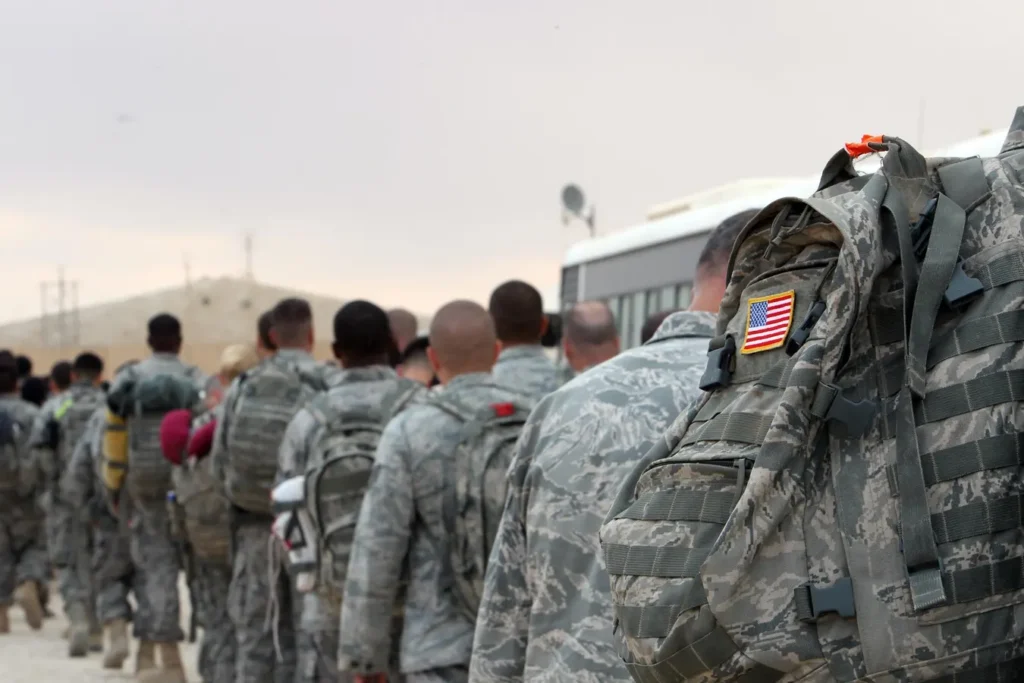
The foreign military footprint was the organizing grievance, the mobilizing frame, the external referent against which the PMF defined its mission and consolidated its domestic legitimacy. Its strikes, raids, and persistent pressure on American positions were not merely tactical harassment — they were the political performance through which the PMF’s social base was continuously reproduced.
Now that the external referent has, for the moment, departed, a new question emerges: does the PMF dissolve into irrelevance, or does it consolidate into something more durable?
The answer is not difficult to read. Iraq’s newly-elected government had insisted that all armed factions operating outside state control would be required to integrate into formal structures by the September 30 withdrawal deadline, with the mechanism requiring factions to hand over independent arsenals to the PMF within a revised institutional framework.
Note what this actually means: disarmament in name, institutionalization in practice. The weapons do not disappear; they migrate into a state structure that the PMF already substantially controls. By proposing that factions transfer their weapons to the Popular Mobilization Commission, the arrangement appears designed to ensure that aligned influence in Iraq survives the coalition’s withdrawal — stalling disarmament and preserving organizational coherence through the transition period.
The pressure valve has been partially released, yes — but the underlying organizational mass remains intact, and it is now acquiring formal state sanction rather than operating in the structural ambiguity that previously characterized it.
The notion, circulating in certain analytical quarters, that the Iraqi arm of the Ring of Fire is heading toward dormancy or strategic irrelevance is built on a category error. It conflates the withdrawal of the occupying force with the removal of the strategic threat that originally brought the PMF into being and continues to motivate it. That threat has not withdrawn.
Iraq remains sandwiched between competing interests — home to a constellation of aligned militia forces while simultaneously being a theater where external actors are actively courting Kurdish opposition groups and conducting strikes on militia positions. The Israeli military threat to the broader network, and to Iraq specifically, has not diminished with the American departure.
Read More: Iraq Says No US Troops or Military Advisers Remain in the Country
The war with Iran has created a fundamentally different regional situation than existed when the withdrawal deal was originally agreed upon. The PMF absorbed strikes during the 2026 Iran war, operated through a ceasefire period, and emerged institutionally intact. What external military pressure has not been able to accomplish is the dissolution of the organizational and political substrate that sustains these forces.
If anything, the post-withdrawal landscape is likely to accelerate the PMF’s consolidation rather than produce its marginalization. The PMF now enters an environment in which the primary justifying cause — expelling foreign forces — has been formally achieved, the institutional pressure to disarm is being absorbed through a state integration process that effectively formalizes rather than neutralizes its power, and the political infrastructure aligned with it commands significant parliamentary representation.
Iraq’s Coordination Framework, a Shia coalition whose members won the most seats in the November 2025 elections, has been the primary political sponsor of the institutional arrangements governing PMF reform. The PMF’s political and military dimensions are not separable — they are two faces of the same organizational reality, and the electoral dimension gives the formation a democratic legitimacy that makes straightforward dismantlement constitutionally and politically implausible.
The Iraqi state, meanwhile, stands to gain something meaningful from the pressure’s partial release. For two decades, the presence of foreign forces created a constant friction that distorted Iraqi political space, made every government coalition hostage to the occupation question, and gave external actors continuous leverage over domestic political calculations.
Read More: Iran’s Ring of Fire: Strategy, Not Expansionism
With that structural distortion removed, there exists — for the first time since 2003 — a genuine opening for the Iraqi state to consolidate authority on terms that are not permanently organized around the foreign presence question. This is not a trivial development. It creates conditions under which Baghdad can, in principle, pursue a more coherent and less instrumentalized relationship with Tehran — one of sovereign alignment rather than reactive dependence.
But coherent state-building cannot proceed on the assumption that the Israeli strategic threat has been neutralized or rendered irrelevant by the American withdrawal. Other governments in the region will still struggle in 2026 to exercise a monopoly of armed force in their territories, and the potential for aligned forces — on their own initiative — to provoke conflict with Israel or other regional actors remains structurally present.
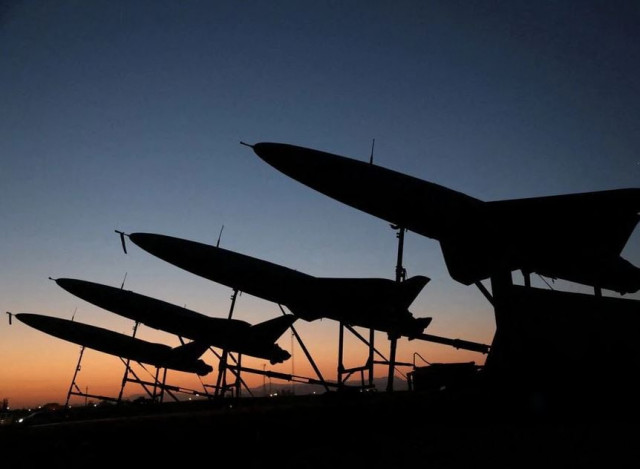
Iraq’s geography places it squarely within the threat calculus of the network’s adversaries, and the PMF’s demonstrated capacity for drone operations, logistics, and cross-border coordination means that the Iraqi arm of the Ring of Fire remains a live strategic variable — not a dormant one. Triumphal declarations that the withdrawal has somehow neutralized this network confuse the retreat of one party with the resolution of the underlying structural conflict. The latter is nowhere near resolution.
The more precise framing is this: the Iraqi arm of the Ring of Fire is entering a phase of consolidation rather than dormancy, institutionalization rather than dissolution, and recalibration rather than retreat. The pressure valve of the occupying force has partially released — and that release creates space not for passivity but for a qualitatively different, and potentially more coherent, form of strategic engagement. The PMF will not enter the footnotes of history. It will, in all likelihood, write more of them.
*The views presented in this article are the authors’ own and do not necessarily reflect the views of The Diplomatic Insight.*

Muhammad Mahad Samija
Muhammad Mahad Samija is a student of Political Science at Government College University, Lahore. He can be reached at [email protected]