
The ghost of Lindsey Graham is now an instrument of American foreign policy. On August 7, 2026, the United States Senate passed the Lindsey O. Graham Sanctioning Russia and Iran Act of 2026 by a vote of 86 to 11, imposing primary and secondary sanctions on Russia and its network of financial allies in its war against Ukraine.
The sanctions target Russia’s “shadow fleet” of shell corporations, repurposed maritime infrastructure, and individuals including Russian officials, oligarchs, their family members, and financial institutions.
The bill’s namesake did not live to see it. Graham announced a long-sought deal with the White House the day before his sudden death on July 11.
Speaking on the Senate floor following the vote, Sen. Richard Blumenthal offered both eulogy and battle cry: “I’m not even going to try to channel my inner Lindsey Graham, except to say, as he said to me in some of his last words, ‘This is a big effing deal.’”
Read More: EU Unity on Russia Sanctions Frays as Members Seek Exemptions for Domestic Industries
He was not understating the ambition. But ambition and execution are distinct instruments of power, and in the architecture of secondary sanctions, the gap between the two is where strategic miscalculation lives.
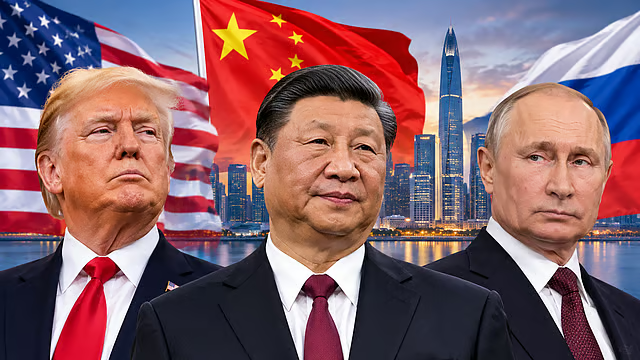
The bill would authorize the White House, at its discretion, to impose secondary tariffs of up to 100 percent on the top five importers of Russian oil and gas, in addition to the top five countries facilitating sanctions evasion, and any country that knowingly makes additional crude or natural gas purchases.
Graham himself had been explicit about the strategic target. In a January 2026 statement carried by Al Jazeera, Graham said: “This bill would give President Trump tremendous leverage against countries like China, India and Brazil to incentivize them to stop buying the cheap Russian oil that provides the financing for Putin’s bloodbath against Ukraine.”
Senate Majority Whip John Barrasso was more direct on the Senate floor: “Energy is the cash cow of Putin’s war machine. It is also Russia’s Achilles’s Heel. Cut it off, and Russia cannot continue to fight. Russia’s biggest customer is Communist China. The next is India. They will be hit hard.”
Read More: US Senator Graham Threatens Gulf States Over Refusal to Join War on Iran
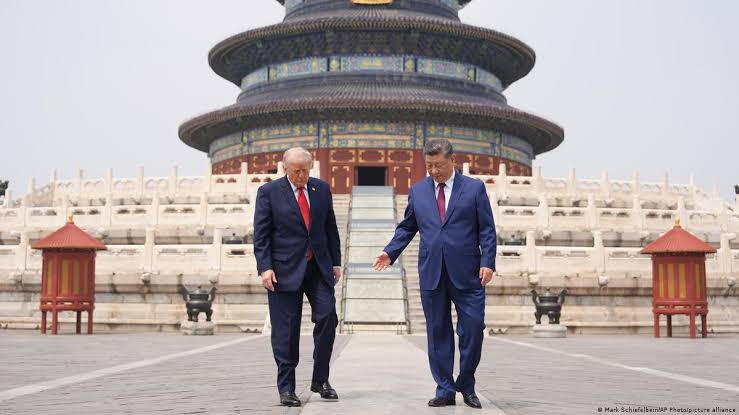
On July 15, Chinese Foreign Ministry spokesperson Lin Jian responded to the bill with language that was neither procedural nor ambiguous: “China firmly opposes illegal unilateral sanctions that have no basis in international law and are not authorized by the United Nations Security Council. China will take all necessary measures to resolutely safeguard the legitimate rights and interests of its enterprises and citizens.”
This is not diplomatic hedging, it is a declared posture of counter-coercion, and China has already directed companies not to abide by US sanctions on private refiners, signaling a far more aggressive stance from Beijing.
Washington’s leverage calculus rests on a structural problem. Whether secondary sanctions will be enforced remains uncertain.
What is clear is that previous US actions, such as imposing prohibitive import duties on goods from India, did not reduce Indian companies’ purchases of Russian oil, nor did threatened duties against China materialize.
The compellence theory assumes that the threat of dollar-system exclusion will alter sovereign energy procurement decisions. China’s documented willingness to construct parallel financial rails suggests otherwise.
Read More: The Hidden Weakness in the Global Sanctions Strategy
India occupies the most exposed position in this equation; not as a defiant actor, but as an economy already absorbing punishment from a war it did not choose.
The Indian rupee weakened past 93 per dollar following the Iran conflict, with the currency falling 3 percent since the conflict began and remaining under pressure as the crisis entered its fourth week.
March alone saw global funds withdraw around $12 billion from Indian equities, the steepest monthly outflow on record.
Brent crude, up 44 percent since February, could climb further if the Strait of Hormuz remains effectively closed, adding to currency pressures. Into this bruised economy, Washington now proposes to layered secondary sanctions targeting New Delhi’s Russian oil dependencies a compellent demand that arrives precisely when India’s fiscal room to comply has narrowed most sharply.
Read More: US Sanctions Turkish Bank Over Alleged Trade Links with IRGC
The House remains on recess. The White House may treat the secondary tariff authority as negotiating leverage against China and India, or possibly the EU bloc, to extract political concessions.
This flexibility is the bill’s genuine strategic value, not the sanctions themselves, but the threat they make credible. Whether that threat translates into behavioral change in Beijing and Delhi, or instead accelerates the de-dollarization dynamics both capitals have been quietly managing for years, is the question no Senate floor speech answered on August 7.
Graham wanted China to tell Putin “enough.” China has told Washington something else entirely.

Muhammad Mahad Samija
Muhammad Mahad Samija is a student of Political Science at Government College University, Lahore. He can be reached at [email protected]