

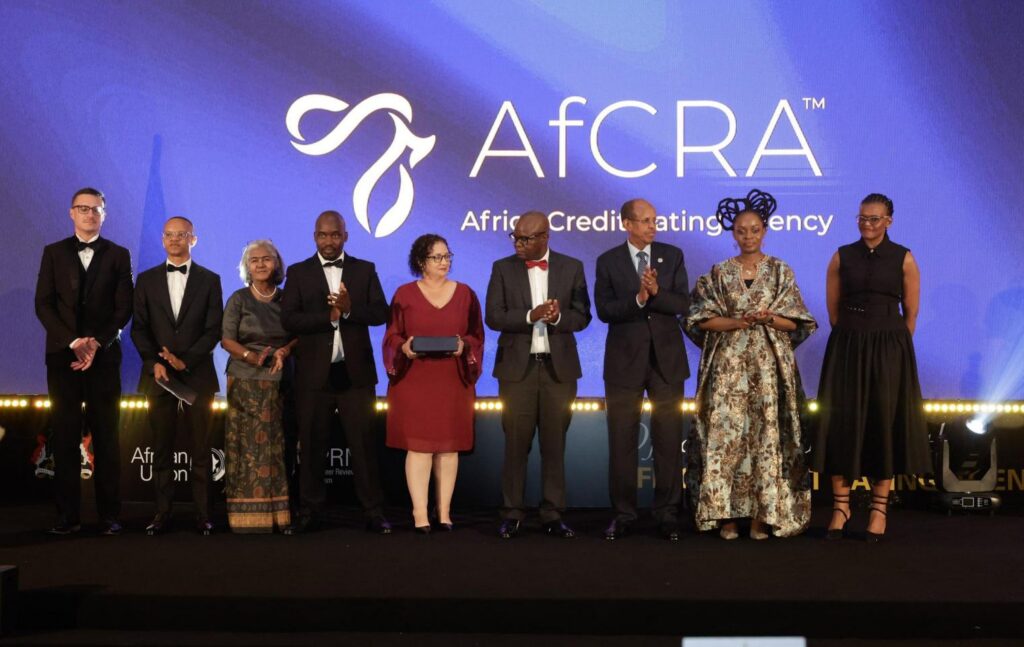
The African Union (AU) has launched a continental credit rating agency in hopes that the new body will change how global markets judge African borrowers and lower the cost of capital across the continent.
The Africa Credit Rating Agency (AfCRA) was inaugurated at a ceremony on Wednesday in Balaclava, in northern Mauritius. Its headquarters are in the capital, Port Louis.
AfCRA is meant to improve the data, expertise and context behind assessments of African credit risk. It will rate sovereigns, sub-sovereigns, corporates, and public and private institutions. It may also rate non-African entities, depending on management decisions.
Speech of the Chairperson of the African Union Commission, H.E. Mahmoud Ali Youssouf, @ymahmoudali, at the Launch of the Africa Credit Rating Agency #AfCRA in Port Louis, #Mauritius https://t.co/woNfpqc7ez
— African Union (@_AfricanUnion) October 8, 2026
The agency is private sector-driven and self-funded. It operates independently under the oversight of the AU’s African Peer Review Mechanism. Governments are barred from holding shares in it, a rule the AU says is designed to shield it from political influence.
Speaking at the launch, AU Commission Chairperson Mahmoud Ali Youssouf argued that risk assessments shaped by “political considerations” push up borrowing costs.
In his view, that deters investment in infrastructure, health, education, energy and industrialization. It also adds to what he called “significant debt service pressures” on member countries.
The AU’s own figures show the scale of that pressure. Africa’s external debt service climbed from 61 billion U.S. dollars in 2010 to 163 billion dollars in 2024. In most countries, interest payments now exceed public spending on health or education.
Coverage is also thin. Only 32 African states are rated by the three major international credit rating agencies, and the rest go unrated. AfCRA plans to broaden coverage so that more African issuers can reach capital markets.
Youssouf stressed that the new agency is not meant to displace established players. He described its role as complementary, offering an “additional Africa-focused perspective” alongside existing international agencies.
The launch reflects a long-running debate over whether global rating methodologies fully capture African economic realities.
Whether AfCRA gains credibility with international investors will probably depend on how rigorous its methods prove and how independent it remains in practice. Its ratings will be tested by the markets they aim to influence.
Monitoring Desk
- Monitoring Desk