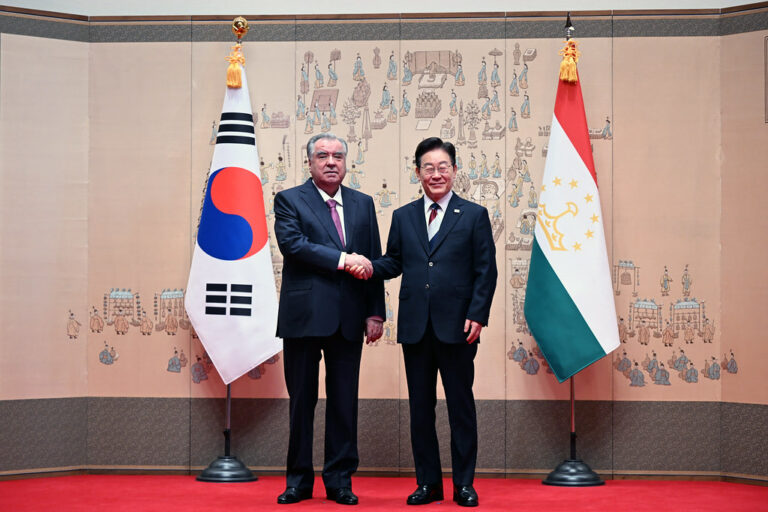
Pakistan took over the chairmanship of the Economic Cooperation Organisation’s Council of Ministers for the 2026 to 2027 term after its election at the twenty-ninth ECO-COM meeting in November 2025. Islamabad now presides over the organisation as member states finalise the ECO Vision 2026-2035, the framework due to replace the outgoing ECO Vision 2025. For a bloc spanning South, West and Central Asia, trade has tremendous scope and necessity since Central Asia’s five republics are landlocked by definition and dependent, in practice, on a narrow set of southern routes to reach open water. Pakistan sits at the end of the shortest of these routes. Whether that geography converts into commerce is the question this chairmanship has to answer. Connectivity corridors sit at the centre of this year’s agenda for a reason, since without them, the rest of the shared prosperity that ECO promises has nothing to travel on.
Pakistan’s trade with the five Central Asian republics remains modest and, over the past year, has thinned further. Exports to Kazakhstan, Kyrgyzstan, Tajikistan, Turkmenistan and Uzbekistan fell by 8.6 per cent to US$148 million between July 2025 and April 2026, down from US$162 million in the same period the year before, while imports collapsed by 88 per cent, to under US$21 million, once the overland route through Afghanistan closed.
Annual trade with the bloc has typically ranged between US$400 million and US$500 million when that route is open, a modest sum for a market of some seventy million people. Set against Pakistan’s total external trade, worth tens of billions of dollars a year, commerce with the entire region remains marginal. Islamabad has begun rerouting some exports through Iran instead, though distance keeps the volumes low.

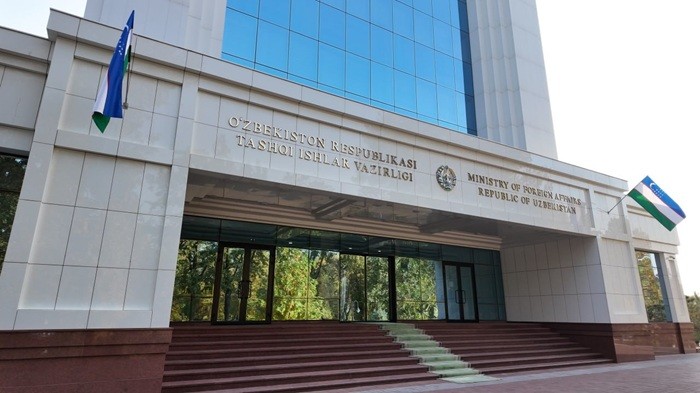
Not every indicator points downward. Exports to Uzbekistan rose by 38 per cent, helped by a transit trade agreement that Tashkent has now put into operation. Kazakhstan tells a starker story as imports from that country fell from US$73 million to under US$1 million within a year, a measure of how completely regional trade depends on a single land bridge.
Pakistan’s stated priorities as ECO chair track this vulnerability closely with multimodal transport corridors, harmonised customs procedures and more efficient transit systems. Three further projects aim to anchor this agenda item. The Islamabad-Tehran-Istanbul rail corridor is being revived after years of dormancy, and a separate Eurasian Multimodal Corridor aims to knit road, rail and port links together. Most consequential is the trilateral railway agreed in framework form by Pakistan, Afghanistan and Uzbekistan in July 2025.
That railway would run some 700 kilometres from Termez in Uzbekistan through Mazar-i-Sharif and Logar in Afghanistan to the Kharlachi crossing in Kurram, joining Pakistan’s network towards Karachi, Gwadar and Port Qasim. Estimated at US$4.8 to 7 billion, it is projected to cut transit time between Uzbekistan and Pakistan by up to five days and freight costs by around 40 per cent, with a target capacity of 15 million tonnes a year by 2030. It would give landlocked Central Asia its earliest direct rail access to the Arabian Sea.
Read More: Pakistan’s SCO Moment: Why Kazakhstan Matters More Than Ever
A tripartite coordination committee, formed after talks between the Uzbek and Pakistani leaderships, is now meant to oversee financing and technical work. Parallel engagement with the Central Asia Regional Economic Cooperation programme, including a prospective Asian Development Bank facility for border logistics, adds a financing track that ECO cannot supply alone.
Ambition of this scale invites scrutiny. The railway carries its own obstacles, with a break of gauge where Central Asia’s broad track meets Pakistan’s narrower one, an ageing domestic network that requires upgrading in parallel, and a construction bill arriving as Pakistan’s fiscal space stays tight.
Russia, China and Iran all hold declared interests in Afghan transit routes, and Kazakhstan and Turkmenistan are hedging with corridors of their own, meaning Central Asian cargo has options beyond Pakistan. Above all, the closure that halved Pakistan’s regional trade this year is a reminder that Afghan territory remains the single point of failure for every corridor now under discussion.
Read More: SCO Secretariat Hosts Eurasian Economic Forum Delegation
A more modest agenda would serve trade better than a longer list of corridors. Synchronising customs valuation and transit documentation across the ECO region, extending the Uzbek transit model to Kazakhstan and the other republics, and offering insurance or guarantee schemes against route disruption would each do more for actual cargo volumes. Industry estimates suggest Pakistan’s trade with Central Asia could rise from roughly US$525 million to US$5 billion by 2035, with transit and logistics revenue reaching US$3 billion a year, provided connectivity holds.

Kumail Hasan
Kumail Hasan is an author who writes on international order, strategic competition, and the political economy of resource conflicts, with a particular focus on South and Central Asian politics.