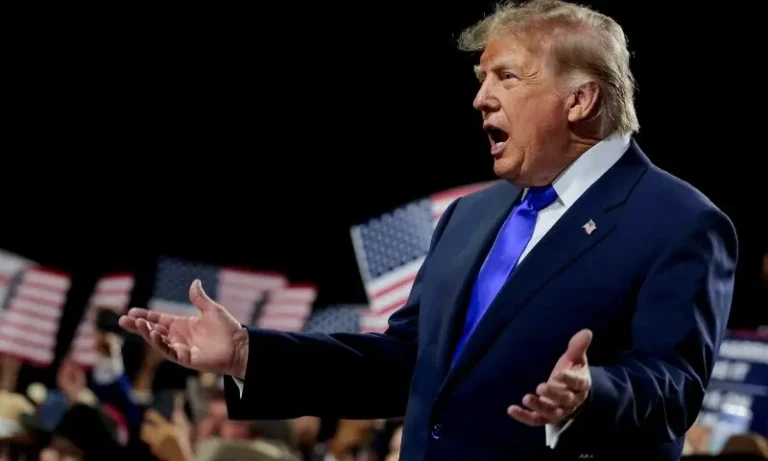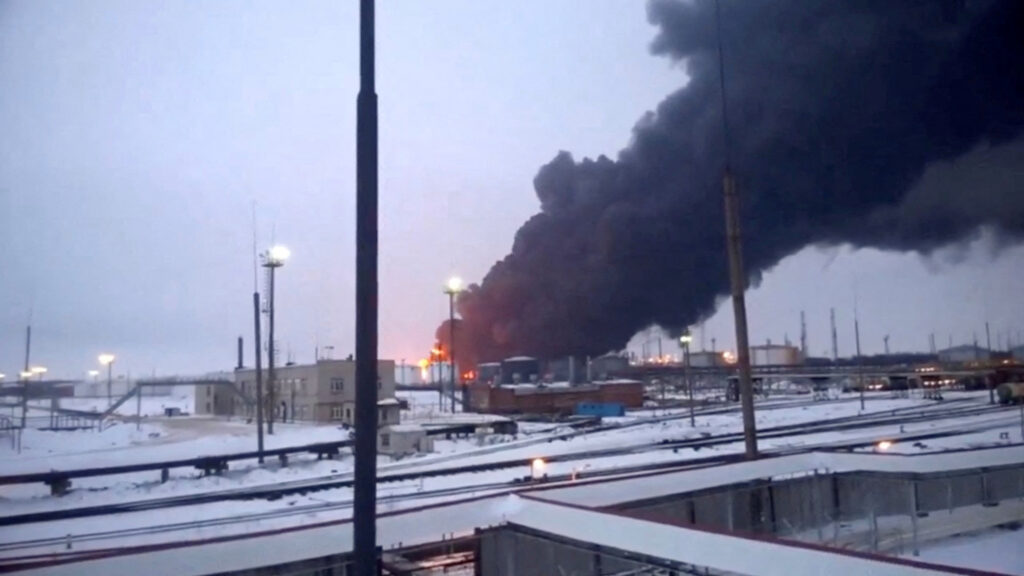
Speaking to reporters on Sunday on the sidelines of the Irish Open at his golf club in Doonbeg, Ireland, US President Donald Trump issued a direct public demand to Ukrainian President Volodymyr Zelensky: stop targeting Russian oil refineries.
“Mr. Zelensky has to do one thing,” Trump told reporters. “He has to stop knocking out diesel fuel in Russia. Let him go after targets, but not diesel fuel, because he’s causing a shortage of diesel.” The statement came as global energy markets buckle under the combined weight of two simultaneous conflicts.
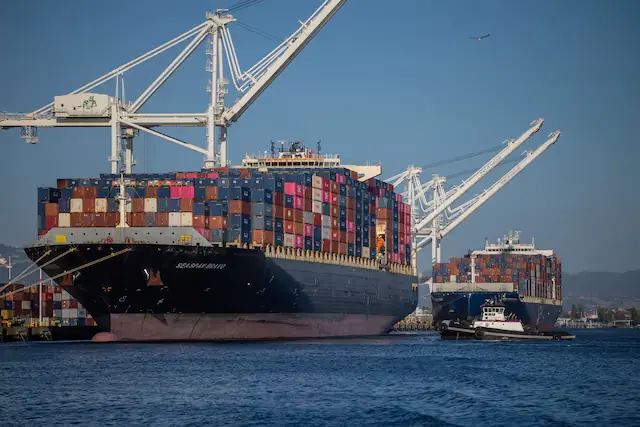
Diesel topped $6 a gallon in the United States on Friday for the first time in recorded history, as global oil prices surpassed $108 per barrel amid the war in the Middle East, with diesel costs having risen more than 55% since the start of the Iran war, outpacing even the 40% surge in gasoline prices.
Trump also confirmed the demand aboard Air Force One: “I’ve asked President Zelensky not to hit the diesel plants, refineries. The diesel is being driven up by the fact that it’s having a hard time coming out of Russia.”
Read More: EU Approves €6.1B for Ukraine’s Air Defenses as Western Inventories Dry Out
The energy system underpinning the remark is under acute strain. Since the start of the Iran war, global observed oil inventories have fallen by 507 million barrels, an average draw of 2.8 million barrels per day, with August alone seeing stocks fall by a steep 95 million barrels.
Disruptions to Russia’s refining system and a near-halt to product exports following intensified Ukrainian attacks have compounded losses already caused by Gulf disruptions, leaving combined net diesel and gasoil exports from Russia and Gulf countries 1.6 million barrels per day lower than in February.
The International Energy Agency has responded with successive downward revisions. The IEA has warned that “with buffers shrinking and the global refining system stretched to the limit, the need for progress in resolving the conflict in the Middle East, and the Russia–Ukraine war, which is now in its fifth year, is greater than ever to avoid further market tightening and demand destruction.”
The IEA has cut its Russian oil supply outlook for 2026 and 2027 by 85,000 and 150,000 barrels per day respectively, attributing the revisions directly to “continued strikes on refineries, storage facilities, and transport infrastructure.”
Read More: Kyiv Talks Yield No Breakthrough as Witkoff and Kushner Conclude Ukraine Visit
Ukrainian arms manufacturers have already sounded the alarm: most manufacturers today hold contracts covering only 15–25% of their production capacity, with market forecasts suggesting that weapon supplies for unannounced procurements will not begin arriving before December 2026.
Field reporting from frontline units in Donetsk and Kharkiv found the narrative consistent: targets were chosen with extreme caution due to acute scarcity of ammunition, with some units reporting only a few rounds available per day.
Washington, meanwhile, has been in active pursuit of a settlement. Trump’s envoys Steve Witkoff and Jared Kushner travelled to Moscow and Kyiv in the first week of September, with both Russia and Ukraine agreeing to hold off on strikes on each other’s capitals to enable the visits, though no broader ceasefire was placed on the table.
Witkoff acknowledged afterwards that ending the war would require both sides to make “compromises” and to “narrow the issues between them.”
Whether Trump’s public intervention over the refineries amounts to strategic coercion of Kyiv regime, or a pressure valve for domestic fuel politics ahead of midterm season, is a question the administration has not answered.
What is clear is that Washington is simultaneously pursuing a ceasefire framework and constraining the one economic lever Kyiv regime has most effectively deployed. For a war now entering its fifth year, the two impulses are not contradictory. They point in the same direction.

Muhammad Mahad Samija
Muhammad Mahad Samija is a student of Political Science at Government College University, Lahore. He can be reached at [email protected]