The European Commission on August 24 approved €6.1 billion in new defense procurement for Ukraine, covering air and missile defense systems, missiles, ammunition, and radars, under what Brussels framed as an “unfaltering” commitment to Ukrainian security.
The funding forms part of the broader €90 billion Ukraine Support Loan (UASL), of which €60 billion is allocated to defense across 2026–2027.
In concrete terms, the decision officially enables Ukraine to acquire PAC-3 missiles for its Patriot systems; a procurement long sought by Kyiv.
The scale of the package is undeniable. What is equally undeniable, however, is the strategic context in which it arrives: an interceptor crisis that European cheques alone cannot resolve.
Ukraine’s primary ballistic missile shield, the American-made Patriot system, is operating at the edge of collapse. Allies have supplied just one-third of the air defense missiles to Ukraine in 2026 compared with the same period in 2025, according to President Volodymyr Zelensky.
Read More: Kyiv Talks Yield No Breakthrough as Witkoff and Kushner Conclude Ukraine Visit
On the night of August 1, the consequences were laid bare: Russia launched 35 missiles and 185 attack drones at Kyiv. Ukrainian forces shot down 154 of the drones but stopped only one of the 27 ballistic missiles. Nine people were killed.
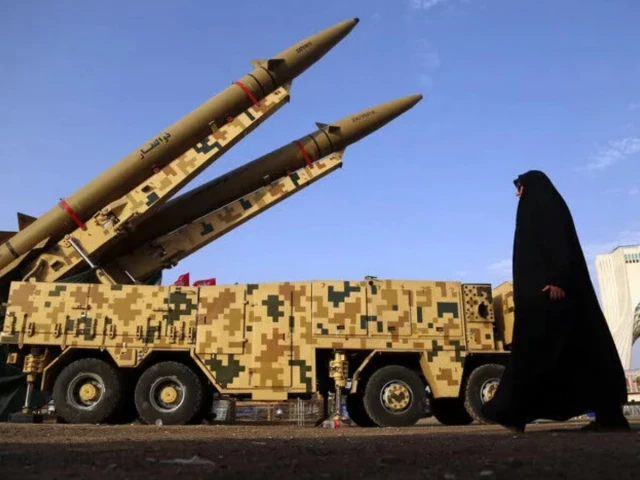
The reason is structural, not incidental. Researchers from the Center for Strategic and International Studies (CSIS) estimated that fewer than 827 Patriot interceptors remain in US stockpiles, and fewer than 278 THAAD ballistic missile interceptors; a significant depletion from a pre-war inventory CSIS estimated at around 2,200 Patriots and 452 THAAD missiles.
The Iran war, which the US entered in February 2026, has compounded this drastically: the Iran war has reportedly depleted up to three-fifths of US Patriot interceptor stocks and as much as half of THAAD anti-ballistic missile stocks, with full replenishment expected to take years.
This is the core strategic bind. Ukraine still relies on the US Patriot system to defend against ballistic missiles, as does the rest of Europe, yet US interceptor stocks were heavily depleted during the Iran war, throwing into doubt a continued flow of high-end defensive munitions to European allies.
“There is essentially no other countermeasure against missiles than the Patriot. That is why it is obviously very sensitive when you don’t have enough Patriot interceptors or enough systems overall. Because then you simply cannot counter all the incoming missiles,” said Roger Djupsjo, a major in the Swedish Army and an instructor at the Swedish Defense University who has worked extensively with the Ukrainian military.
Read More: French Combat Deaths in Ukraine Signal Covert Escalation
Meanwhile, Russia has not been idle. Alongside its sustained ballistic campaign, Moscow has introduced a new aerial threat that further strains Kyiv regime’s layered defenses.
Russia has deployed a new jet-powered attack drone, the Geran-4, with Ukraine’s Main Directorate of Intelligence (GUR) saying “it was introduced as a direct countermeasure against the effectiveness of Ukrainian interceptor drones.”
The Geran-4 reaches roughly 300 to 400 km/h, a speed difference that defeats many of the cheap defenses Ukraine had developed to tame the older propeller-driven Geran-2. And Ukrainian military intelligence assessed that Russian industry now produces around 3,000 jet-powered Geran-4/5 airframes a month, with jet output having overtaken production of the piston version.
The EU’s €6.1 billion will finance hardware. It will not rebuild Washington’s depleted magazines, restock Raytheon’s production lines on an accelerated timeline, or nullify the speed differential that Russia’s jet drone surge has introduced.
Brussels is providing the financial commitment. The kinetic and industrial conditions to translate that commitment into real air defense remain, for the moment, unmet.

Muhammad Mahad Samija
Muhammad Mahad Samija is a student of Political Science at Government College University, Lahore. He can be reached at [email protected]