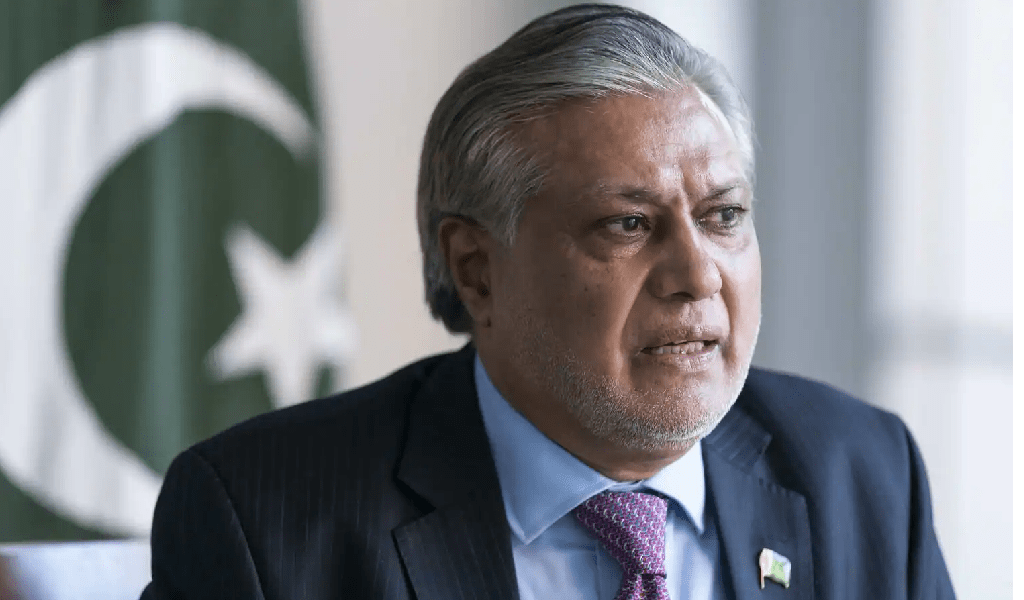
Doha (TDI): Deputy Prime Minister and Foreign Minister Ishaq Dar has said that Pakistan possesses a very large and effective military that has demonstrated its conventional capabilities, comments that came as he discussed Islamabad’s possible position should Arab states form a united body to halt Israeli aggression in the Middle East.
In an interview with Al Jazeera, recorded ahead of the Arab-Islamic Emergency Summit in Doha and aired late Monday, saw Dar in conversation with Osama Bin Javed. When asked whether a regional, UN-independent security mechanism to intervene in Gaza was being considered, Dar said that ideas were circulating among Arab capitals and the Arab League. He added that, vis-à-vis the UN Security Council, “a mechanism could be chalked out.”
Pointing to the leverage enjoyed by powerful bodies, he noted how the Security Council has imposed severe sanctions in the past, inflicting substantial economic pain on recalcitrant states. At the same time, Dar said the region could explore a “combined security force” made up of willing states, not to pursue aggression, he stressed, but to stop an occupier and protect civilians. “Why not? What’s wrong with that?” he asked.
Pressed on where a nuclear-armed Pakistan would stand in such a scenario, Dar said Islamabad would “discharge its duty” as a member of the Ummah. He was careful to reiterate Pakistan’s long-stated stance that its nuclear arsenal is for deterrence alone. “We have no intention of using it; it is only a deterrence,” he said.
Read More: Dar Urges Action Against Israel to Protect Global Order
Dar went on to highlight Pakistan’s conventional strengths, “We have a very large, known, very effective army, very effective air force, very effective navy … We have proved that we can beat our opponent even conventionally, if challenged.”
Dar criticized the broader multilateral system, arguing the UN and the Security Council require “very serious reforms.” He said repeated disregard for council resolutions, citing Israel in Gaza and India in Kashmir, undermines the UN’s purpose. “If its resolutions are just put in the bin… what do we expect from the multilateral system?” he asked.
Turning to the question of collective Muslim action, Dar argued that all states, regardless of size — deserved equal dignity and respect. He suggested that claims of regional hegemony had been checked by recent events between May 7 and 10, when a four-day armed escalation, he said, demonstrated that “the hegemony is buried.” Pakistan’s military responses during that period, Dar maintained, were acts of self-defense.
Read More: Pakistan Urges UNSC to Hold Israel Accountable for Attack on Qatar
On Gaza, Dar said diplomacy and dialogue remain the preferred route, though they require sincerity from all parties. Where that sincerity is absent and expansionist designs persist, he warned, talks are futile. He also urged the Security Council to develop mechanisms to ensure resolutions are enforced, and acknowledged that, in some cases, that enforcement might ultimately require “physical actions, physical interventions.”