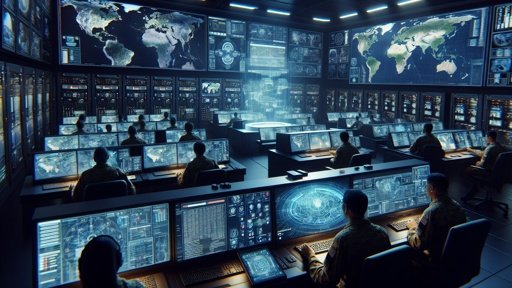
War is changing. Conflicts now are no longer fought only with soldiers, missiles, or military force. Increasingly, they are also fought through information, technology, and influence. Artificial intelligence (AI) has become part of this transformation, creating new ways for states and non-state actors to shape public opinion, spread disinformation, and influence how people understand reality.
Traditionally, war has been understood through physical domains such as land, sea, and air. In recent decades, cyber warfare added a new digital battlefield. Now, many experts argue that human perception itself is becoming another domain of conflict. AI is not simply changing military technology; it is changing the battlefield itself by turning the human mind into a strategic target.
In recent years, experts have increasingly used the term “cognitive warfare” to describe this form of conflict. Unlike traditional warfare, cognitive warfare targets how people think rather than physical territory alone. Its purpose is not only to weaken an enemy militarily, but also to influence emotions, beliefs, public trust, and political perception. As AI technology becomes more advanced, this type of warfare is becoming faster, cheaper, and much harder to detect.
Psychological warfare itself is not new. During the Cold War, governments used propaganda, radio broadcasts, newspapers, and television to influence public opinion. What makes the current moment different is the role of AI. Today, AI systems can create realistic fake images, videos, and written content within seconds. Deep-fake technology, for example, can generate videos that appear authentic even when they are completely false.
Read More: Question of State Sovereignty in the Age of AI, Cyberwarfare & Techno-feudalism
According to the Center for Security and Emerging Technology (CSET), AI can supercharge disinformation techniques to increase the speed, scale, and personalization of campaigns.
AI also makes propaganda more targeted. Social media platforms already collect large amounts of data about users’ interests, political views, and online behavior. AI can analyze this information and deliver customized messages to different groups of people. As a result, individuals may receive entirely different versions of the same event depending on their background, beliefs, or online activity.
This makes modern disinformation far more effective than traditional propaganda. In the past, governments often relied on one message for the general public. Today, AI allows different messages to be designed for specific audiences.
One group may see content intended to create fear, while another may receive messages designed to increase anger or political polarization. In many cases, people may not even realize that the information they are consuming has been manipulated.
Recent developments in the Middle East show how these technologies are already influencing modern conflicts. Microsoft Threat Intelligence reported that Iranian-linked networks had expanded cyber-enabled influence operations through online propaganda and coordinated misinformation campaigns. These campaigns aimed to shape political narratives and influence both domestic and international audiences.
At the same time, AI is also changing military operations themselves. A report published by The Guardian revealed that the Israeli military used an AI-assisted targeting system known as “The Gospel” (Habsora) during operations in Gaza. According to the report, the system helped process large amounts of intelligence data and rapidly generate potential targets for airstrikes.
Supporters of such technologies argue that AI can improve military efficiency and speed up decision-making. However, critics warn that relying heavily on algorithms in war raises serious ethical concerns, especially when civilian lives are at risk. Questions about accountability become more difficult when machines are involved in military decisions.
The spread of AI tools has also made it easier for non-state actors to participate in information warfare. Organizations and individuals no longer need large financial resources to create convincing fake content. Deep-fake videos, manipulated images, and AI-generated audio can now be produced with relatively simple software.
Research by Graphika has shown that online influence campaigns increasingly use AI-generated media to spread confusion and weaken trust in public information. This creates a dangerous environment where it becomes harder for ordinary people to distinguish between real and false content.
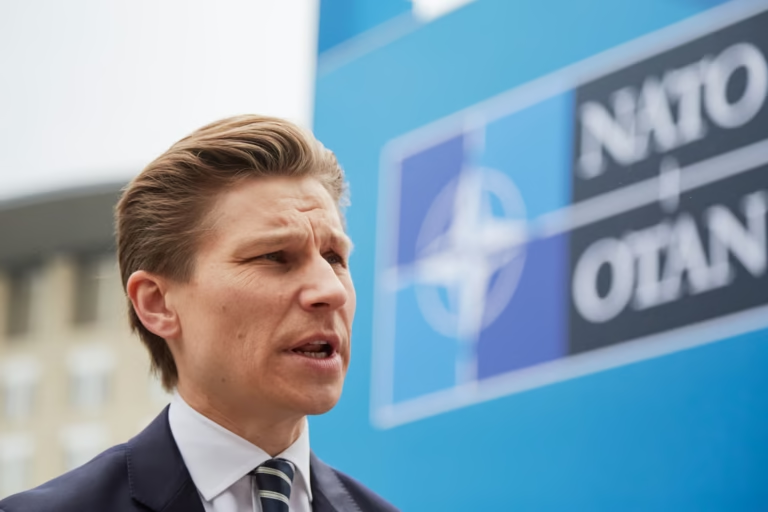
The growing concern over cognitive warfare has also attracted attention from NATO’s Innovation Hub, which describes cognitive warfare as a challenge that directly targets human perception, decision-making, and social stability. This reflects a broader shift in modern security thinking, where influencing how people think is becoming as important as controlling physical territory.
Analysts at the RAND Corporation have similarly argued that modern information warfare increasingly focuses on shaping perception and public behavior, with AI accelerating this transformation through more personalized, scalable, and difficult-to-trace campaigns.
At the same time, some experts argue that the impact of disinformation can sometimes be exaggerated. People are not always easily manipulated, and many users are becoming more aware of fake content online. Governments have also used propaganda long before the rise of AI.
However, what makes AI different is the speed, scale, and personalization it brings to information warfare. AI allows influence campaigns to operate continuously and reach audiences with unprecedented precision.
One of the biggest dangers of cognitive warfare is that it blurs the line between war and peace. Traditional wars usually have clear beginnings and endings. Cognitive warfare, however, can happen continuously through social media, digital platforms, and online communication spaces. Influence campaigns can take place every day without formal military confrontation.
This shift is also creating growing concerns about democracy and public trust. When people can no longer easily distinguish between real and manipulated information, trust in media, institutions, and even reality itself can begin to weaken. In deeply polarized societies, this can increase political instability and social division.
Read More: Geopolitics of Artificial Intelligence: How Countries Are Competing for AI Dominance
Another important concern is accountability. As AI systems become more autonomous, it may become harder to identify who is responsible when harmful outcomes occur. Governments, technology companies, and military institutions are all moving faster than international regulations can currently manage. While discussions about AI ethics continue, technological development is advancing even more rapidly.
For this reason, many experts argue that governments and international organizations need stronger rules for the use of AI in conflict situations. Improving digital literacy is also becoming increasingly important. People must learn how to critically evaluate online information and recognize manipulated content before it spreads further.
AI is not replacing traditional warfare completely, but it is changing how power operates in the modern world. In the future, influence over information and perception may become just as important as military strength. States that successfully combine technology, cyber capabilities, and strategic communication may gain significant advantages in future conflicts.
The rise of cognitive warfare shows that modern conflict is no longer fought only on physical battlefields. Increasingly, it is fought online through narratives, algorithms, and public perception. In an era shaped by AI, the greatest strategic advantage may no longer belong to the actor with the strongest army, but to the actor most capable of shaping perception, trust, and reality itself.
*The views presented in this article are the authors’ own and do not necessarily reflect the views of The Diplomatic Insight.

Farahnaz Amini
Farahnaz Amini is an Afghan journalist and a master’s student in International Relations at Universitas Islam Internasional Indonesia (UIII). She holds a bachelor’s degree in Journalism from Afghanistan. Her research interests include geopolitics, AI and security, authoritarian governance, and emerging forms of conflict in the digital age. She can be reached at farahnaz.amini@uiii.ac.id