
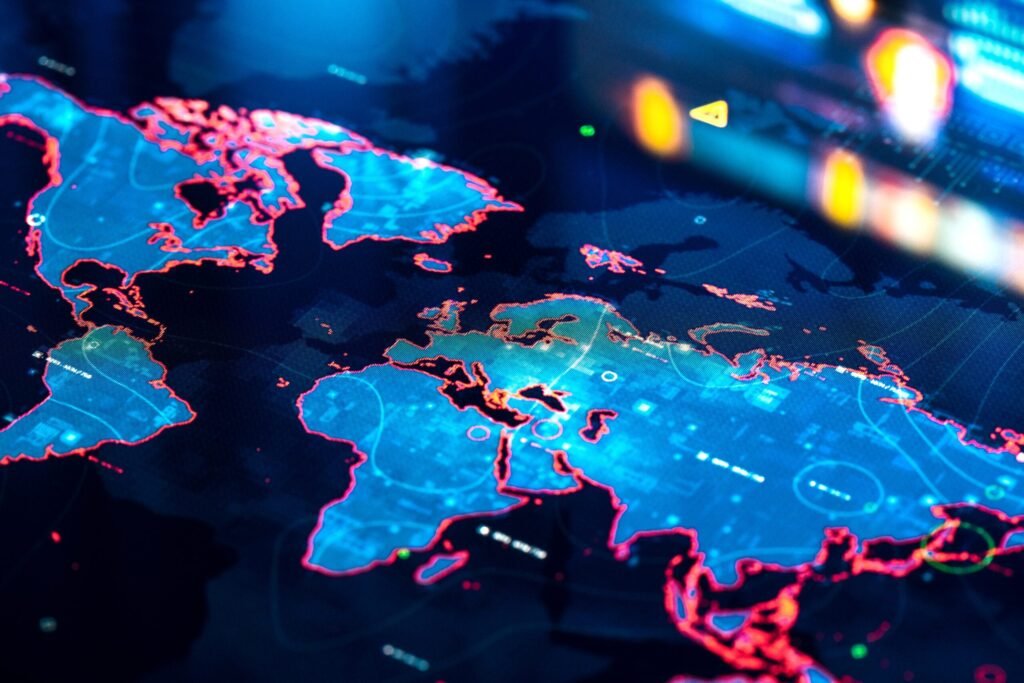
Artificial intelligence has rapidly evolved from a technological innovation into a strategic geopolitical asset. Nations around the world are investing heavily in AI capabilities, recognizing that leadership in artificial intelligence will shape economic strength, military power, cybersecurity resilience, and global influence in the coming decades. Much like the space race of the twentieth century, the global competition for AI dominance has become a defining feature of modern international relations.
Governments, technology companies, and research institutions are now engaged in an intense race to develop advanced AI systems that can transform industries, strengthen national security, and accelerate economic growth. However, this competition also raises concerns regarding ethics, regulation, digital sovereignty, and the future balance of global power.
The United States and China currently stand at the center of this technological rivalry. Both countries have emerged as dominant forces in AI research, infrastructure, and investment. The United States maintains an advantage through its strong ecosystem of technology companies, innovation-driven universities, and venture capital networks. American firms such as OpenAI, Google, Microsoft, and NVIDIA continue to lead in AI model development, semiconductor innovation, and cloud computing infrastructure.
China, meanwhile, has adopted a state-driven strategy focused on becoming the global leader in artificial intelligence by 2030. Massive government funding, data accessibility, and centralized policy initiatives have allowed Chinese technology companies to rapidly expand their AI capabilities.
Beijing views artificial intelligence not only as an economic opportunity but also as a critical component of national security and global influence. AI-powered surveillance systems, facial recognition technologies, and military modernization programs have become major pillars of China’s technological ambitions.
Read More: How Artificial Intelligence is Changing the Future of Global Diplomacy
The competition between the United States and China extends far beyond economics. AI technologies now influence cybersecurity operations, intelligence gathering, autonomous defense systems, and information warfare. Nations are increasingly integrating artificial intelligence into military planning, raising concerns about the potential emergence of autonomous weapons and AI-driven cyber conflicts. As a result, technological supremacy has become closely linked with national defense strategies.
In response to these developments, many countries are attempting to reduce dependence on foreign technology providers and strengthen their own digital sovereignty. The European Union has positioned itself differently by emphasizing ethical AI governance and regulatory leadership. Rather than competing solely on technological scale, the EU seeks to establish global standards for transparency, privacy protection, and responsible AI usage.
The European Union’s AI Act represents one of the world’s first comprehensive regulatory frameworks for artificial intelligence. The legislation aims to categorize AI systems according to risk levels and ensure accountability for developers and organizations deploying these technologies. While critics argue that strict regulation could slow innovation, supporters believe it is necessary to protect democratic values and prevent misuse.
Other nations are also accelerating their AI strategies. India has emerged as an important player due to its growing technology workforce, digital infrastructure expansion, and startup ecosystem. The Indian government has increasingly emphasized AI applications in healthcare, agriculture, education, and public administration.
As one of the world’s fastest-growing digital economies, India has the potential to become a significant contributor to global AI development.
Meanwhile, countries such as the United Kingdom, Japan, South Korea, and the United Arab Emirates are investing heavily in AI research centers, innovation hubs, and public-private partnerships. These nations recognize that artificial intelligence will influence global competitiveness across nearly every industry, from finance and manufacturing to healthcare and defense.
One of the most important aspects of the AI race is semiconductor manufacturing. Advanced AI systems require high-performance chips capable of processing enormous amounts of data. Semiconductor supply chains have therefore become strategically important.
The United States has introduced export restrictions on advanced chips to China, while also investing billions of dollars in domestic semiconductor production. These measures demonstrate how technology supply chains are now deeply connected to geopolitical competition.
Taiwan occupies a particularly critical position in this landscape because of its dominance in semiconductor manufacturing. Taiwan Semiconductor Manufacturing Company (TSMC) produces many of the world’s most advanced chips, making the region strategically significant for both economic and security reasons. Any disruption involving Taiwan could have major consequences for the global technology sector and the broader AI ecosystem.
The geopolitical competition surrounding artificial intelligence also raises serious ethical concerns. AI systems can amplify misinformation, enable mass surveillance, and reinforce algorithmic bias if not carefully regulated. Deepfake technologies and AI-generated propaganda may increasingly be used to manipulate public opinion and influence elections. As these risks grow, international cooperation will become essential.
Read More: Mythos AI Has Raised Serious Cyber Security Concerns
Despite the competitive environment, there is a growing recognition that global collaboration on AI governance is necessary. International organizations, policymakers, and technology leaders have started discussing common principles for safe and responsible AI development. Topics such as data privacy, cybersecurity standards, AI ethics, and autonomous weapons require multinational dialogue and cooperation.
However, achieving international consensus remains difficult because countries often prioritize strategic advantages over collective governance. The absence of globally accepted AI regulations could create fragmented technological ecosystems, where competing standards and digital blocs emerge. Such fragmentation may increase tensions and reduce opportunities for international collaboration.
The future of artificial intelligence will likely shape the next phase of globalization. Nations that successfully combine innovation, regulation, talent development, and infrastructure investment will gain substantial economic and geopolitical advantages. At the same time, countries that fail to adapt risk falling behind in an increasingly technology-driven world.
Artificial intelligence is no longer simply a tool for automation or business optimization. It has become a strategic resource capable of influencing diplomacy, military power, economic stability, and international influence. The global AI race is fundamentally reshaping how nations compete and cooperate in the twenty-first century.
As governments continue investing in AI capabilities, the challenge will not only be achieving technological leadership but also ensuring that artificial intelligence is developed responsibly. Balancing innovation with ethical safeguards will determine whether AI becomes a force for global progress or a source of greater geopolitical instability.
The coming decade will therefore be critical. Decisions made today regarding AI governance, international cooperation, and technological investment will shape the future global order. In many ways, the race for artificial intelligence dominance is not merely about technology itself, but about defining the political, economic, and ethical.
*The views presented in this article are the authors’ own and do not necessarily reflect the views of The Diplomatic Insight.

Vinay Pasilkar
Vinay Pasilkar is a digital marketing and technology professional associated with Cloudester. He writes about artificial intelligence, cybersecurity, digital transformation, and emerging technology trends shaping global industries. His work focuses on the intersection of innovation, policy, and global technology development. He can be reached at[email protected]