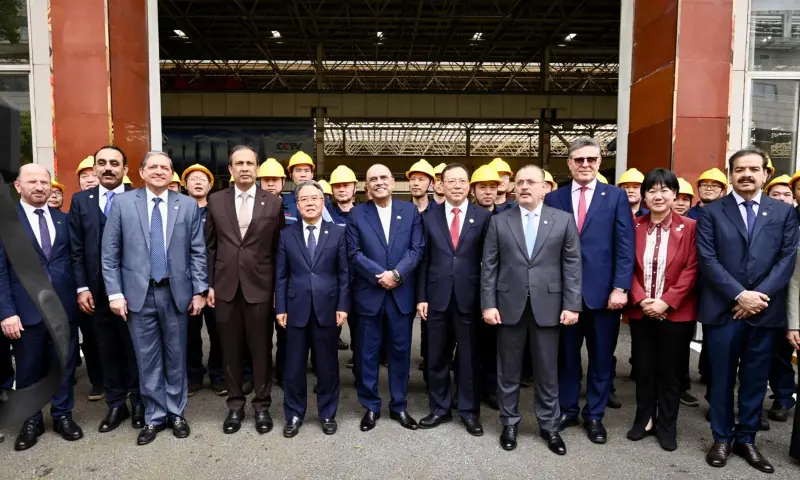
Islamabad (TDI): Pakistan’s President, Asif Ali Zardari, held high-level meetings with Chinese provincial leaders on Sunday, focusing on deepening cooperation across key sectors including agriculture, trade, health and education, as part of his ongoing official visit to China.
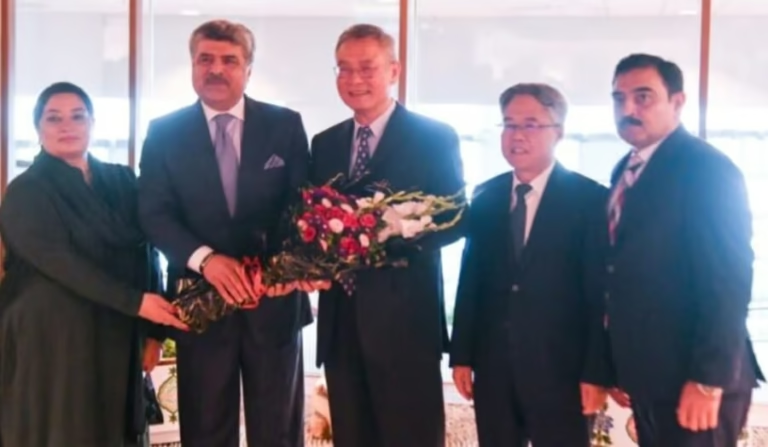
During his engagements in Changsha, the capital of Hunan province, Zardari met Communist Party Secretary Shen Xiaoming and attended a banquet hosted by Governor Mao Weiming.
The discussions highlighted opportunities to expand bilateral collaboration, particularly in areas critical to Pakistan’s economic development.
Officials said the president underscored the importance of leveraging Hunan’s strengths in agricultural technology and equipment to boost Pakistan’s productivity.
He also expressed interest in closer cooperation in seed technology, agricultural research and modern farming practices, signaling Islamabad’s intent to modernize its agriculture sector through Chinese expertise.
Beyond agriculture, both sides explored avenues for collaboration in trade, health and education, reflecting a broad-based approach to strengthening ties.
Read More: President Zardari Begins Week-Long China Visit to Boost Economic Ties
Zardari emphasized that Pakistan-China relations remain a cornerstone of Islamabad’s foreign policy and continue to enjoy strong public and institutional support.
Zardari’s trip, which began on Saturday, is expected to further reinforce economic and strategic cooperation under the China-Pakistan Economic Corridor (CPEC), a flagship project of China’s Belt and Road Initiative involving tens of billions of dollars in infrastructure and development investments.
Analysts note that Pakistan is increasingly looking to partnerships with China and other regional allies to drive sustainable growth, particularly as it implements economic reforms and seeks to boost exports.
The current visit is also expected to result in agreements and memoranda of understanding between Pakistani entities and Chinese companies, particularly at the provincial level.
In addition to official meetings, Zardari’s itinerary includes visits to industrial and technology facilities, reflecting Islamabad’s interest in expanding cooperation in manufacturing, clean energy and digital industries.
The engagements in Hunan are seen as a step toward diversifying Pakistan-China cooperation beyond traditional infrastructure projects, with a growing emphasis on innovation, agriculture and human development sectors.