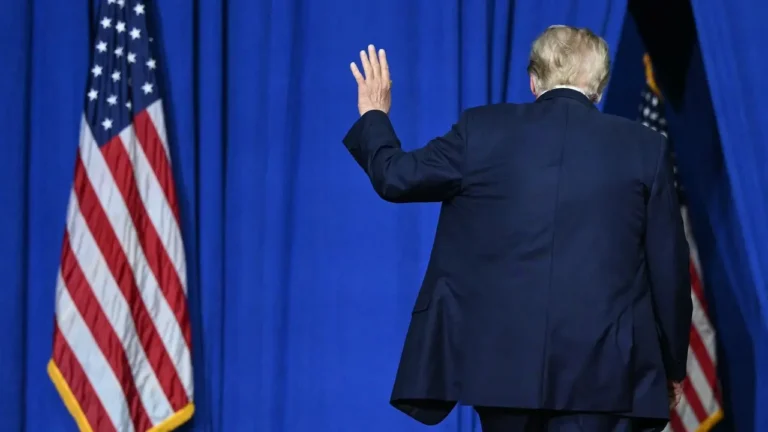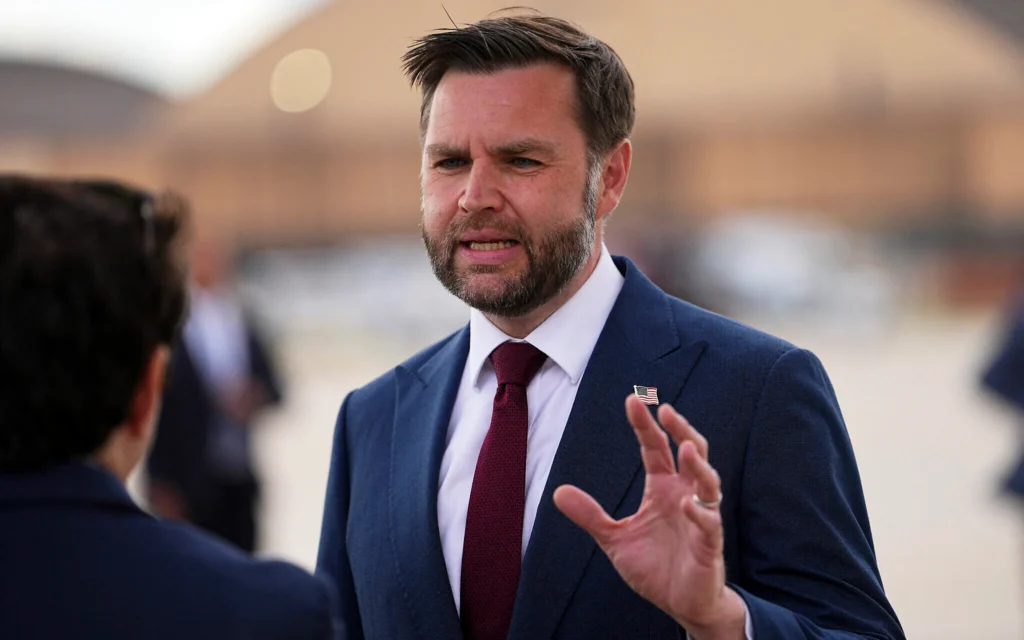
Washington (TDI): US Vice President JD Vance has said Washington does not always agree with Israel, stressing that American policy in the Middle East cannot be “subservient to the State of Israel.”
Speaking on the All-In Podcast on Tuesday, Vance said President Donald Trump recognized Israel as an important partner in areas including military technology and intelligence sharing, but maintained that the United States would pursue its own national interests when differences arise.
Vance said Trump had shown, “more than, frankly, any president in the last 40 years,” a willingness to part ways with Israeli Prime Minister Benjamin Netanyahu when he believed the interests of the American people differed from those of the Israeli government.
Drawing a comparison with US relations with NATO members, Vance said Washington maintains important partnerships within the alliance but does not allow its European foreign policy to become entirely subordinate to NATO.
Read More: PM Shehbaz Condemns Attempted Houthi Drone Attack on Makkah, Reaffirms Support for Saudi Arabia
“In the same way that we cannot let our Middle Eastern foreign policy be subservient to the State of Israel,” he said. “We’re gonna work with people when we work with them; we’re gonna disagree when we disagree. And we’re gonna pursue America’s interests. That’s the only way to have a rational foreign policy,” Vance added.
Vance’s comments came as tensions continued to rise across the region, with Saudi Arabia saying its air defenses had intercepted and destroyed a drone launched by Yemen’s Houthi group near Makkah.
Saudi-led coalition spokesman Turki al-Malki said the drone was intercepted at around 6:50pm local time on Tuesday, before entering restricted airspace, with its wreckage falling south of the holy city.
Al-Malki described the incident as the Houthis’ second reported attempt to target Makkah, referring to a ballistic missile launched toward the city on July 27, 2017.
He said the security of the Two Holy Mosques and pilgrims was a “red line,” and warned that the coalition would take measures to deter further attacks.
The reported drone incident followed attacks that Saudi authorities said injured 13 civilians in Khamis Mushait, Abha and Taif, while seven homes and two vehicles were damaged.
Read More: Pakistan-Saudi-Turkiye Defense Pact: Who Gains Most?
The Organization of Islamic Cooperation condemned what it described as Houthi attacks targeting Makkah and the Madinah region. According to Al Jazeera, the OIC called the incidents “heinous attacks” aimed at terrorising civilians and violating the sanctity of Islamic holy sites and mosques.
The Houthis, however, rejected the Saudi-led coalition’s account. A Houthi official described the allegations that the group had targeted Makkah as a “worn-out lie” and denied posing a threat to the holy city.
Separately, Yemen’s Houthis claimed they had shot down a Saudi F-15 fighter jet over Marib province. Houthi military spokesman said the aircraft was targeted with a locally manufactured air-to-air missile while conducting what the group described as hostile operations in support of Saudi military activities.
The spokesman also accused Saudi Arabia of carrying out around 450 airstrikes. The claims could not be independently verified.