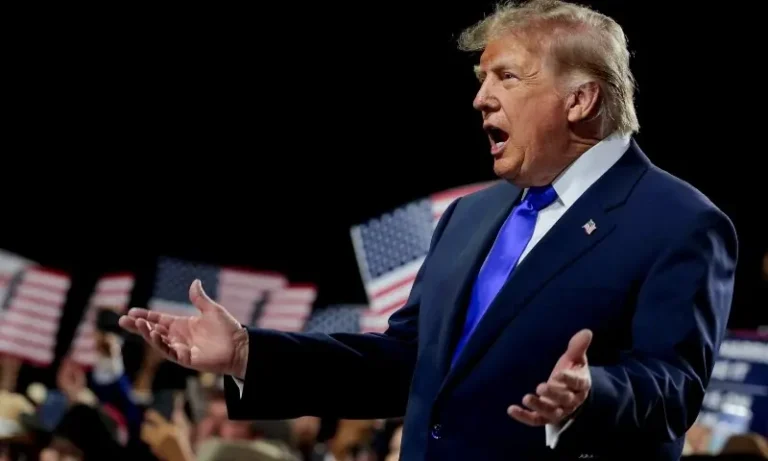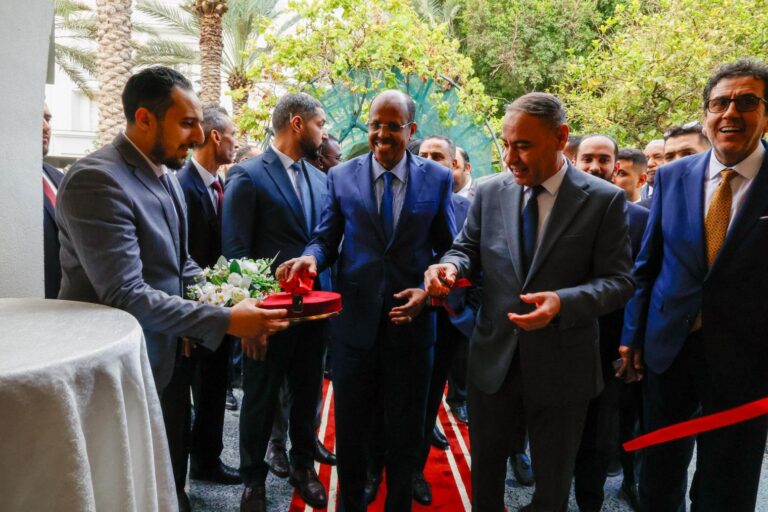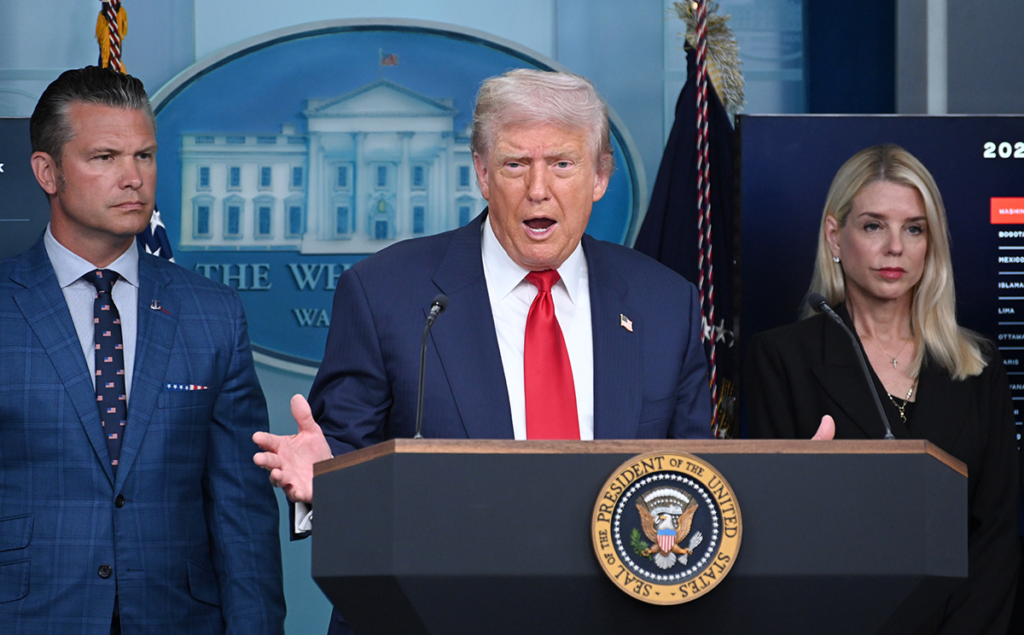
Sometimes through official diplomatic channels, but most of the time through X, Trump’s diplomacy has recalibrated Washington’s global presence.
Hollowed-out embassies and social media-centric diplomacy were often dramatized with statements such as, “A whole civilization would die tonight,” or “You’re either going to make a deal, or we’re out.” Over time, the series of such events has continued to accumulate.
The reaction — resulted as, “This is the most foolish idea any American president has put forth in the modern history of the United States,” said Fawaz Gerges, a veteran Middle East expert and professor at the London School of Economics.
“It is beyond any kind of rational thinking, any kind of policy feasibility.” It is not an overstatement to assert that much of the world has grown weary of President Trump and his counterproductive policies.
As much as Trump’s policies have shortcomings, so too does his leadership when it comes to administering and managing an institution effectively. The statistics underline the deficiencies of Trump’s diplomacy.
Read More: Appeal, Confuse, Bully – Trump’s Way of Diplomacy Explained
According to the American Foreign Service Association (AFSA), 109 out of 195 US diplomatic posts are currently vacant. The new structure leaves Washington with fewer top diplomats on the ground in a major zone of conflict: five of the seven countries bordering Iran, and four of the six Gulf States, have no US ambassador.
Around 2,000 US diplomats have been forced out through layoffs and forced retirements over the past year, taking with them decades of experience and highly specialized language skills. About 3,000 employees left the State Department in 2025 alone — nearly half fired and the rest taking buyouts — a roughly 15% cut to its US-based staff.
The 2026 budget request would see international affairs funding drop to its lowest level since before the Second World War, with a massive 85% decrease ($51.7 billion cut). UN funding alone is slashed by 83%.
Before unraveling the proposition of whether this is about power concentration — a strategy of Trump — it is essential to understand how the blueprint for this setup was formulated.
Project 2025, a political initiative to institutionalize Trumpism. Project 2025 was the groundwork to institutionalize and transform the State Department into a conservative agenda. President Donald Trump himself endorsed it as “going to lay the groundwork and detail plans for exactly what our movement will do when the American people give us a colossal mandate.”
The primary objective of the initiative was to centralize the executive power and to dismantle the administrative state. A 900-page manual that aspired to reorganize the entire federal government, agency by agency, by addressing the need for more political appointees and to restructure the department to implement the president’s foreign policy agenda.
Project 2025 was fiercely driven by the supposition that a large number of State Department workers are left-wing and therefore actively disagree with Trump’s conservative policies. Career foreign service ambassadors have traditionally remained during political transitions. The administration envisioned it would ask every ambassador to submit letters of resignation so they could be assessed for loyalty to the president.
Initially, what was perceived as diplomacy was an entirely apolitical institution that works to achieve national interests without alienation to a certain political belief. For example, during Biden’s age, both Democrat and Republican diplomats represented the government, but now this was seen as rebellion.
Recent developments further confirm that loyalty has become the singular qualification for entry into Trump’s sphere of administration. It is the only credential that counts. More troubling still, this dynamic risks establishing a regulatory blueprint that could shape and constrain the conduct of future presidencies.
Read More: Why the US Keeps Failing in Diplomatic Efforts Against Adversaries Under Trump?
This is not reform. It is the replacement of a merit-based professional corps with a loyalty-based patronage system, precisely what the 1883 Pendleton Civil Service Reform Act was designed to prevent, after a century of the spoils system that had produced incompetent, corrupt governments.
This point compels one unavoidable conclusion: power concentration. As seen recently, the career appointees have been stripped off, but two key managers of foreign policy, Steve Witkoff and Jared Kushner, interestingly are not diplomats but real estate developers!
Therefore, key policy portfolios have been divided based on the president’s personal preferences rather than institutional credibility or track record. Influence, proximity, and perceived deal-making ability determined who handled what.
Margaret MacMillan, an Oxford University professor of international history, puts it plainly: “We’re not going to be able to use diplomacy as we have often done before: to build relationships, get agreements that benefit both sides, and avert and end wars.” Therefore, corroborating the institutional, diplomatic and political setbacks Trump’s policies are advocating for.
In conclusion, the ongoing shift in US foreign policy is not a mere reform; it is a permanent structural transformation. Whatever ambition may exist to revolutionize or remake America, the outcome is already visible in the diplomatic conduct and attitudes of those Trump has appointed.
The question, then, is whether the country still possesses the will to stop this before irreversible damage is done.

Samia Tanveer
Samia Tanveer is pursuing a degree in International Relations at Government College University Lahore. She is engaged in developing Youth Naama, a youth-led diplomatic forum. Her interests lie in policy-making and South Asian research. She can be reached at [email protected]