From preserving identities to facilitating communications, language plays a crucial role across the world; in all cultures and communities.
Different regions have their unique way of forcing ‘mama’ as their baby’s first word, for example, a mother living in a bougie New York City apartment would be encircling her lips in different ways to force a ‘mom’ out of her babies mouth and some where across the distance of 7000 miles, a mother in Beijing would be pressing her lips together to force a ma out of her babies mouth.
The difference? The Chinese ma is already mentally calculating her Child’s Gaokao prospects, perhaps greatness. While the American mom is figuring out organic baby food. But on Chinese Language Day, we set aside such clinches and celebrate the beauty of that first ma.
According to the statistics, the world possesses a vibrant community of 6000 languages to usher the purpose of communication. Among these 70% of the world population speaks only 100 languages, while others are spoken by limited communities or are moribund.
Most interestingly, 20% of the population share a common language, English, recognized across the world as ‘global lingua franca.’ Fascinatingly, most languages are quite older than English, yet have not been regarded with similar status.
The reason for the prestigious status of the English language lies in the hegemonic character of its orators that revoked the significance of language during the 18th century.
While English persists as lingua franca, it suffers a growing criticism of its imperial nature and the ability to suppress indigenous identities.
One language that increasingly emerges as a footprint by recalibrating its power in contrast to English, is Mandarin (Chinese). Chinese language is dated back as old as 3500 years ago and earliest writings are found on oracle bones of ox scapula and turtle plastron.
Read More: What is Panda Diplomacy and How China Uses Pandas as a Soft Power Currency?
Chinese is not a single language but a family of related dialects, and Mandarin emerges as the most dominant dialect recognized as the official language of China and Singapore. The mandarin language belongs to the Sino-Tibetan language and uses Hànzì as logograms, not an alphabet.
With the growing influence of China, scholars argue if the Mandarin influence could be rescaled to the global level? While the language encounters structural challenges, the emerging Chinese soft power might redefine its global position.
The growing influence of Chinese industrial culture ushers in mobilizing the language to expand its influence. Through Chinese products like Yutong buses, qingqui rickshas and various dishes, Mandarin paves its way into the global market.
Additionally, the use of Chinese loan-words have penetrated the main-stream English usage in recent years, for example, kung fu, kowtow, Yin and Yang and typhoon. On the institutional front, the Chinese state has actively invested in soft power since the last decade, establishing Confucius Centers worldwide, offering generous scholarships for foreign students, and promoting university exchange programs.
One of the most significant reasons for English influence in the world today is the colonial history of the British empire and countless attempts to impose English as lingua franca in its colonies. However, China never engaged itself in overseas colonization.
The earliest attempt to formally standardize the writing system was by the Qin Dynasty, a millennia after the Chinese language was discovered. Despite the slow institutionalization, Mandarin has 16% of the world population as native speakers (largest) in the world today.
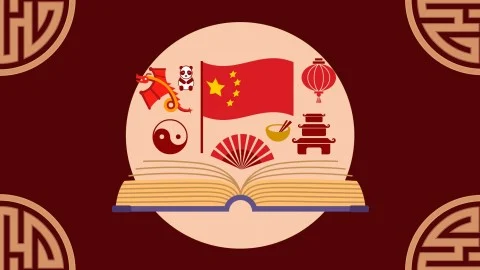
So on this Chinese Language Day, let us set aside all standards of comparison but celebrate Mandarin for beholding beauty within its complexity, ancient yet alive while rapidly paving its way on the international stage.
Therefore, from oracle bones of the Shang Dynasty to Yuyong buses travelling through highways, Mandarin is not merely a language of China but a depiction of how language beholds legacies and narratives within itself.

Samia Tanveer
Samia Tanveer is pursuing a degree in International Relations at Government College University Lahore. She is engaged in developing Youth Naama, a youth-led diplomatic forum. Her interests lie in policy-making and South Asian research. She can be reached at samiatanveer56@gmail.com