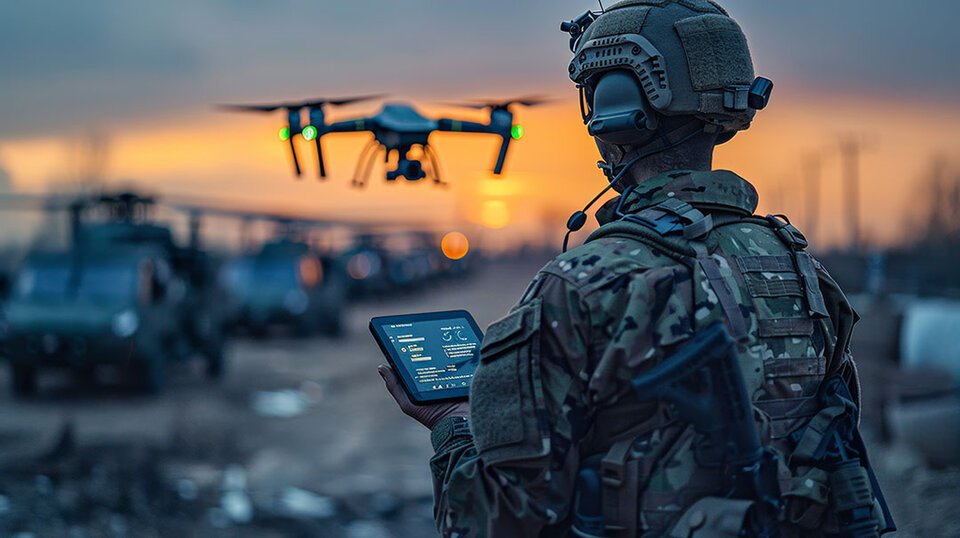
Owing to the proliferation of Artificial Intelligence, the technology has penetrated into every facet of human life. From redefining work spaces to the increasing demand for AI sponsored military strategies, AI is no longer shaping values alone, but also navigating contours of warfare.
With technology concentrated among limited stakeholders, embedded within silicon chips and opaque rooms for debates, the question about sustainability in AI military largely remains unaddressed. Sustainability in AI sponsored military extends beyond environmental debates raising concerns about flexibility, accountability and reliability of the system.
In January 2026, the Pentagon issued an Artificial Intelligence Strategy for the Department of War that directs the use of Modular Open System Architectures (MOSA), reinforcing the foundation for versatile AI systems that can be modified without being locked into rigged designs. The same report emphasized deploying the latest models within 30 days of public release, highlighting the AI’s potential for rapid adaptation unlike static conventional systems.
Happening in multiple cities across the world, the SilkRoad 4.0 Global Future Summit gathers the AI industry to explore how intelligent and sophisticated AI systems can be institutionalized for greater good. If this is a conversation you are interested in, the Summit is all set for 14th April 2026.
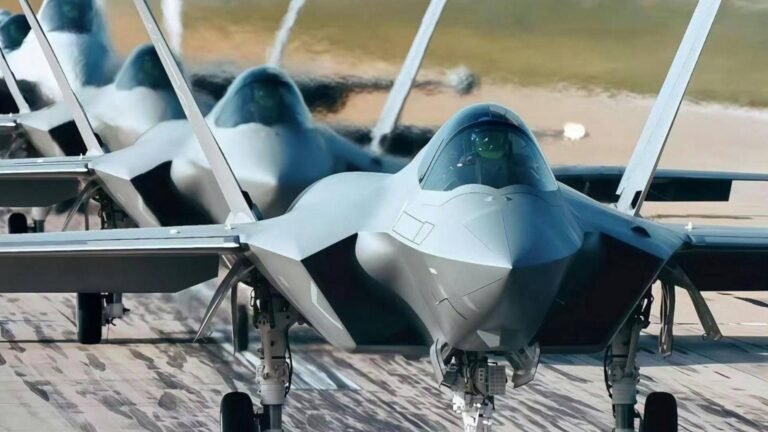
Across these technical advancements, AI is utilized in dynamic echelons such as warfighting (e.g., Swarm Forge, Agent Network, Ender’s Foundry), Intelligence (e.g., Open Arsenal, Project Grant), and enterprise systems (e.g., GenAI.mil, Enterprise Agents). This versatility demands a robust inter-connected system that is still under development, thereby paving the way toward a more sustainable AI infrastructure.
AI reliability raises another critical question regarding sustainable military AI systems: whether these systems promise performance guarantees and withstand non-robust changes or adversarial changes. It acts as a double-edged sword.
It can make military systems faster, more precise, and less reliant on vulnerable human operators, but it also introduces novel failure modes (adversarial attacks, noncomputability, model drift, black-box opacity) that traditional engineering cannot easily address.
The potential for AI reliability is constrained by these issues, yet it promises credible leverage if theorized properly. By integrating into warfare, militaries could achieve significant gains in fuel efficiency, resource conservation, and force protection. AI can help military planners save fuel, conserve munitions and other supplies, and reduce collateral damage through more accurate targeting, which requires fewer munitions to be trucked or shipped to the fight.
Read More: The Structural Exclusion of Global South from AI Governance
When Germany was first accused of war guilt, World War II was ignited. In the wake of the war, global governance structures recognized that the conflict had been partly precipitated due to oversimplification of the Treaty of Versailles. It was not the accountability that was in question, but rather the pattern of how it was imposed on Germany.
Similarly, AI accountability is structurally indifferent. AI systems acquire a series of carefully calculated data. If a target is misplaced, who shall be held accountable? The engineer who codified the first prompt or the authorizer of the technology?
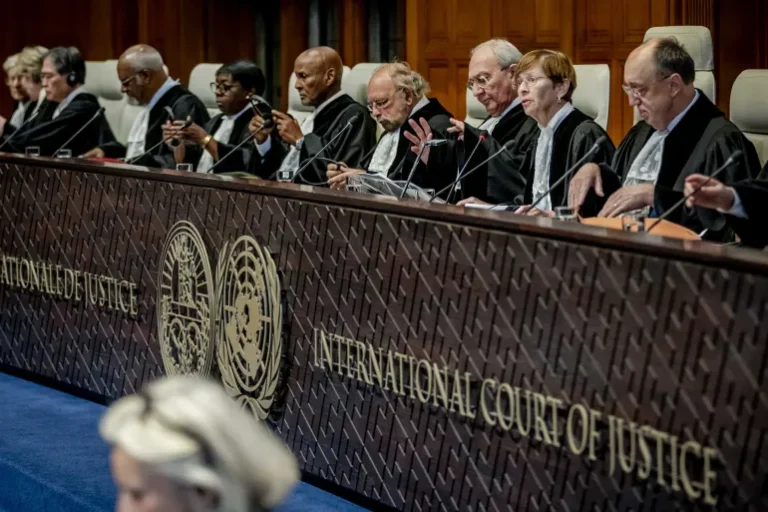
While the international lawyers are yet exploring new paradigms of AI law, the International Criminal Court reiterated Rome Status, and existing legal framework may be enough to prosecute misuse of AI whereas with the growing emergence of Lethal Autonomous Weapon system, establishing clear legal accountability systems becomes increasingly complicated to achieve. These problems pave the way for sustainable AI systems.
Pick your closest city, join locally, and connect globally via the shared program and live links. SilkRoad 4.0 Global Future Summit is accessible and is a platform for actors who want to put in place well-regulated AI systems in a cross-border context.
Ultimately, by improving strategic and tactical planning, encouraging the efficient and proportionate use of lethal military assets, enhancing intelligence gathering, and automating jobs long done by humans, AI has the potential to save lives and reduce the overall toll of war.
The suitable use of AI in the military is an emerging debate, as AI systems still possess structural flaws in reliability, though accountability and versatility have increasingly progressed. The solution of the problem is to address it through open debates rather than opaque systems of decision making rooms.
Silk Road 4.0 is a cross-border governance platform themed on AI. The purpose of Silk Road 4.0 is an effort to institutionalize AI through collaborative efforts. Scheduled for 14th April the conference invites policymakers, entrepreneurs, and technology professionals across the world.

Samia Tanveer
Samia Tanveer is pursuing a degree in International Relations at Government College University Lahore. She is engaged in developing Youth Naama, a youth-led diplomatic forum. Her interests lie in policy-making and South Asian research. She can be reached at samiatanveer56@gmail.com