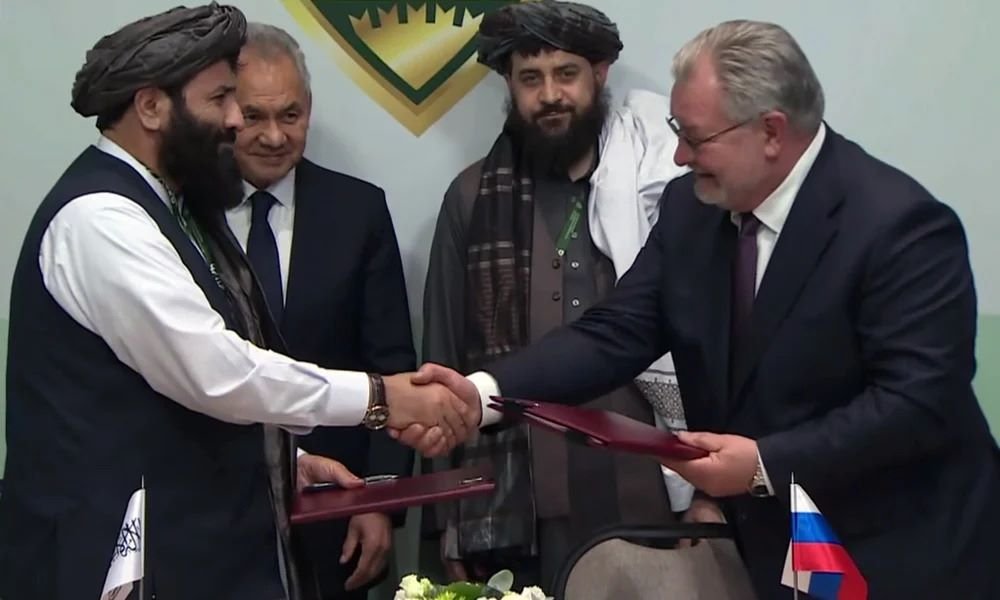
Russia and Afghan Taliban’s interim government signed a military-technical cooperation agreement on May 27, a step forward to further strengthen their bilateral ties. Officials on both sides claim that the pact is aimed to ensure “repair and maintenance of Russian-made weapons systems”, admittedly, a curious explanation. Much of Afghanistan’s Soviet-era equipment has endured decades of war, neglect, and obsolescence, and it is equally difficult to imagine Moscow volunteering to repair American-made hardware left behind after the 2021 US withdrawal.
Surely, between Moscow and Kabul, someone could have come up with a more convincing cover story. What this agreement could realistically involve is far broader than simple repair work. It may include arms sales, military training, logistics support, technical assistance, ammunition supplies, and maintenance services. The confidence displayed by Afghan Interim Defense Minister Mullah Yaqoob, who stated that Pakistan would think twice before launching attacks on Afghan territory in the future, suggests that this assurance is not based merely on repairing outdated Soviet military antiques. Such confidence usually comes from expectations of enhanced military capability and deterrence.
While no one outside Moscow and Kabul knows the exact terms and conditions of the agreement, the central question remains: how much military-technical assistance will Russia provide, under what timeline, and under what conditions, especially when Afghanistan remains engaged in an active confrontation with Pakistan?
At the geopolitical level, this agreement appears to be more symbolic than transformational, at least in the immediate term. It serves as a message from Russia to Central Asian states and the West that Moscow is prepared to expand its influence in Afghanistan and position itself as a major stakeholder in the country’s future. It demonstrates that despite international isolation of the Taliban government, Russia is willing to engage with Kabul on security matters and shape regional security arrangements according to its own interests.
For Pakistan, however, the implications may be far more tangible. The debate over whether Russia is legitimizing the Taliban government is effectively over. That question was settled when Moscow became the first United Nations member state to formally recognize the Taliban administration. The more pressing concern now is whether Russian military assistance will indirectly strengthen militant networks operating against Pakistan.
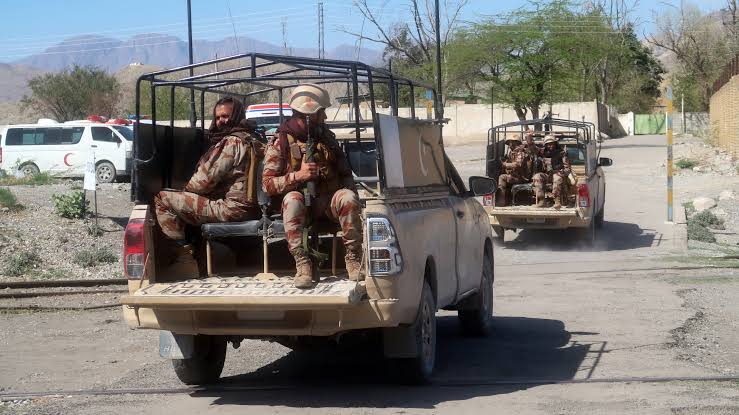
Pakistan launched Operation Ghazab lil Haq in February 2026 with the objective of degrading Taliban military infrastructure and reducing the threat posed by terrorist groups operating from Afghan territory. Pakistani strikes targeted locations in Kabul, Kandahar, and Paktia, inflicting substantial damage on Taliban military assets along the Durand Line. Independent satellite imagery confirmed damage to military-related facilities. By this stage, much of the NATO-standard military stock inherited by Afghanistan in 2021 had already been depleted, rendered unusable, or fallen into disrepair.
Read More: Russia Calls for Revival of SCO-Afghanistan Contact Group
Pakistan’s broader objective was to weaken the Afghan Taliban’s military capabilities and to reduce the operational space available to Tehreek-e-Taliban Pakistan (TTP), which Islamabad has repeatedly accused of using Afghan territory as a sanctuary. Given the ideological links, ethnic overlap, and longstanding relationships between elements of the Afghan Taliban and the TTP, any effort to degrade Taliban military capacity also indirectly affects the environment in which the TTP operates.
This is where Russia’s military assistance becomes significant. If Russian support restores Taliban military infrastructure, repairs disabled equipment, provides training, improves logistics networks, and potentially expands into weapons and ammunition transfers, it effectively rebuilds portions of the military capability that Pakistan spent months attempting to degrade. In practical terms, this reduces the long-term impact of Pakistan’s military campaign and allows the Taliban government to recover more quickly than it otherwise could have.
Read More: Afghanistan Signs $1.5 Million Trade Agreements with Russia’s Dagestan
The stronger Afghan Taliban would also be in a better position to resist Pakistan’s pressure, making future military operations more costly and complicated. If Taliban military capabilities improve, the protection available to groups operating within Afghan territory could also increase. From Pakistan’s perspective, this creates the perception that hard-earned military gains may gradually be eroded.
Since 1989, this is the first time Russia has emerged in Afghanistan not as an occupier, not as an invader, and not as an attacker, but as a patron, partner, and security provider.
Now rewind history. In December 1979, the Soviet Union invaded Afghanistan to support its struggling communist government. In response, the United States launched Operation Cyclone, one of the largest covert operations of the Cold War. Pakistan became the central conduit for this effort. Billions of dollars worth of military aid, including Stinger missiles, were funneled to the Afghan mujahideen.
Pakistan trained fighters, distributed weapons, coordinated logistics, and played an indispensable role in supporting the anti-Soviet resistance. The Soviet withdrawal in February 1989 remains one of the most significant military setbacks in Soviet history.
History has a remarkable tendency to repeat itself. Russia has never forgotten the role Pakistan played during the Soviet-Afghan War. The Kremlin remembers that the forces which contributed to Moscow’s defeat were armed, trained, and supported through networks operating from Pakistani territory. Today, four decades later, Russia finds itself formalizing military cooperation with the very movement that emerged from that broader mujahideen infrastructure.
Is Russia deliberately playing Pakistan’s 1979 game back at Pakistan in 2026? The comparison is not exact, but the structural similarities are difficult to ignore. An external power with historical grievances is providing military assistance to an Afghan government at a time when Pakistan is engaged in active military confrontation with that government. At the same time, this development is particularly striking because Russia-Pakistan relations had improved considerably over the last decade. Trade expanded, energy cooperation increased, Moscow supported Pakistan’s growing role in regional organizations, and diplomatic engagement reached levels that would have been difficult to imagine during the Cold War.
Russia’s decision does not necessarily mean that it seeks confrontation with Pakistan. Rather, it highlights a fundamental reality of international politics: states pursue interests, not friendships.
For the Taliban leadership, meanwhile, this agreement is undoubtedly a diplomatic victory. Recognition by a major power and military cooperation with Russia provide international standing that the Taliban government has struggled to achieve since 2021.
Yet the Taliban may be overlooking a deeper historical lesson. Afghanistan has repeatedly become a theatre for regional and global competition whenever major powers acquire strategic interests there. By welcoming greater Russian involvement, Kabul may be gaining diplomatic legitimacy today while simultaneously increasing the likelihood that Afghanistan once again becomes entangled in great-power rivalries tomorrow.
The Taliban may be celebrating their arrival on the international stage, but history suggests that foreign patronage in Afghanistan rarely comes without long-term geopolitical consequences.

Farkhund Yousafzai is a seasoned journalist and analyst with over a decade of experience in the media industry. He specializes in national politics and international relations and regularly contributes as an analyst to national and international media outlets.

The writer is a researcher and Managing Editor at The Diplomatic Insight.