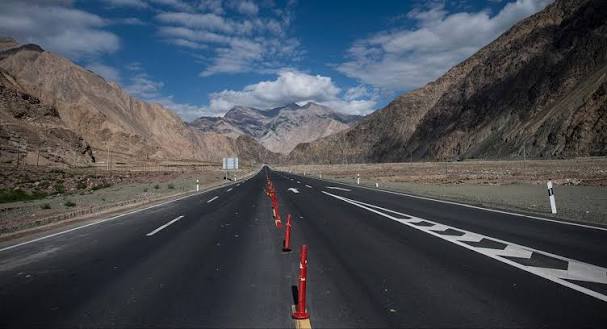
A highway can be inaugurated in a day. A shared working language, a trusted supplier or a durable university partnership takes years, and nobody cuts a ribbon when it succeeds. As CPEC enters its second phase, that asymmetry deserves attention.
Pakistan and China have grown adept at connecting places. The harder task is connecting the people who must use them.
This is not a neglected field. The 2025–2029 Action Plan contains a distinct chapter on people-to-people exchanges, covering education, youth, cultural relics and the environment. China has also pledged 3,000 training opportunities for Pakistanis over 2025–2029, a commitment restated in the May 2026 joint statement.
The next opportunity is to build on these initiatives by giving greater attention to their long-term outcomes. Alongside scholarships and delegations, it is worth assessing whether the relationships formed through these programs continue to support collaboration after a course or visit has ended.
As implementation proceeds, targeted initiatives, appropriate resources and clear performance indicators can help translate the plan’s commitments into lasting partnerships.
Read More: China, Central Asia and CPEC: Can Pakistan turn Geography into Geopolitical Power?
The economic context sharpens the point. The plan’s thematic corridors, covering growth, livelihood, innovation, green development and openness, depend on firms, technicians, farmers and researchers working together, not merely on moving cargo. The scale and composition of bilateral trade also highlight opportunities to deepen economic cooperation.
China’s consul general in Lahore recently cited Pakistani exports of about $2.5 billion against imports of roughly $16.3 billion. Language will not close that gap. Competitiveness, market access and policy matter far more. But an exporter who cannot read a buyer’s specifications, or an official who cannot follow a counterpart’s reasoning, starts at a disadvantage. That is a plausible mechanism rather than a proven effect, and it deserves testing.
Language shows both the demand and the difficulty. The Pakistan-China Institute estimated that nearly 30,000 Pakistani students were studying Chinese through Confucius Institute programs in 2022. Yet a Lahore School of Economics research summary on CPEC workplaces found limited communication between Pakistani and Chinese employees, with technical Mandarin vocabulary a particular obstacle.
Conversational fluency is not the same as the ability to read a contract, a safety manual or an engineering drawing. The same research notes that Chinese staff are also learning Urdu, highlighting the value of reciprocal language learning and more effective communication across Pakistani and Chinese workplaces.
People-to-people cooperation also depends on a secure environment and meaningful engagement with local communities. The 2022 attack near Karachi University’s Confucius Institute, claimed by the Baloch Liberation Army, underscored the security challenges facing educational and cultural exchanges.
Such incidents reinforce the importance of pursuing community engagement alongside the necessary security measures, while recognizing that cultural programs alone cannot resolve complex security and development challenges. Nor can human connectivity be confined to graduates in major cities.
Research published by PIDE highlights the importance of strengthening local skills to expand employment opportunities associated with CPEC-related investment in Balochistan. This reinforces the case for aligning vocational training and technical education with the needs of local communities and prospective employers.
One way to understand this relationship is through a three-layer analytical framework developed for this article, rather than an official CPEC model. The first layer is Physical connectivity — meaning roads, ports, railways, energy and industrial zones — which creates the capacity for movement and production.
Human connectivity, meaning language skills, cultural literacy, educational ties, professional networks and social trust, shapes how well that capacity is used. Functional regional integration, meaning lasting business partnerships, joint research, skills development and tourism, is the outcome.
The layers are not strictly sequential. Weak human ties can leave good infrastructure underused, while strong ones cannot compensate for security, regulatory or financing constraints.
Four practical steps could help deepen this agenda within existing cooperation arrangements. First, the relevant institutions could develop a people-to-people connectivity framework under the existing Action Plan, with clear objectives, defined responsibilities for participating ministries, universities and chambers of commerce, and an annual progress review.
Read More: CPEC 2.0 to Drive Industrial Growth, Innovation and Skills Development: Dar
Second, language training could be linked to professional needs. Engineers, trade officials and tourism operators could benefit from technical, commercial and sector-specific Mandarin, while Chinese professionals working in Pakistan could be encouraged to develop their Urdu skills and, where useful, familiarity with regional languages.
Third, complement public events and cultural festivals with sustained engagement. Repeat exchanges, joint research, translation programs and alumni networks that connect graduates with employers can help turn individual visits into longer-term professional relationships.
Fourth, assess outcomes as well as participation. Useful indicators could include language proficiency achieved, exchanges completed, joint research and other collaborative outputs, partnerships that remain active after three years, and documented community participation.
These are proposed measures for consideration, to be developed in consultation with the relevant institutions and supported by appropriate resources.
Connectivity should be judged not only by what infrastructure links, but by what relationships it enables. Roads decide where two countries can meet; people decide whether they have anything to say when they arrive.
*The views presented in this article are the authors’ own and do not necessarily reflect the views of The Diplomatic Insight.*

Mujtaba Arshad
Mujtaba Arshad is a Research Associate at the Centre of Excellence for CPEC, Pakistan Institute of Development Economics (PIDE), Islamabad. He holds an MPhil in Economics from Quaid-i-Azam University, Islamabad, where he secured second position in the Economics Department. His research and policy interests include international trade and investment, industrial development, regional connectivity, and Pakistan’s economic transformation.