Many see artificial intelligence and digital transformation as the defining economic trends of our time. Yet the more consequential shift may be happening elsewhere. Around the world, governments, businesses, and investors are increasingly recognizing that resilience often matters more than efficiency.
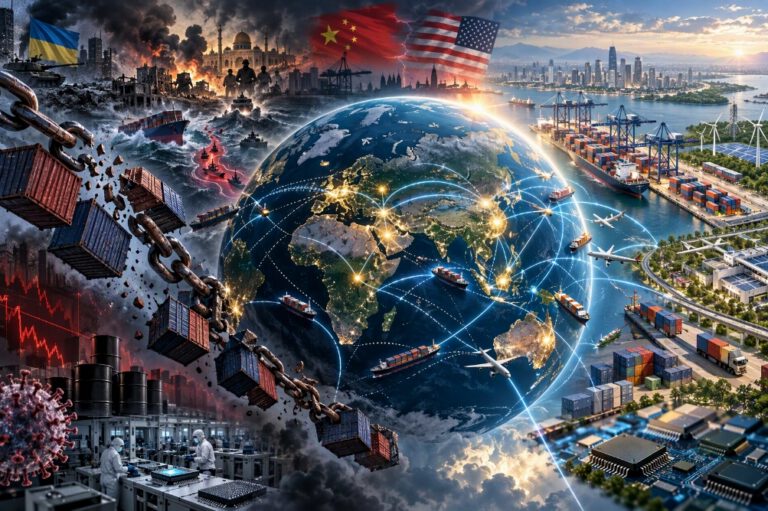
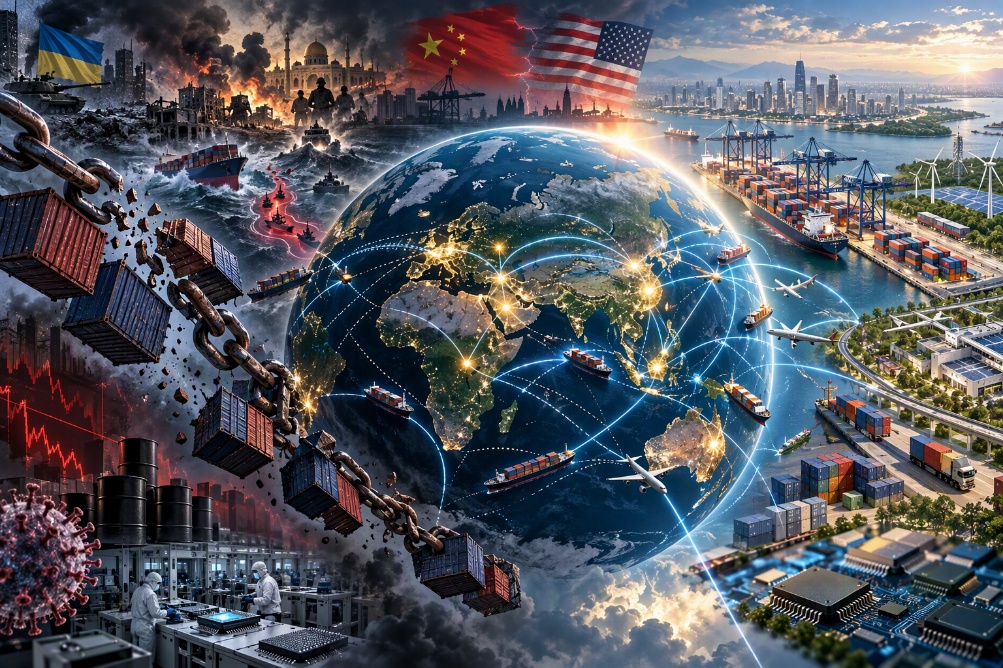
The COVID-19 pandemic, the Russia-Ukraine war, conflicts in the Middle East, disruptions in the Red Sea, and intensifying U.S.-China competition have exposed the vulnerabilities of an economic model built primarily around efficiency.
For much of the globalization era, economic success was measured by how efficiently countries, companies, and markets operated. Businesses optimized supply chains, governments pursued deeper trade integration, and investors rewarded production networks capable of delivering goods at the lowest possible cost. Efficiency became the foundation of competitiveness in an increasingly interconnected world.
Recent events, however, have revealed the limits of that approach. As geopolitical tensions intensify and economic fragmentation becomes more pronounced, the ability to withstand shocks is emerging as an equally important source of strength.
The question facing policymakers today is no longer simply how to maximize growth and efficiency, but how to maintain stability and adaptability in an increasingly uncertain global environment.
Read More: ASEAN Eyes $2 Trillion Digital Economy by 2030 Under New Regional Pact
For much of the past three decades, globalization encouraged firms to concentrate production in locations offering the lowest costs. The model helped expand international trade, attract investment, and lower prices for consumers around the world. Yet recent crises revealed a critical weakness: systems optimized solely for efficiency often lack the flexibility needed to withstand major disruptions.
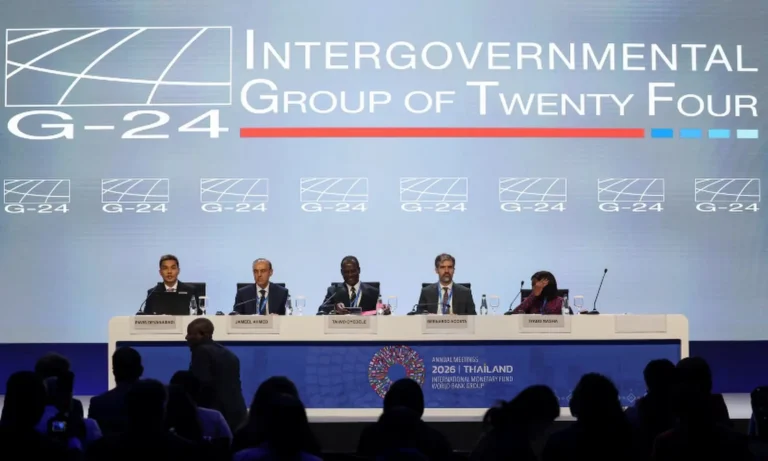
This shift reflects broader concerns about geo-economic fragmentation. The International Monetary Fund has repeatedly warned that rising geopolitical divisions could weaken trade, restrict investment flows, and reduce long-term global growth.
At the same time, IMF research shows that foreign direct investment is increasingly shaped by geopolitical considerations, with investors favoring countries viewed as politically stable and strategically reliable partners.
Interestingly, global trade continues to expand despite these challenges. According to the World Trade Organization, world merchandise trade is still expected to grow in the coming years, demonstrating that globalization is not disappearing but evolving into a different form.
The implication is clear: while efficiency remains important, resilience is becoming equally valuable. Countries capable of maintaining stability during periods of uncertainty are likely to become increasingly attractive destinations for global investment.
Indonesia’s Opportunity in a Fragmenting World
For emerging economies, global fragmentation presents both risks and opportunities. While geopolitical tensions may reduce the efficiency of international trade, they are also encouraging multinational firms to diversify investment destinations and supply chains.
Indonesia is well positioned to benefit from this shift. With a population exceeding 280 million people, a large domestic market, and abundant strategic minerals, the country offers several advantages that are increasingly valued in a more uncertain global economy.
Investor confidence remains relatively strong. Realized investment reached Rp1.010,6 trillion in the first half of 2026, creating approximately 1.45 million jobs. This performance is notable given concerns raised by MSCI regarding governance and market accessibility.
While such concerns warrant attention, investment flows suggest that many investors continue to view Indonesia’s long-term prospects positively.
Moreover, Indonesia’s economic fundamentals remain resilient. Inflation stood at 3.28 percent in September 2026, core inflation at 2.84 percent, and foreign exchange reserves reached US$146.3 billion, equivalent to 5.3 months of imports. These indicators suggest that Indonesia enters an increasingly fragmented world from a position of relative strength.
The Growing Importance of Economic Shock Absorbers
Resilience, however, is not determined solely by investment and industrial development. It also depends on a country’s ability to absorb shocks when global conditions deteriorate. In this environment, central banks play an increasingly important role.
Historically, central banks were primarily judged by their ability to maintain price stability. Today, their responsibilities extend much further. Financial stability, payment system resilience, macroprudential supervision, and crisis management have become essential components of modern economic resilience.
In an era defined by recurring shocks, central banks are increasingly expected to do more than maintain low inflation. They are becoming guardians of economic resilience, tasked with preserving financial stability, safeguarding confidence, and ensuring that external turbulence does not evolve into domestic crises.
Indonesia’s experience illustrates this point. Despite heightened global volatility, the country’s banking sector has remained relatively healthy. Credit growth reached 13.26 percent year-on-year in September 2026, while investment credit expanded by 23.20 percent.
Meanwhile, the banking sector maintained a Capital Adequacy Ratio (CAR) of 24.10 percent and a Non-Performing Loan (NPL) ratio of only 2.11 percent.
Read More: Indonesia’s Economic Diplomacy Through Modest Fashion
A New Measure of Economic Strength
The world is gradually redefining what economic strength means. For much of the globalization era, success was measured by efficiency, productivity, and cost competitiveness. Those factors remain important, but they are no longer sufficient on their own.
Governments are increasingly focused on energy security, food security, supply chain security, and financial stability. Companies are accepting higher costs in exchange for greater reliability. Investors are paying closer attention to geopolitical risks alongside traditional financial metrics.
The result is a fundamental shift in priorities. Economic strength is no longer determined solely by how efficiently a country performs under favorable conditions. Increasingly, it is defined by how effectively a country absorbs shocks, adapts to change, and recovers from disruption.
Efficiency will remain an important component of economic success. Yet in a world shaped by geopolitical rivalry, fragmented supply chains, and recurring crises, resilience is becoming the more valuable asset. That is why economic resilience is gradually replacing economic efficiency as the defining measure of national economic strength in the twenty-first century.
*The views presented in this article are the authors’ own and do not necessarily reflect the views of The Diplomatic Insight.*

Hari Suciono
Hari Suciono is an economic practitioner at the Bank Indonesia Representative Office in Central Kalimantan. His work focuses on regional economic dynamics, monetary policy, and financial stability, with particular attention to emerging and resource-based economies. His commentary has appeared in Indonesian national media, including Kompas.com, Kumparan, Indosiana by Tempo, and Republika.