For years, discussions about leadership in the Islamic economy have largely focused on market size, financial assets, and the expansion of halal industries. Countries have competed to become hubs for Islamic banking, halal trade, and Sharia-compliant investments.
Yet as the global Islamic economy matures, a more fundamental question is emerging: who will shape the ideas, policies, and innovations that define its future?
The global Islamic economy now spans multiple sectors, including finance, halal food, pharmaceuticals, modest fashion, media, and digital services. What was once viewed as a niche segment has evolved into an increasingly important component of the global economic landscape.
As Islamic finance expands across regions and attracts wider participation from governments, investors, and international institutions, competition is gradually shifting from simply building markets to shaping the frameworks that govern them.
The same dynamic is becoming increasingly evident in Islamic finance. The sector has expanded significantly over the last two decades, reaching new markets and attracting a broader range of stakeholders. However, rapid growth has also introduced new questions.
How should Islamic finance adapt to digital transformation? How can Islamic social finance contribute to sustainable development goals? What policies are needed to improve financial inclusion while maintaining Sharia principles? These challenges require more than financial resources. They require rigorous research and evidence-based policymaking.
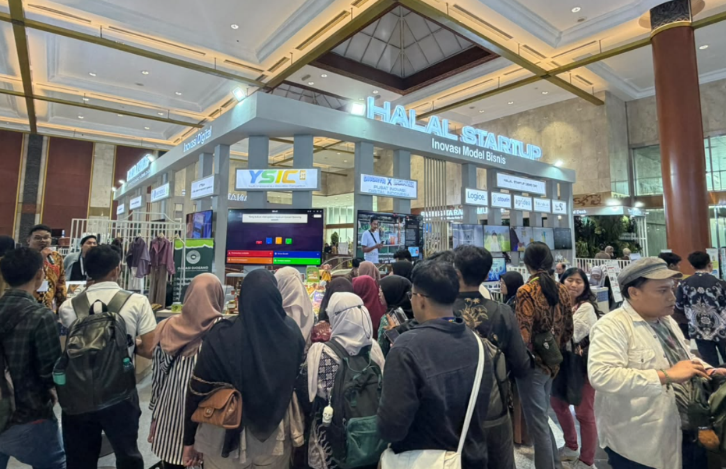
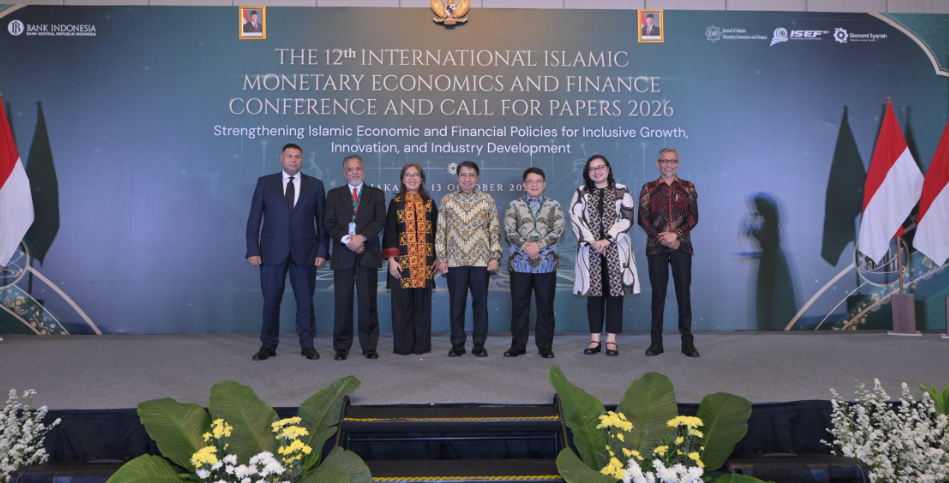
This evolving landscape was clearly reflected at the 13th Indonesia Sharia Economic Festival (ISEF) and the 12th International Islamic Monetary Economics and Finance Conference (IIMEFC) held in Jakarta. Beyond highlighting industrial achievements and market opportunities, the event underscored a growing recognition that research and knowledge production are becoming strategic assets in the global Islamic economic ecosystem.
Research as a Strategic Asset in Islamic Economic Leadership
Speaking at the conference, Bank Indonesia Deputy Governor Solikin M. Juhro emphasized that the development of Islamic economics and finance requires high-quality research capable of generating practical solutions and evidence-based policy recommendations. His message carries significance well beyond Indonesia’s borders.
Islamic finance has entered a phase where future growth depends not only on expanding institutions but also on improving policy quality. As financial systems become more interconnected, policymakers must better understand the consequences of regulatory choices, technological innovations, and market developments. Research provides the foundation for those decisions.
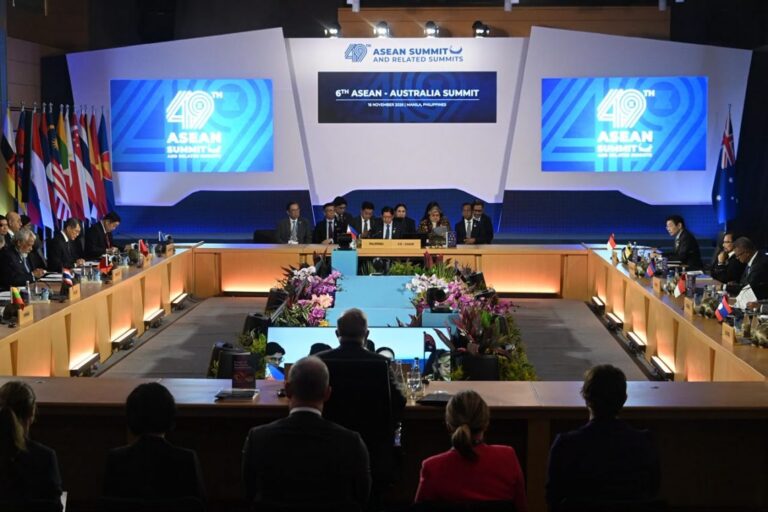
The rising international participation in IIMEFC demonstrates growing global interest in this agenda. This year, the conference received 538 academic papers from 49 countries, a significant increase from 348 papers from 37 countries in 2025.
Read More: ISEF: Showcasing the Future of the Global Islamic Economy
Such participation is more than an academic achievement. It signals that discussions about Islamic economics are becoming increasingly global, with scholars, regulators, and practitioners seeking platforms to exchange ideas across borders.
In today’s interconnected world, conferences, journals, and research institutions often play a diplomatic role. They create networks of trust, facilitate intellectual collaboration, and encourage the exchange of policy experiences. In that sense, research functions as a form of soft power. Countries capable of fostering high-quality intellectual ecosystems can influence international conversations without relying solely on economic or political leverage.
The role played by Bank Indonesia through initiatives such as IIMEFC and the Journal of Islamic Monetary Economics and Finance (JIMF) illustrates this point. By supporting research dissemination and international academic engagement, Indonesia is contributing not only to domestic policy discussions but also to broader global debates on Islamic economic development.
From Financial Growth to Knowledge Power
The importance of research becomes even more apparent when viewed alongside the continued expansion of Islamic finance itself. As of June 2026, Indonesia’s Islamic financial assets reached approximately Rp3,264 trillion, growing by nearly 10 percent. These figures demonstrate the sector’s growing economic relevance and the opportunities available for further development.
Yet the future of leadership in Islamic finance will not be determined solely by asset growth. Financial scale may create influence, but lasting leadership often comes from the ability to establish frameworks, develop standards, and offer solutions that others choose to follow.
This is particularly important as Islamic finance confronts a new generation of challenges. Digital financial services, fintech integration, sustainable finance, supply-chain financing, and the mobilization of Islamic social funds all require innovative approaches.
No single country possesses all the answers. Progress will depend on international collaboration, continuous experimentation, and robust research capable of identifying what works and what does not.
The competition is already underway. From Malaysia and Indonesia in Southeast Asia to Saudi Arabia, the United Arab Emirates, Bahrain, and Pakistan across the broader Muslim world, countries are increasingly competing not only for market share but also for intellectual leadership within the global Islamic economy.
Read More: Tashkent Hosts the Inaugural Silk Road Finance and Technology Forum 2026
While each possesses unique advantages, their success increasingly depends not only on market size or capital availability, but also on their ability to generate innovation, cultivate expertise, and influence international best practices.
For this reason, investment in research should be viewed not as a supporting activity but as a strategic priority. Strong research ecosystems help bridge the gap between theory and practice, ensuring that innovation remains grounded in real-world needs. They also allow policymakers to anticipate risks rather than merely react to them.
ISEF 2026 offers a glimpse of this emerging reality. Beneath the exhibitions, business forums, and industry discussions lies a broader ambition: strengthening the role of knowledge in shaping the future of Islamic economics and finance.
In an era where influence increasingly flows through networks of expertise and innovation, the next leaders of Islamic finance may not simply be those with the largest markets. They may be those that contribute the most valuable ideas.
Ultimately, the future of Islamic finance will not be decided solely in boardrooms, trading floors, or investment portfolios. It will also be shaped in research centers, academic journals, policy forums, and international conferences where the next generation of ideas is being developed.
In that contest, knowledge may become the most valuable form of capital, and intellectual leadership the defining measure of success.
*The views presented in this article are the authors’ own and do not necessarily reflect the views of The Diplomatic Insight.*

Hari Suciono
Hari Suciono is an economic practitioner at the Bank Indonesia Representative Office in Central Kalimantan. His work focuses on regional economic dynamics, monetary policy, and financial stability, with particular attention to emerging and resource-based economies. His commentary has appeared in Indonesian national media, including Kompas.com, Kumparan, Indosiana by Tempo, and Republika.