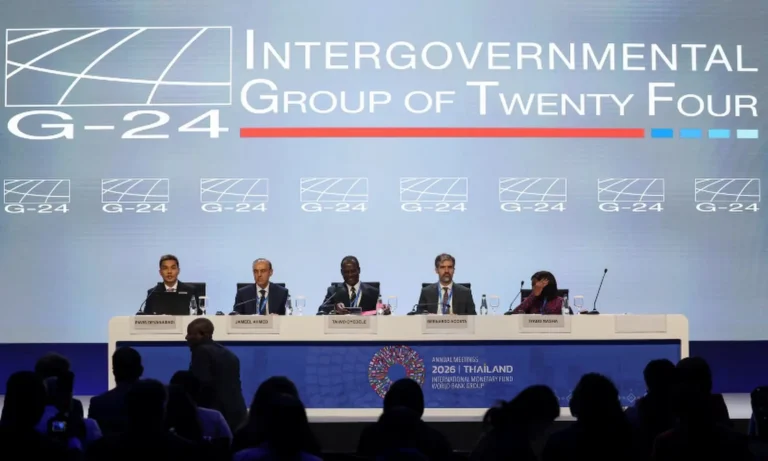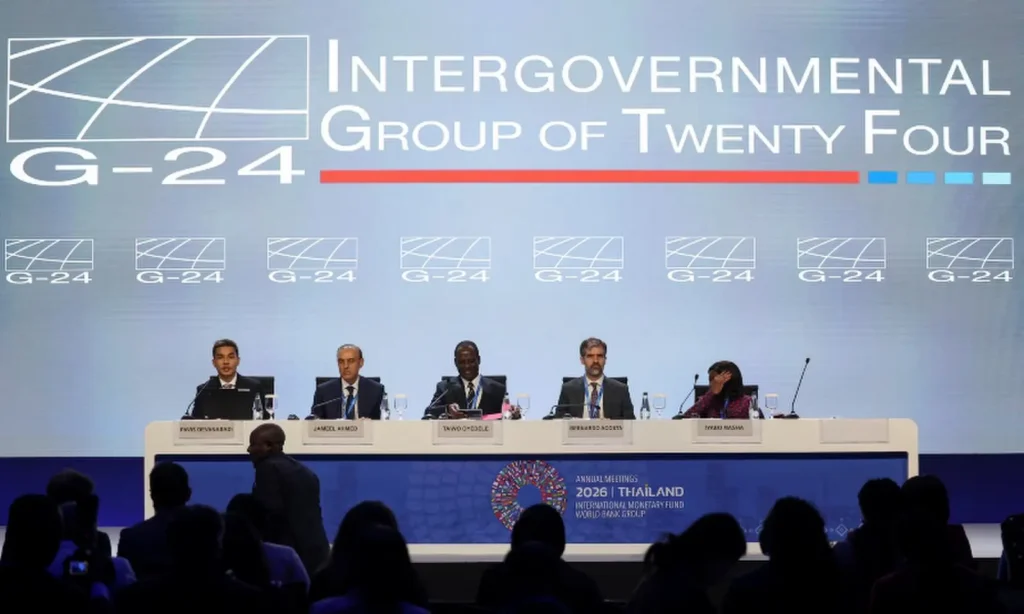
Islamabad (TDI): Pakistan assumed the chairmanship of the Group of 24 (G-24) on Sunday, taking over leadership of the bloc of developing countries that coordinates positions on international monetary and development finance. Finance Minister Muhammad Aurangzeb pledged to push for a fairer global financial system.
Pakistan succeeds Nigeria, whose leadership Aurangzeb acknowledged, promising to build on the group’s progress. Founded in 1971, the G-24 gives countries from Africa, Asia, Latin America and the Caribbean a collective platform on issues involving the International Monetary Fund (IMF) and World Bank.
Despite its name, it now has 29 members, according to Gulf News. It does not control decisions at the Bretton Woods institutions but seeks to shape them through negotiation and advocacy.
Aurangzeb called the role a “profound responsibility,” according to a Finance Ministry statement. He argued that the future of developing economies is “not peripheral” but central to the global economy, citing their potential as drivers of investment, innovation and growth.
Read More: Finance Minister Urges Global Cooperation to Address Economic Challenges
He set out three priorities. First, placing development at the center of global economic policymaking, with macroeconomic stability underpinning investment, jobs and productivity so low-income economies can move beyond crisis management.
Second, strengthening multilateral frameworks by pressing for fairer governance, meaningful participation in decision-making and greater responsiveness from the IMF and World Bank.
Third, advancing a development-oriented financial architecture built on affordable and timely financing, sustainable debt solutions, stronger safety nets, climate resilience and greater mobilization of public and private capital.
Aurangzeb said Pakistan would draw on its own experience of stabilization and reform to argue that financial stability should be aligned with long-term development goals. He said reforming economies need the financing and policy space to pursue sustainable growth.
The chairmanship, he added, would follow the G-24’s principles of consultation, consensus and collective advocacy, and its success would be judged by tangible outcomes rather than rhetoric.
Read More: Pakistan, Singapore Seek Stronger Trade, Investment and Security Cooperation
Prime Minister Shehbaz Sharif called the appointment a “significant diplomatic milestone.” He said it would let Pakistan advocate for reform of the global financial system, secure equitable climate financing and promote sustainable development for emerging economies.
He praised Aurangzeb’s team for Pakistan’s participation in the recent IMF and World Bank annual meetings, which he said strengthened its standing among developing nations.
President Asif Ali Zardari also welcomed the development, saying it would give Pakistan a role in development financing, climate challenges and global financial cooperation.
The chairmanship comes as developing economies press for more influence in international financial institutions and easier access to development funding.