Navruz, with its rich rituals, traditions, and cultural heritage, is not only a celebration of the Tajik people but also one of the most ancient traditions of the peoples of the East. Among the Aryan nations, it is regarded as the most sacred and noble festival. In Iran, as in Tajikistan, Navruz is considered a revered holiday. People eagerly await its arrival and celebrate it with remarkable grandeur, beauty, and festivity.
With the arrival of spring in this ancient land and among peoples who share common linguistic and cultural roots, the heralds of spring and the New Day appear in streets, avenues, markets, cities, and villages. Through singing, humorous performances, playful imitations, and colorful theatrical displays, they announce the departure of winter and the coming of spring and Navruz. Hearing this joyful message, people experience great happiness and begin preparing to welcome the New Year.
Since ancient times, the message of Navruz has been widely known among the peoples of Iran and Tajikistan. Similar to Tajiks, Iranians sprout wheat and lentil seeds before the arrival of Navruz. They thoroughly clean their homes, doors, walls, ovens, and courtyards. The surroundings of the house are renovated and painted, dishes and utensils are washed and polished, old belongings are replaced with new ones, and new clothes are purchased for family members.
In various regions of Iran—particularly in Khorasan, Mazandaran, the Province of Fars, Gilan, and Daylam—ancient Navruz customs and rituals continue to this day. The celebration and preparation for Navruz among Iranians include numerous practices that closely resemble the Navruz traditions of the Tajik people. This similarity once again demonstrates the deep cultural and historical connections between Tajikistan and Iran.
Preparations for the festive table include the purchase of meat, rice, oil, and other ingredients necessary for cooking traditional Navruz pilaf. Various sweets and breads are baked to decorate the festive table. According to tradition, beautifully arranged tables are prepared with different dishes and symbolic elements known as Haft Sin, Haft Shin, and Haft Mim.
On the Navruz table of the Iranian people, commonly referred to as the Navruz Sofra, round breads, sweets, fruits, and greenery are placed alongside symbolic objects such as decorated colored eggs, tulips, a mirror, and the Qur’an, which became part of the tradition after the spread of Islam and continues to be observed today.
Before the arrival of the New Year, samanu (samanak) is prepared, and a bowl of water with green leaves floating on its surface is also placed on the table. Honey is traditionally served as well, symbolizing the wish for a sweet and prosperous year ahead. Candles or lamps are also lit in every household.
The celebration of Navruz in different regions of contemporary Iran varies depending on climatic conditions. Today, throughout the country, representatives of various ethnic groups, religions, and beliefs celebrate Navruz with great enthusiasm and respect.
The Iranian people are deeply devoted to Navruz traditions. Before Navruz and until the celebration of Sizdeh Bedar, various symbolic objects and decorations are displayed in homes. Seeds such as isfarza, tartezah, and khakshir are spread on cloth and later attached to clay jars so that they grow green by the night of the holiday.
As Navruz approaches, flower vendors prepare numerous beautiful decorative flowers in baskets and vases. During this period, markets become especially lively: sellers of nuts and dried fruits, perfumers, fruit vendors, vegetable sellers, shoemakers, barbers, and bathhouse attendants all experience increased activity.
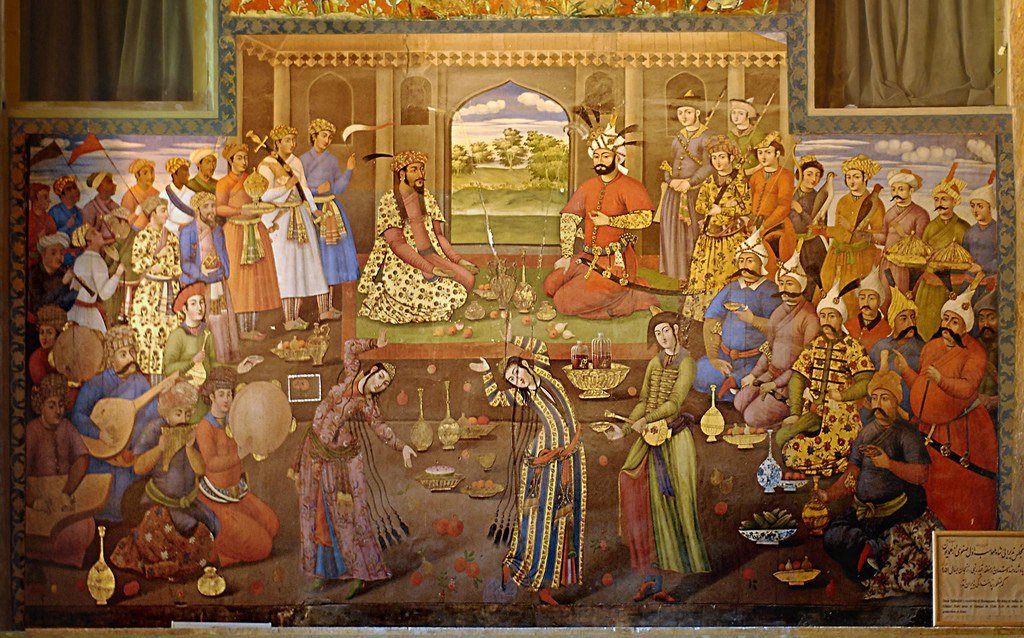
Several traditional ceremonies associated with Navruz have long been practiced among the Iranian people, many of which remain visible today. One of the most interesting among them is Mir-e Navruzi, a theatrical and symbolic ritual with a long history. According to this custom, an individual from among the people would be symbolically placed on the throne for five days.
During this time, he would issue humorous orders that entertained the people and brought joy to the community. Accompanied by ministers, soldiers, jesters, musicians, and singers, the Mir-e Navruzi would walk through the streets announcing the arrival of spring and the beginning of the new year.
Another important pre-Navruz ceremony in Iran is Chaharshanbe Suri. In Shiraz, the central place associated with this celebration is the shrine of Shah Cheragh. On the night of Chaharshanbe Suri, some women and unmarried girls visit the tomb of the famous Persian poet Saadi of Shiraz, known as Saadiyya. For Iranians, this ceremony represents an opportunity to symbolically renew different aspects of their lives.
Old clay jars are broken so that in the new year people may drink cool water from new vessels. Traditionally, water in Iran is stored in clay jars because it remains cool for a long time. In addition, wild rue (esfand) is burned in order to ward off evil forces and protect people from the evil eye, allowing them to enter the new year with health and well-being.
In conclusion, Navruz, as a great international festival, is celebrated in modern Iran with great magnificence and splendor. This demonstrates that the significance and glory of this ancestral celebration have not diminished over time; on the contrary, its importance continues to strengthen. The message of Navruz is the message of renewal, a new beginning, and the ideals of peace and unity among peoples and nations.

Shoira Kholikova
Shoira Kholikova is a candidate of Philological Sciences and lead researcher at the Department of the Near and Middle East at the Institute of studying of the problems of Asian and European countries at the National Academy of Sciences of Tajikistan.