In the contemporary globalization era, characterized by intensified transnational interactions and the rapid circulation of information, capital, and cultural symbols, the issue of national identity has gained renewed academic and political relevance. Globalization has significantly altered the conditions under which identities are constructed, reproduced, and transformed. In this context, national identity is no longer a fixed or static phenomenon but a dynamic and reflexive construct shaped by both internal sociocultural processes and external global influences.
From a sociological perspective, national identity can be defined as a system of shared meanings, values, symbols, and collective memories that provide individuals with a sense of belonging to a particular community. It functions as a mechanism of social integration and cultural continuity while simultaneously serving as a means of positioning the nation within the global system. As Giddens notes, globalization intensifies worldwide social relations, linking distant localities in such a way that local events are shaped by global processes.
For Tajikistan, a post – Soviet state that gained independence in 1991, the formation and consolidation of national identity has been closely linked to processes of state-building, cultural revival, and institutional development. The relevance of this study lies in the need to analyze how global processes interact with national sociocultural structures and influence identity formation in contemporary Tajik society.
Methodology. The present study is based on a theoretical-analytical approach that integrates sociological theory with qualitative secondary analysis. The research draws on key theoretical contributions in the sociology of globalization and identity, including the works of Giddens, Beck, Castells, and Bauman.
Read More: Nowruz: A Pillar of Tajikistan’s Cultural Diplomacy
The methodological framework includes: conceptual analysis of national identity as a sociological category; examination of globalization as a structural condition influencing social transformation; analysis of policy measures and institutional practices in Tajikistan; andinterpretation of secondary data from international organizations.
The interdisciplinary nature of the study allows for a comprehensive understanding of the interaction between global processes and national identity formation.
Contemporary sociological theory emphasizes the fluid and constructed nature of identity. According to Beck, modern societies are increasingly characterized by global risks that transcend national boundaries, leading to the transformation of traditional social structures. In this context, identity becomes reflexive, requiring continuous reinterpretation in response to changing social conditions.
Castells’ concept of the network society highlights the role of information technologies in shaping identity. He argues that identity is constructed within networks of communication and power, where cultural meanings are constantly negotiated. Similarly, Bauman points to the ambivalent effects of globalization, which simultaneously creates opportunities for cultural exchange and generates uncertainty and fragmentation.
These theoretical perspectives suggest that national identity in the contemporary world is shaped by the interaction between global and local processes, making it both resilient and adaptable.
Sociocultural foundations of national identity in Tajikistan is in the core of our study. The formation of national identity in Tajikistan is deeply rooted in its historical and cultural heritage. The Tajik language, classical Tajik literature, and longstanding cultural traditions constitute the core elements of national self-identification.
Language plays a particularly important role as a marker of cultural continuity and social cohesion. The preservation and development of the Tajik language have been central to national identity formation, especially in the post-independence period. Cultural heritage, including literary and philosophical traditions, provides a shared historical narrative that reinforces collective identity.
The family serves as the primary institution of socialization, transmitting cultural norms, values, and traditions across generations. As noted in sociological literature, the stability of identity depends largely on the effectiveness of primary socialization mechanisms . In the Tajik context, family structures play a crucial role in maintaining cultural continuity and reinforcing national consciousness.
Read More: Foundation of International Center of Navruz in Tajikistan
Globalization and Identity Transformation. Globalization has introduced new dynamics into the process of identity formation in Tajikistan. Increased exposure to global cultural flows, migration processes, and digital communication has transformed the sociocultural landscape.
International migration, in particular, has had a significant impact on social structures and value systems. According to the World Bank, migration influences both economic conditions and social relations in countries of origin, contributing to changes in family structures and patterns of social mobility.
At the same time, digital media and global information networks have expanded access to alternative cultural models. This creates a complex environment in which traditional values coexist with global influences. As Bauman suggests, globalization generates both integration and fragmentation, leading to the reconfiguration of identity structures.
State Policy and Institutional Mechanisms. In Tajikistan, the state plays an active role in shaping and reinforcing national identity. Cultural and language policies have been central to nation-building efforts since independence.
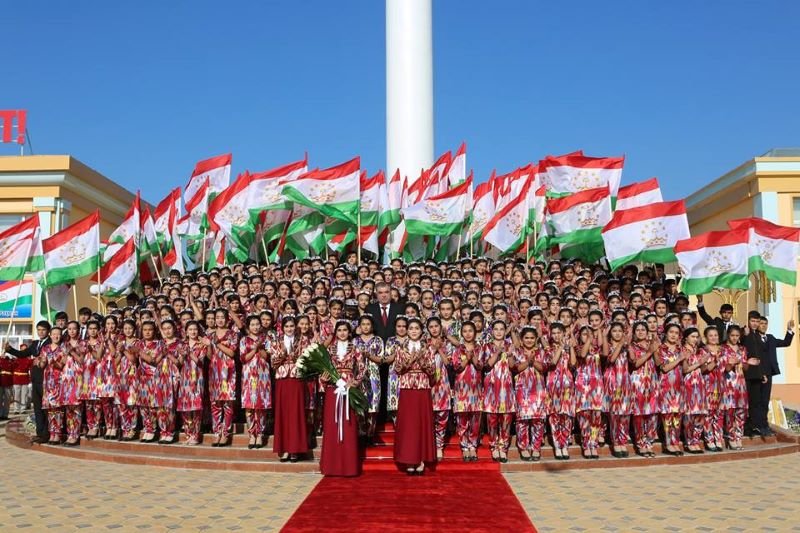
The adoption of the Law “On the Tajik Language” in 2009 represents a key institutional measure aimed at strengthening linguistic identity. State-supported cultural initiatives, including the celebration of historical anniversaries and traditional holidays, function as mechanisms for reinforcing collective memory and cultural continuity.
Such policies reflect a broader strategy of identity construction, in which the state acts as a key agent in promoting national values and historical narratives. As Lebedeva notes, state institutions play a crucial role in shaping national identity through symbolic and policy instruments.
Challenges and Future Prospects. Despite significant progress, the preservation of national identity in Tajikistan faces several challenges. Global cultural influences, migration, and digitalization continue to reshape social values and identity patterns.
The key challenge lies in maintaining a balance between preserving cultural heritage and engaging with global processes. As Beck argues, modern societies must navigate the complexities of globalization while managing the risks associated with social transformation.
Future prospects for national identity in Tajikistan depend on strengthening cultural and educational institutions; promoting national content in digital environments; and fostering critical engagement with global cultural influences.
Read More: Independence, Leadership and Strengthening of National Thought in Tajikistan
To summurize, national identity in Tajikistan is a dynamic and evolving phenomenon shaped by historical, cultural, and institutional factors. In the context of globalization, identity formation is influenced by both internal processes and external global dynamics. The findings of this study demonstrate that the preservation and strengthening of national identity requires a balanced approach that integrates cultural continuity with adaptive engagement in global processes. Such an approach is essential for ensuring social stability, cultural sustainability, and long-term national development.

Dostieva Dilafruz
Dostieva Dilafruz is a Junior Researcher at the Department of South and East Asian Studies, Institute for the Study of Asian and European Issues, National Academy of Sciences of Tajikistan.