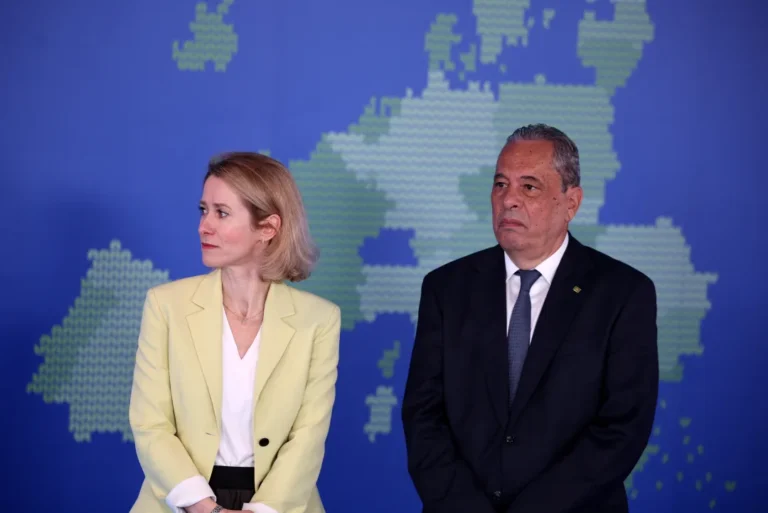
Nicosia (TDI): European Union defense ministers convened in Nicosia on Monday for an informal summit dominated by the war in Ukraine, rising tensions over the Strait of Hormuz, and the thorny question of restricting Russia financially.
The gathering, hosted by Cyprus, brought together ministers to tackle a packed agenda stretching from battlefield support to maritime security; with EU foreign policy chief Kaja Kallas arriving in an optimistic mood over a significant financial breakthrough.
Speaking to press ahead of the meeting, Kallas announced that Hungary’s appointment of a new defense minister has cleared the path to unblocking €6.6 billion held in the European Peace Facility, long frozen due to Budapest’s objections.
The funds, she said, are now the subject of active negotiation over how best to deploy them; whether as reimbursements to member states that have already contributed to Ukraine’s defense or as fresh aid directed to Kyiv.
EU Defence Ministers are meeting today to discuss Europe’s security, from support for Ukraine to freedom of navigation in the Middle East.
Ukraine is turning the tide of the war, and we are helping them, including by advancing the unblocking of €6.6 billion through the European… pic.twitter.com/53LuSJ1xwM
— Kaja Kallas (@kajakallas) June 8, 2026
Kallas described the unblocking as “a very, very important step” and said a compromise proposal has been tabled that attempts to satisfy both camps.
On Ukraine more broadly, ministers were expected to discuss ways to deepen cooperation between European and Ukrainian defense industries, particularly on drone technology.
Kallas noted that Ukraine has hard-won expertise in this area and urged European partners not to duplicate existing knowledge, pushing instead for direct industrial collaboration backed by available EU funding.
Read More: EU Leaders Descend on Montenegro for Historic Enlargement Summit
She also took note of fresh overnight escalation in the Middle East, calling on all parties to pursue a negotiated settlement and pointing to Operation ASPIDES, the EU’s naval mission in the Red Sea, as a tool for further engagement.
She also confirmed that Monday marks the first time freedom-of-navigation sanctions will be applied against Iran. Kallas also weighed in on a controversy over Ireland’s alumina exports to Russia, which have drawn criticism despite not being subject to sanctions.
While stopping short of naming Dublin directly, she suggested the EU may need to consider broadening its sanctions regime if such trade is helping to fund Russia’s war effort, noting that “wars also end when aggressors run out of money.”