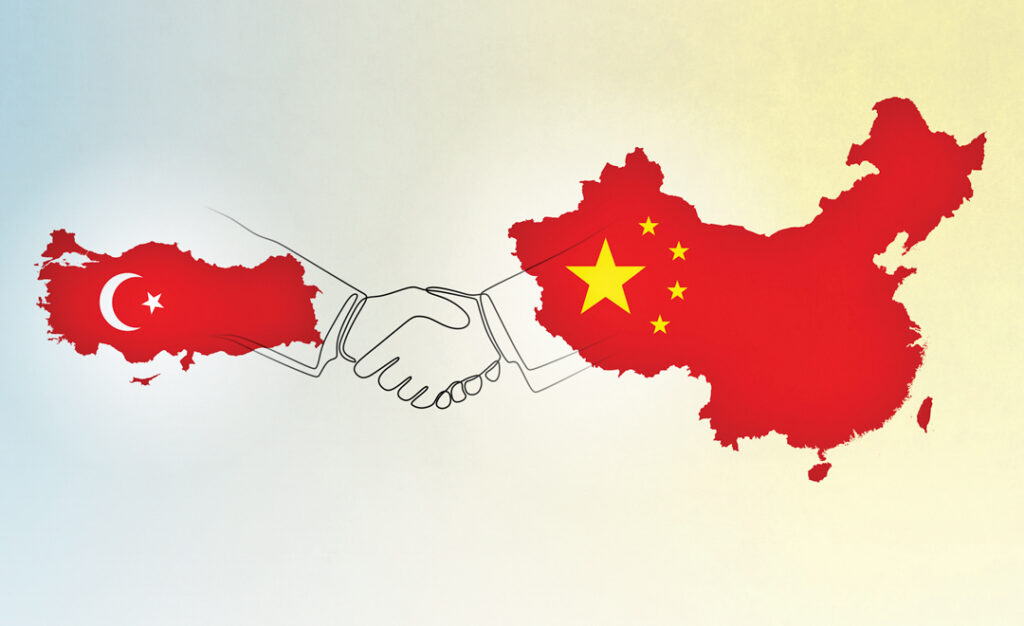
The recognition of China in 1971 by Türkiye was more of a symbolic gesture between two countries whose distance is geographical and political, both defined by a Cold War mentality, and with low volumes of trade.
Bilateral relations continued to develop slowly throughout the 1980s as both countries opened up; it did not come to the “Strategic Cooperation” stage until 2010. On the 55th anniversary of formal relations in 2026, the two countries are joined by much more serious – and much more complex – ties than those that were established at the start of their relationship.
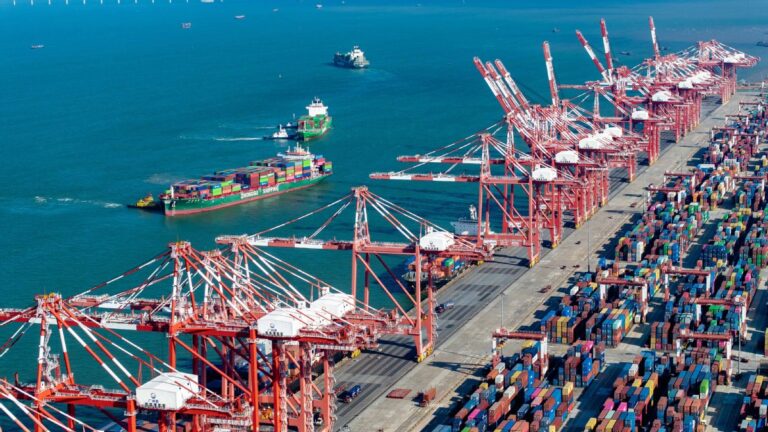
The number in the headline is impressive. “In this year, when we mark the 55th anniversary of diplomatic relations, China has become our largest trading partner in the world,” Türkiye’s Ambassador to Beijing Selçuk Ünal said in June 2026, noting that “total trade volume now exceeds $50 billion.”
The fact that the bilateral commercial ties have multiplied by 40 over the last 20 years is something that Ankara’s foreign policy apparatus has been very keen to promote. The Turkish Embassy in Beijing held a reception to celebrate the 20th anniversary of cooperation, themed “Invest in Türkiye: 20 Years of Excellence,” with Investment and Finance Office of the Presidency, aimed at establishing new opportunities for cooperation between Chinese investors and business leaders.
But the celebration covers up the structural issue which Ankara is unable to mask. The Turkish Ministry of Foreign Affairs reports that in 2025, exports to China valued at $3.3 billion were made; and imports valued at $49.6 billion were made, which results in a difference between exports and imports of $46.3 billion.
The asymmetry is not new, but is growing. China exported more than $4 billion worth of products to Türkiye in January 2025, which represents a 40.9% increase from the same month in 2024. China was still the biggest source of Türkiye’s imports by early 2026, accounting for 13.7% of all imports, and in 2025, Türkiye had the largest trade deficit with China, at $92 billion, which is the biggest source of imports throughout the year.
Even Türkiye’s main exports to China – marble, travertine, boron compounds, copper, and chromium – are raw materials, highlighting the low level of value added in exports.
The Turkish answer has been two-fold – selective protectionism on one side and an aggressive approach towards Chinese FDI on the other. Türkiye has taken a unilateral action of placing a 40% tariff on Chinese EVs and has initiated anti-dumping actions against Chinese hot-rolled flat steel, which have resulted in complaints with the WTO.
However, the savvier approach is to lure Chinese investors to make goods here in Türkiye rather than from China, in order to shift the reliance from imports to investment in manufacturing, gain access to Chinese technology, and possibly use Türkiye’s customs union with the European Union as a gateway for Chinese companies trying to sell to the EU but having trouble due to tariffs on exporting from mainland.
BYD was the poster-child example for this reasoning. In July 2024, the Turkish Ministry of Industry and Technology announced that BYD was ready to invest in Manisa with an electric vehicle plant of 150,000 units per year and a research and development center with an estimated of up to 5,000 jobs, while the production was set to begin in 2026.
The agreement seemed to be an experiment of Ankara’s rebalancing-by-FDI strategy. Since then, it has been unsuccessful. BYD has officially said that it is not going ahead with the $1 billion investment. BYD’s local sales in Türkiye dropped significantly after the Turkish Ministry of Industry and Technology cancelled BYD’s import tax privileges due to no progress on the project.
The episode also revealed deeper tensions, with China reportedly insisting on more concessions regarding Ankara’s stance on the Uyghurs, and EU “Made in Europe” laws looming as a potential threat to the logic of the customs union agreement.
But connectivity is the more robust cornerstone of Ankara’s China policy. In 2015, Türkiye and China signed an MOU to coordinate the Middle Corridor Initiative (Trans-Caspian International Transport Route) with China’s Belt and Road Initiative, while the first meeting of their Joint Working Group to align the two initiatives took place in November 2024 in Beijing.
During Erdoğan’s meeting with Xi Jinping at the SCO Tianjin Summit on 31 August 2025, the Middle Corridor’s strategic significance for Türkiye was also on Beijing’s agenda, along with raising the issue of the trade imbalance. At parallel meetings, the Turkish delegation presented the two plans as complementary and supportive and believed that China’s 15th Five-Year Plan could play a role in Türkiye’s economic and technological progress.
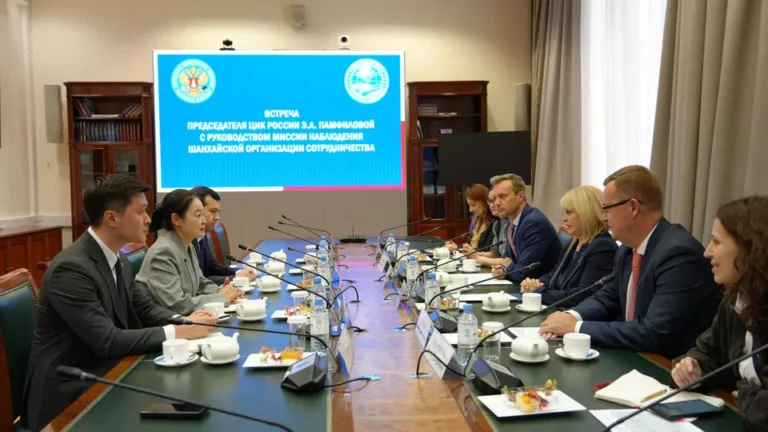
The June 2026 roundtable meetings in Beijing were more specific in offering movement. The Investment and Finance Office of the Presidency signed MoUs with Silk Road Fund and China Chamber of Commerce for Import and Export of Machinery and Electronic Products (CCCME), with various industry sessions bringing together companies from the energy, ICT, mobility, construction, and food sectors.
The Silk Road Fund’s president said Türkiye has robust demand of infrastructure development while the manufacturing, new energy, logistics, green transition, and digital economy sectors are where China excels. In November 2025, ICBC Türkiye officially entered the market as a designated clearing bank for RMB transactions, which is a new step in financial cooperation and will drive local currency transactions for bilateral trade and investment.
Fifty-five years in, the Türkiye–China relationship has true depth; civilizational, commercial, and more recently, institutional. But the distance between Ankara’s plans for connectivity and Beijing’s promises for investment remains great. Chinese money flows not only because of business logic.
Chinese politics, transfer of technology, and the Uyghur issue are always part of every big deal as in the BYD story. According to the MFA’s own figures, China is not only Türkiye’s biggest trading partner in Asia, but also in the world, and Ankara continues to trade mainly raw materials while importing high-value manufactures.
To restore that balance via FDI — Ankara’s primary bet — Beijing will need to accept that what is good for Türkiye, is good for China. This alignment is not yet finalized as the Manisa factory site has yet to be completed and is largely unused.

Muhammad Mahad Samija
Muhammad Mahad Samija is a student of Political Science at Government College University, Lahore. He can be reached at [email protected]