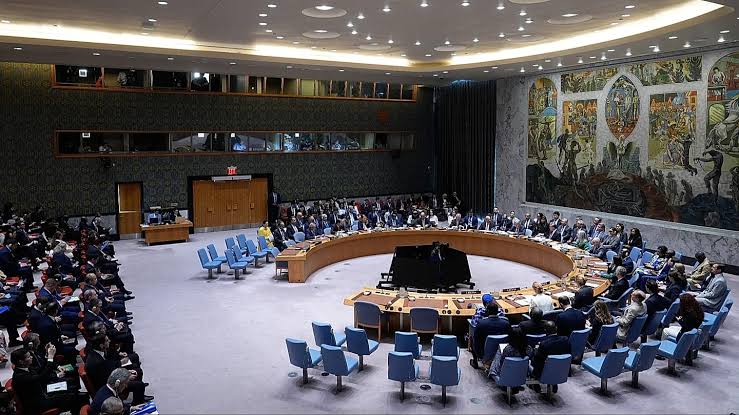
Russia and China have vetoed a United Nations Security Council resolution that would have extended the mandate of independent experts monitoring sanctions against Iran, deepening divisions among major powers over the future of the sanctions regime and the international response to Tehran’s nuclear program.
The draft received 11 votes in favor, while Russia and China voted against and Pakistan and Somalia abstained. Because both Moscow and Beijing are permanent members of the Security Council, their vetoes prevented the resolution from being adopted.
The proposed extension would have allowed the UN panel of experts to continue tracking sanctions implementation, investigating possible violations and reporting on networks used to bypass restrictions.
The sanctions themselves remain in force, but the failure to renew the monitoring mandate weakens one of the main international mechanisms used to assess compliance.
Western states had argued that continued independent oversight was necessary to maintain transparency and ensure that the sanctions regime could be enforced effectively.
Russia and China rejected that position and argued that the sanctions framework and the process used to restore restrictions on Iran were politically driven and legally questionable.
Both countries have increasingly called for the Iranian nuclear issue to be addressed through diplomacy rather than additional pressure, while Tehran has welcomed their opposition to what it considers an illegitimate sanctions regime.
The vote reflects a broader strategic divide at the Security Council, where Iran has become another major point of disagreement between Western powers and Moscow and Beijing.
That divide is particularly significant at a time when Iran and the United States remain locked in a wider confrontation and diplomatic efforts to establish a new negotiating framework remain uncertain.
Without the independent monitoring panel, information on possible sanctions violations is likely to depend more heavily on national intelligence, unilateral assessments and alternative monitoring arrangements outside the UN framework.
This could complicate efforts to maintain a common international picture of sanctions enforcement and further politicise disputes over Iran’s nuclear and missile activities.
The decision also carries implications beyond the technical question of monitoring. It demonstrates that the international approach to Iran is becoming increasingly fragmented, with Western governments continuing to prioritize enforcement while Russia and China push for a less punitive strategy.
That division is likely to shape upcoming discussions at the United Nations General Assembly, where Iran, the United States, Gulf states and major powers are expected to engage in renewed diplomatic consultations.
While the sanctions regime remains formally intact, the weakening of its independent oversight could make enforcement less coordinated and further expose the limits of Security Council consensus on Iran.

Anoush Taimur is an International Relations graduate from DHA Suffa University, Karachi, currently based in Doha. Her research interests include Gulf politics, small-state diplomacy, Global South studies and conflict
mediation. Her work examines how states create influence through connectivity, institutions and strategic relationships. She can be reached at [email protected]