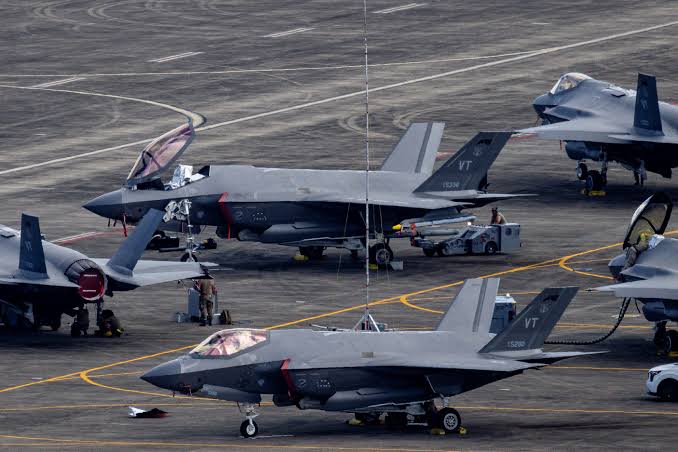
The United States has approved a potential $24.3 billion sale of 48 F-35 Lightning II fighter jets and related equipment to Saudi Arabia, marking a major development in defense ties between Washington and Riyadh and potentially reshaping the military balance across the Gulf.
The proposed package includes the aircraft, F135 engines, training, logistical support, secure communications systems and associated equipment, with the sale now moving into the congressional review stage before any final contract is concluded.
If completed, Saudi Arabia would become the first Arab state to operate the F-35 and only the second country in the Middle East after Israel to field the fifth-generation stealth fighter.
The decision comes after years of Saudi interest in acquiring the aircraft and reflects the broader expansion of strategic cooperation between Washington and Riyadh.
It also arrives at a time when the Kingdom is confronting renewed missile and drone threats from Yemen’s Houthis, pressure on its air-defense systems and wider instability across the Gulf and Red Sea.
For Riyadh, the potential acquisition would significantly expand its surveillance, electronic warfare and precision-strike capabilities while deepening interoperability with US forces and other partners.
The approval is likely to carry wider regional implications because US arms transfers involving advanced technology have long been shaped by Washington’s commitment to preserving Israel’s qualitative military edge.
Previous attempts to expand F-35 access to Gulf states have also raised concerns over the protection of sensitive technology, particularly as countries in the region deepen economic and strategic relations with China.
The Saudi case therefore goes beyond a conventional weapons purchase and reflects a broader reassessment of Gulf defense priorities amid a changing security environment.
Riyadh has increasingly sought to strengthen its deterrence against both conventional and asymmetric threats, while Washington appears willing to deepen Saudi Arabia’s role within the US-led regional security architecture.
The possible sale also comes amid renewed debates over the reliability and sustainability of Gulf air defense, especially as prolonged regional warfare places pressure on interceptor inventories and strategic infrastructure.
If the transaction proceeds through Congress, it would represent one of the most consequential defense agreements in the history of US-Saudi relations and could influence future military planning across the Gulf.
More broadly, the deal signals that the regional security order is being reshaped not only by active conflicts with Iran and the Houthis, but also by a longer-term shift in how Gulf states are positioning themselves within the wider strategic balance of the Middle East.

Anoush Taimur is an International Relations graduate from DHA Suffa University, Karachi, currently based in Doha. Her research interests include Gulf politics, small-state diplomacy, Global South studies and conflict
mediation. Her work examines how states create influence through connectivity, institutions and strategic relationships. She can be reached at [email protected]